Tag: stress

  • Staying busy to manage anger 11 resets that work now

    Staying busy to manage anger 11 resets that work now

    [fusion_builder_container type=”flex” hundred_percent=”no” hundred_percent_height=”no” min_height_medium=”” min_height_small=”” min_height=”” hundred_percent_height_scroll=”no” align_content=”stretch” flex_align_items=”flex-start” flex_justify_content=”flex-start” flex_wrap_medium=”” flex_wrap_small=”” flex_wrap=”wrap” flex_column_spacing=”” hundred_percent_height_center_content=”yes” equal_height_columns=”no” container_tag=”div” menu_anchor=”” hide_on_mobile=”small-visibility,medium-visibility,large-visibility” status=”published” publish_date=”” class=”” id=”” spacing_medium=”” margin_top_medium=”” margin_bottom_medium=”” spacing_small=”” margin_top_small=”” margin_bottom_small=”” margin_top=”” margin_bottom=”” padding_dimensions_medium=”” padding_top_medium=”” padding_right_medium=”” padding_bottom_medium=”” padding_left_medium=”” padding_dimensions_small=”” padding_top_small=”” padding_right_small=”” padding_bottom_small=”” padding_left_small=”” padding_top=”” padding_right=”” padding_bottom=”” padding_left=”” link_hover_color=”” link_color=”” border_sizes=”” border_sizes_top=”” border_sizes_right=”” border_sizes_bottom=”” border_sizes_left=”” border_color=”” border_style=”solid” border_radius_top_left=”” border_radius_top_right=”” border_radius_bottom_right=”” border_radius_bottom_left=”” box_shadow=”no” box_shadow_vertical=”” box_shadow_horizontal=”” box_shadow_blur=”0″ box_shadow_spread=”0″ box_shadow_color=”” box_shadow_style=”” z_index=”” overflow=”” background_color_medium=”” background_color_small=”” background_color=”” gradient_start_color=”” gradient_end_color=”” gradient_start_position=”0″ gradient_end_position=”100″ gradient_type=”linear” radial_direction=”center center” linear_angle=”180″ background_image_medium=”” background_image_small=”” background_image=”” skip_lazy_load=”” background_position_medium=”” background_position_small=”” background_position=”center center” background_repeat_medium=”” background_repeat_small=”” background_repeat=”no-repeat” background_size_medium=”” background_size_small=”” background_size=”” background_custom_size=”” background_custom_size_medium=”” background_custom_size_small=”” fade=”no” background_parallax=”none” enable_mobile=”no” parallax_speed=”0.3″ background_blend_mode_medium=”” background_blend_mode_small=”” background_blend_mode=”none” background_slider_images=”” background_slider_position=”” background_slider_skip_lazy_loading=”no” background_slider_random_order=”no” background_slider_loop=”yes” background_slider_pause_on_hover=”no” background_slider_slideshow_speed=”5000″ background_slider_animation=”fade” background_slider_direction=”up” background_slider_animation_speed=”800″ background_slider_blend_mode=”” video_mp4=”” video_webm=”” video_ogv=”” video_url=”” video_aspect_ratio=”16:9″ video_loop=”yes” video_mute=”yes” video_preview_image=”” pattern_bg=”none” pattern_custom_bg=”” pattern_bg_color=”” pattern_bg_style=”default” pattern_bg_opacity=”100″ pattern_bg_size=”” pattern_bg_blend_mode=”normal” mask_bg=”none” mask_custom_bg=”” mask_bg_color=”” mask_bg_accent_color=”” mask_bg_style=”default” mask_bg_opacity=”100″ mask_bg_transform=”left” mask_bg_blend_mode=”normal” render_logics=”” logics=”” absolute=”off” absolute_devices=”small,medium,large” sticky=”off” sticky_devices=”small-visibility,medium-visibility,large-visibility” sticky_background_color=”” sticky_height=”” sticky_offset=”” sticky_transition_offset=”0″ scroll_offset=”0″ animation_type=”” animation_direction=”left” animation_color=”” animation_speed=”0.3″ animation_delay=”0″ animation_offset=”” filter_hue=”0″ filter_saturation=”100″ filter_brightness=”100″ filter_contrast=”100″ filter_invert=”0″ filter_sepia=”0″ filter_opacity=”100″ filter_blur=”0″ filter_hue_hover=”0″ filter_saturation_hover=”100″ filter_brightness_hover=”100″ filter_contrast_hover=”100″ filter_invert_hover=”0″ filter_sepia_hover=”0″ filter_opacity_hover=”100″ filter_blur_hover=”0″][fusion_builder_row][fusion_builder_column type=”1_1″ layout=”1_1″ align_self=”auto” content_layout=”column” align_content=”flex-start” valign_content=”flex-start” dimension_gap_medium=”” dimension_gap_small=”” dimension_gap=”” content_wrap=”wrap” spacing=”” center_content=”no” column_tag=”div” link=”” target=”_self” link_description=”” min_height=”” hide_on_mobile=”small-visibility,medium-visibility,large-visibility” sticky_display=”normal,sticky” class=”” id=”” type_medium=”” type_small=”” max_height_medium=”” max_height_small=”” max_height=”” flex_grow_medium=”” flex_grow_small=”” flex_grow=”” flex_shrink_medium=”” flex_shrink_small=”” flex_shrink=”” order_medium=”0″ order_small=”0″ dimension_spacing_medium=”” dimension_spacing_small=”” dimension_spacing=”” dimension_margin_medium=”” dimension_margin_small=”” margin_top=”” margin_bottom=”” padding_medium=”” padding_small=”” padding_top=”” padding_right=”” padding_bottom=”” padding_left=”” hover_type=”none” border_sizes=”” border_color_hover=”” border_color=”” border_style=”solid” border_radius=”” box_shadow=”no” dimension_box_shadow=”” box_shadow_blur=”0″ box_shadow_spread=”0″ box_shadow_color=”” box_shadow_style=”” z_index_hover=”” z_index=”” overflow=”” background_type=”single” background_color_medium=”” background_color_small=”” background_color_medium_hover=”” background_color_small_hover=”” background_color_hover=”” background_color=”” gradient_start_color=”” gradient_end_color=”” gradient_start_position=”0″ gradient_end_position=”100″ gradient_type=”linear” radial_direction=”center center” linear_angle=”180″ background_image_medium=”” background_image_small=”” background_image=”” background_image_id_medium=”” background_image_id_small=”” background_image_id=”” lazy_load=”none” skip_lazy_load=”” background_position_medium=”” background_position_small=”” background_position=”left top” background_repeat_medium=”” background_repeat_small=”” background_repeat=”no-repeat” background_size_medium=”” background_size_small=”” background_size=”” background_custom_size=”” background_custom_size_medium=”” background_custom_size_small=”” background_blend_mode_medium=”” background_blend_mode_small=”” background_blend_mode=”none” background_slider_images=”” background_slider_position=”” background_slider_skip_lazy_loading=”no” background_slider_random_order=”no” background_slider_loop=”yes” background_slider_pause_on_hover=”no” background_slider_slideshow_speed=”5000″ background_slider_animation=”fade” background_slider_direction=”up” background_slider_animation_speed=”800″ background_slider_blend_mode=”” render_logics=”” sticky=”off” sticky_devices=”small-visibility,medium-visibility,large-visibility” sticky_offset=”” absolute=”off” absolute_props=”” filter_type=”regular” filter_hover_element=”self” filter_hue=”0″ filter_saturation=”100″ filter_brightness=”100″ filter_contrast=”100″ filter_invert=”0″ filter_sepia=”0″ filter_opacity=”100″ filter_blur=”0″ filter_hue_hover=”0″ filter_saturation_hover=”100″ filter_brightness_hover=”100″ filter_contrast_hover=”100″ filter_invert_hover=”0″ filter_sepia_hover=”0″ filter_opacity_hover=”100″ filter_blur_hover=”0″ transform_type=”regular” transform_hover_element=”self” transform_scale_x=”1″ transform_scale_y=”1″ transform_translate_x=”0″ transform_translate_y=”0″ transform_rotate=”0″ transform_skew_x=”0″ transform_skew_y=”0″ transform_scale_x_hover=”1″ transform_scale_y_hover=”1″ transform_translate_x_hover=”0″ transform_translate_y_hover=”0″ transform_rotate_hover=”0″ transform_skew_x_hover=”0″ transform_skew_y_hover=”0″ transform_origin=”” transition_duration=”300″ transition_easing=”ease” transition_custom_easing=”” motion_effects=”” scroll_motion_devices=”small-visibility,medium-visibility,large-visibility” animation_type=”” animation_direction=”left” animation_color=”” animation_speed=”0.3″ animation_delay=”0″ animation_offset=”” last=”true” border_position=”all” first=”true”][fusion_text columns=”” column_min_width=”” column_spacing=”” rule_style=”” rule_size=”” rule_color=”” hue=”” saturation=”” lightness=”” alpha=”” user_select=”” awb-switch-editor-focus=”” content_alignment_medium=”” content_alignment_small=”” content_alignment=”” disable_idd=”no” hide_on_mobile=”small-visibility,medium-visibility,large-visibility” sticky_display=”normal,sticky” class=”” id=”” width_medium=”” width_small=”” width=”” min_width_medium=”” min_width_small=”” min_width=”” max_width_medium=”” max_width_small=”” max_width=”” margin_top_medium=”” margin_right_medium=”” margin_bottom_medium=”” margin_left_medium=”” margin_top_small=”” margin_right_small=”” margin_bottom_small=”” margin_left_small=”” margin_top=”” margin_right=”” margin_bottom=”” margin_left=”” fusion_font_family_text_font=”” fusion_font_variant_text_font=”” font_size=”” line_height=”” letter_spacing=”” text_transform=”” text_color=”” render_logics=”” logics=”” animation_type=”” animation_direction=”left” animation_color=”” animation_speed=”0.3″ animation_delay=”0″ animation_offset=””]

    Staying Busy as a Way Out of Anger: How an Inward Mindset Affects Mental and Physical Health

    Anger can feel like “energy” you have to live with. But a lot of the time, it’s not the anger itself that traps you. It’s the loop—the replaying, rehearsing, and re-arguing inside your head. Staying busy to manage anger works because it breaks that loop fast and gives your brain something real to do right now.

    This isn’t about pretending nothing happened. It’s about switching from “thinking myself in circles” to “doing something that changes my state.” When you do that consistently, your mood shifts, your body calms down, and growth comes back online.


    🔥 Staying busy to manage anger starts with understanding the loop

    Some people spend a lot of time inside their own minds. Reflection can help, but anger makes reflection turn into rumination—the same scenes, the same words, the same “I should’ve said…” on repeat. The mind feels busy, yet nothing gets solved.

    Anger also makes your brain look for proof that you’re right to be mad. So you notice every slight, every tone, every delay. That’s why the inward mindset can feel “normal” from the inside while it quietly wrecks your peace.

    Staying busy to manage anger doesn’t “fix the past.” It stops your brain from living there all day.


    🌀 Rumination: when anger runs on repeat

    Rumination is not problem-solving. It’s replay. It’s mental chewing. And it often makes emotions stronger, not smaller. The American Psychological Association describes rumination as repetitive thinking that keeps pulling you back into distress.

    When anger meets rumination, you get:

    • Tunnel vision (everything feels personal)

    • Mind-reading (you assume intent)

    • All-or-nothing thinking (right/wrong, respect/disrespect)

    • Trigger stacking (small things feel huge)

    If your mind keeps “going inward,” it’s usually not because you’re deep. It’s because you’re stuck.


    🧠 What chronic anger does to your brain

    Anger flips your brain into threat mode. Your body pushes out stress hormones, your attention narrows, and your impulse control gets weaker—especially when you’re tired or overwhelmed. Chronic stress keeps this system turned on longer than it should be.

    Over time, that can look like:

    • Shorter patience

    • More snapping or shutting down

    • Less focus and memory

    • Faster emotional spikes

    The brain is basically saying, “Stay ready. Something’s coming.” Even if nothing is happening in front of you.


    💓 What anger and stress do to your body

    Anger doesn’t live only in your thoughts. It shows up as muscle tension, headaches, gut issues, shallow breathing, and bad sleep. Long-term stress can also affect blood pressure, immune function, and heart health.

    This is why “calm down” advice fails. You can’t talk your body into safety while it’s still acting like it’s in a fight.

    You need a state change. That’s where action becomes medicine.


    🚦 Why staying busy to manage anger works

    Here’s the blunt truth: your brain can’t fully re-run the same angry movie while it’s busy doing something that demands attention. Action steals fuel from rumination.

    Staying busy to manage anger works through three simple mechanics:

    1. Attention shift: your brain re-locks onto the present

    2. Energy release: you burn off the stress response

    3. Control return: you prove to yourself you can choose your next move

    The goal isn’t “distraction.” The goal is interruption—and then replacement.


    🏃 Staying busy to manage anger with movement

    Movement is the fastest reset most people ignore. Exercise uses up stress chemistry and helps your nervous system come down. Even a brisk walk changes breathing, posture, and heart rate.

    If you want a simple rule: move first, think second.

    Try:

    • A 10–20 minute walk with no phone

    • Push-ups, squats, jumping jacks for 3–5 minutes

    • Cleaning something aggressively (vacuuming counts)

    • Stretching your neck, shoulders, jaw (where anger hides)

    Mayo Clinic’s anger management guidance includes tactics like stepping away (“timeout”), relaxing, and using physical activity as part of calming down.


    🛠️ Staying busy to manage anger with hands-on tasks

    Hands-on tasks are underrated because they feel “small.” But small tasks create a big effect: they give your brain structure.

    Good options:

    • Wash dishes, wipe counters, sweep floors

    • Organize one drawer (not the whole house)

    • Fix something simple (tighten, replace, patch)

    • Cook something that requires steps (not just microwaving)

    Why it works: your hands create feedback. You do a thing → you see the result → your brain relaxes.

    That “result loop” is the opposite of rumination.


    🧩 11 practical resets that work now

    Use these like a menu. Pick one and start. No debate. No “I don’t feel like it.” That’s the anger trying to negotiate.

    1. Cold water reset: splash face or hold a cold drink

    2. Two-room clean: clean two rooms for 5 minutes each

    3. Walk and count: count steps to 300, then restart

    4. Music + task: one song, one chore, done

    5. Write it ugly: 5 minutes of messy journaling, then stop

    6. Box breathing: 4–4–4–4 for 2 minutes

    7. Text a safe person: “I’m heated. Need a quick reset.”

    8. Skill sprint: 15 minutes learning something practical

    9. Anger to list: list the next 3 actions you control

    10. Change your scene: go outside, different room, different light

    11. Make something: sandwich, sketch, quick code snippet, anything

    You’re not trying to “win” against anger. You’re trying to outlast the spike.


    🗓️ Staying busy to manage anger with activity scheduling

    If anger keeps coming back, you don’t need more willpower. You need a system.

    In therapy, there’s a practical idea called behavioral activation—doing meaningful activities on purpose to improve mood and reduce avoidance. Research supports it as a structured approach that helps people rebuild momentum.

    That’s basically the grown-up version of “stay busy,” but with intention:

    • Plan 1–3 small activities daily

    • Include at least one body activity (walk, stretch)

    • Include at least one “win” task (finishable)

    • Include at least one people activity (text, talk, help)

    Schedule it like it matters—because it does.


    🧾 Busy-work menu table

    Goal Best “Busy” Activity Why It Helps Time Needed
    Stop rumination fast Walk + leave phone behind Shifts attention + burns stress 10–20 min
    Release tension Stretch jaw/neck/shoulders Targets common tension zones 3–5 min
    Restore control Finish one small task Creates a quick “win” loop 5–15 min
    Cool down before talking Breathing + water + reset room Lowers intensity before words 2–10 min
    Prevent repeat spirals Daily activity scheduling Builds a stable routine 10 min planning

    🎯 Healthy busyness vs avoidance

    Not all “busy” is good busy.

    Healthy busyness:

    • Is grounded and finishable

    • Builds your life (health, home, skills, relationships)

    • Leaves you calmer afterward

    Avoidance busyness:

    • Is frantic, scattered, numbing

    • Looks like endless scrolling and doom content

    • Leaves you more irritated, not less

    Staying busy to manage anger should feel like a reset, not like running from yourself.


    🗣️ Turn anger into a real conversation

    Once your body is calmer, then you can deal with the real issue.

    The APA’s anger-control guidance includes tools like relaxation, cognitive restructuring, problem-solving, better communication, and humor (used wisely).

    A simple script that works:

    • “When ___ happened, I felt ___.”

    • “What I need is ___.”

    • “Next time, can we ___?”

    No speeches. No character attacks. Just clarity.


    🧘 Calm-down skills that make busyness work better

    Busy activity works even better when you pair it with a downshift skill.

    Good options:

    • Progressive muscle relaxation (tense then release) has evidence as a stress-management technique.

    • Slow breathing (longer exhale than inhale)

    • Grounding (name 5 things you see, 4 you feel, etc.)

    Think of this like putting brakes on the nervous system so your “busy” doesn’t turn into “frenzy.”


    🤝 Use other people as a reset

    Anger grows in isolation. Connection shrinks it.

    Try:

    • A quick call with someone calm

    • Doing an errand with a friend or family member

    • Helping someone (small help counts)

    You don’t need a deep talk every time. Sometimes you just need your nervous system to feel, “I’m not alone in this.”


    📱 Stop “doom-busy” scrolling from stealing your progress

    Phones can make you feel occupied while your brain gets more reactive. Rage content, drama clips, and comment wars basically train your anger to stay awake.

    A simple boundary:

    • If you’re heated, no social media for 30 minutes

    • Put your phone in another room

    • Replace it with a body task (walk, shower, clean)

    If you want tech help: set a Focus mode and block the apps that spike you during cool-down time.

    ❓ FAQs

    ❓ What does “staying busy to manage anger” actually mean?

    It means doing purposeful actions that interrupt rumination, calm your body, and restore control—rather than sitting in angry thoughts.

    ❓ Is staying busy just avoiding my feelings?

    Not if you choose “healthy busy.” The point is to cool the nervous system first, then deal with the problem with a clearer head.

    ❓ Why does anger feel worse when I’m alone?

    Isolation gives rumination room to grow. Connection adds perspective and lowers intensity.

    ❓ What’s the fastest way to calm down when I feel heated?

    Move your body for 3–10 minutes, drink water, and change your environment. Then choose one finishable task.

    ❓ Can anger affect sleep and digestion?

    Yes. Stress and anger can tighten muscles, disrupt sleep, and affect gut function.

    ❓ What if I keep replaying the same argument in my head?

    That’s rumination. Switch to a task that demands attention (walk, clean, cook), then write down the one next action you control.

    ❓ How often should I use the focus keyword idea—every day?

    Daily is best if anger is a frequent issue. Even one planned reset per day builds momentum.

    ❓ Does exercise really help with anger?

    Yes. Physical activity helps your body “complete” the stress response and reduces the stuck, wired feeling.

    ❓ What if I feel like I might say something I regret?

    Take a timeout, move, and breathe before you speak. The APA recommends strategies like relaxation and better communication skills.

    ❓ When should I get extra help?

    If anger feels uncontrollable, damages relationships, or makes you worry you could hurt someone, talk to a trusted adult, school counsellor, or healthcare professional.


    🧱 Make it a habit: the 7-day build

    Here’s a simple week plan that doesn’t require motivation.

    Day 1–2: 1 anger reset per day (movement first)
    Day 3–4: add 1 finishable task per day
    Day 5–6: add a people touchpoint (text/call/help)
    Day 7: write your personal “anger menu” (top 5 resets)

    The win is not “never getting angry.” The win is recovering faster and staying in charge.


    ✅ Conclusion: staying busy to manage anger for the long run

    An inward, angry mindset can quietly take over your mental and physical health. It convinces you that more thinking will fix it, when what you often need is action that changes your state. Staying busy to manage anger works because it breaks rumination, burns off stress energy, and puts control back in your hands.


    Sources

    • American Psychological Association (APA) — Control anger before it controls you American Psychological Association

    • American Psychological Association (APA) — Strategies for controlling your anger: Keeping anger in check American Psychological Association

    • Mayo Clinic — Anger management: 10 tips to tame your temper Mayo Clinic

    • Mayo Clinic — Chronic stress puts your health at risk (cortisol/stress hormones + long-term health effects) Mayo Clinic

    • APA Dictionary of Psychology — Rumination (definition) APA Dictionary

    • American Psychiatric Association (Psychiatry.org) — Rumination: A Cycle of Negative Thinking American Psychiatric Association

    • Harvard Health Publishing — Understanding the stress response Harvard Health

    • Cleveland Clinic — Cortisol: What it is, function, symptoms & levels Cleveland Clinic

    • APA — How stress affects your health (stress hormones like adrenaline/cortisol) American Psychological Association

    • NCBI Bookshelf (StatPearls) — Relaxation Techniques NCBI

    • PubMed Central (systematic review) — Efficacy of Progressive Muscle Relaxation in Adults for Stress, Anxiety, and Depression PMC

    • PubMed Central (review) — Behavioral Activation… empirical literature (activity scheduling / engagement) PMC

    • ScienceDirect (meta-analysis) — Behavioral activation treatments of depression (activity scheduling evidence) sciencedirect.com

    [/fusion_text][fusion_text columns=”” column_min_width=”” column_spacing=”” rule_style=”” rule_size=”” rule_color=”” hue=”” saturation=”” lightness=”” alpha=”” user_select=”” awb-switch-editor-focus=”” content_alignment_medium=”” content_alignment_small=”” content_alignment=”center” disable_idd=”no” hide_on_mobile=”small-visibility,medium-visibility,large-visibility” sticky_display=”normal,sticky” class=”” id=”” width_medium=”” width_small=”” width=”” min_width_medium=”” min_width_small=”” min_width=”” max_width_medium=”” max_width_small=”” max_width=”” margin_top_medium=”” margin_right_medium=”” margin_bottom_medium=”” margin_left_medium=”” margin_top_small=”” margin_right_small=”” margin_bottom_small=”” margin_left_small=”” margin_top=”50px” margin_right=”” margin_bottom=”” margin_left=”” fusion_font_family_text_font=”” fusion_font_variant_text_font=”” font_size=”” line_height=”” letter_spacing=”” text_transform=”” text_color=”” render_logics=”” logics=”” animation_type=”” animation_direction=”left” animation_color=”” animation_speed=”0.3″ animation_delay=”0″ animation_offset=””]

    Top 3 Tips to Manage Anger Plus Live Q and A – With Nick Wignall Video

    [/fusion_text][fusion_youtube id=”https://www.youtube.com/watch?v=AVjZMAkbXjQ” alignment=”center” width=”600″ height=”350″ start_time=”” end_time=”” autoplay=”false” mute=”false” loop=”false” controls=”true” api_params=”” title_attribute=”” video_facade=”” thumbnail_size=”auto” video_facade_no_cookie=”on” margin_top=”50px” margin_bottom=”50px” hide_on_mobile=”small-visibility,medium-visibility,large-visibility” class=”” css_id=”” render_logics=”” structured_data=”off” video_upload_date=”” video_upload_date_timezone=”-12:00″ video_duration=”” video_title=”” video_desc=”” /][fusion_text columns=”” column_min_width=”” column_spacing=”” rule_style=”” rule_size=”” rule_color=”” hue=”” saturation=”” lightness=”” alpha=”” user_select=”” awb-switch-editor-focus=”” content_alignment_medium=”” content_alignment_small=”” content_alignment=”” disable_idd=”no” hide_on_mobile=”small-visibility,medium-visibility,large-visibility” sticky_display=”normal,sticky” class=”” id=”” width_medium=”” width_small=”” width=”” min_width_medium=”” min_width_small=”” min_width=”” max_width_medium=”” max_width_small=”” max_width=”” margin_top_medium=”” margin_right_medium=”” margin_bottom_medium=”” margin_left_medium=”” margin_top_small=”” margin_right_small=”” margin_bottom_small=”” margin_left_small=”” margin_top=”50px” margin_right=”” margin_bottom=”” margin_left=”” fusion_font_family_text_font=”” fusion_font_variant_text_font=”” font_size=”” line_height=”” letter_spacing=”” text_transform=”” text_color=”” render_logics=”” logics=”” animation_type=”” animation_direction=”left” animation_color=”” animation_speed=”0.3″ animation_delay=”0″ animation_offset=””]


    Related Videos:

    Related Posts:

    Connection With Loved Ones After Loss: 7 Ways to Stay Close

    Supplement Timing by Age and Lifestyle (Men & Women)

    10 Innovative Tips for Oral Health and Longevity

    Death of a Parent How Loss Can Teach You 5 ways to Live Fully

    Mindset Burnout 5 Gifts of Kindness to Protect Your Soul

    [/fusion_text][/fusion_builder_column][/fusion_builder_row][/fusion_builder_container]
  • Why You React in the Moment—And How to Heal Your Heart Before It Breaks

    Why You React in the Moment—And How to Heal Your Heart Before It Breaks

    [fusion_builder_container type=”flex” hundred_percent=”no” hundred_percent_height=”no” min_height_medium=”” min_height_small=”” min_height=”” hundred_percent_height_scroll=”no” align_content=”stretch” flex_align_items=”flex-start” flex_justify_content=”flex-start” flex_wrap_medium=”” flex_wrap_small=”” flex_wrap=”wrap” flex_column_spacing=”” hundred_percent_height_center_content=”yes” equal_height_columns=”no” container_tag=”div” menu_anchor=”” hide_on_mobile=”small-visibility,medium-visibility,large-visibility” status=”published” publish_date=”” class=”” id=”” spacing_medium=”” margin_top_medium=”” margin_bottom_medium=”” spacing_small=”” margin_top_small=”” margin_bottom_small=”” margin_top=”” margin_bottom=”” padding_dimensions_medium=”” padding_top_medium=”” padding_right_medium=”” padding_bottom_medium=”” padding_left_medium=”” padding_dimensions_small=”” padding_top_small=”” padding_right_small=”” padding_bottom_small=”” padding_left_small=”” padding_top=”” padding_right=”” padding_bottom=”” padding_left=”” link_hover_color=”” link_color=”” border_sizes=”” border_sizes_top=”” border_sizes_right=”” border_sizes_bottom=”” border_sizes_left=”” border_color=”” border_style=”solid” border_radius_top_left=”” border_radius_top_right=”” border_radius_bottom_right=”” border_radius_bottom_left=”” box_shadow=”no” box_shadow_vertical=”” box_shadow_horizontal=”” box_shadow_blur=”0″ box_shadow_spread=”0″ box_shadow_color=”” box_shadow_style=”” z_index=”” overflow=”” background_color_medium=”” background_color_small=”” background_color=”” gradient_start_color=”” gradient_end_color=”” gradient_start_position=”0″ gradient_end_position=”100″ gradient_type=”linear” radial_direction=”center center” linear_angle=”180″ background_image_medium=”” background_image_small=”” background_image=”” skip_lazy_load=”” background_position_medium=”” background_position_small=”” background_position=”center center” background_repeat_medium=”” background_repeat_small=”” background_repeat=”no-repeat” background_size_medium=”” background_size_small=”” background_size=”” background_custom_size=”” background_custom_size_medium=”” background_custom_size_small=”” fade=”no” background_parallax=”none” enable_mobile=”no” parallax_speed=”0.3″ background_blend_mode_medium=”” background_blend_mode_small=”” background_blend_mode=”none” background_slider_images=”” background_slider_position=”” background_slider_skip_lazy_loading=”no” background_slider_loop=”yes” background_slider_pause_on_hover=”no” background_slider_slideshow_speed=”5000″ background_slider_animation=”fade” background_slider_direction=”up” background_slider_animation_speed=”800″ background_slider_blend_mode=”” video_mp4=”” video_webm=”” video_ogv=”” video_url=”” video_aspect_ratio=”16:9″ video_loop=”yes” video_mute=”yes” video_preview_image=”” pattern_bg=”none” pattern_custom_bg=”” pattern_bg_color=”” pattern_bg_style=”default” pattern_bg_opacity=”100″ pattern_bg_size=”” pattern_bg_blend_mode=”normal” mask_bg=”none” mask_custom_bg=”” mask_bg_color=”” mask_bg_accent_color=”” mask_bg_style=”default” mask_bg_opacity=”100″ mask_bg_transform=”left” mask_bg_blend_mode=”normal” render_logics=”” logics=”” absolute=”off” absolute_devices=”small,medium,large” sticky=”off” sticky_devices=”small-visibility,medium-visibility,large-visibility” sticky_background_color=”” sticky_height=”” sticky_offset=”” sticky_transition_offset=”0″ scroll_offset=”0″ animation_type=”” animation_direction=”left” animation_color=”” animation_speed=”0.3″ animation_delay=”0″ animation_offset=”” filter_hue=”0″ filter_saturation=”100″ filter_brightness=”100″ filter_contrast=”100″ filter_invert=”0″ filter_sepia=”0″ filter_opacity=”100″ filter_blur=”0″ filter_hue_hover=”0″ filter_saturation_hover=”100″ filter_brightness_hover=”100″ filter_contrast_hover=”100″ filter_invert_hover=”0″ filter_sepia_hover=”0″ filter_opacity_hover=”100″ filter_blur_hover=”0″][fusion_builder_row][fusion_builder_column type=”1_1″ layout=”1_1″ align_self=”auto” content_layout=”column” align_content=”flex-start” valign_content=”flex-start” content_wrap=”wrap” spacing=”” center_content=”no” column_tag=”div” link=”” target=”_self” link_description=”” min_height=”” hide_on_mobile=”small-visibility,medium-visibility,large-visibility” sticky_display=”normal,sticky” class=”” id=”” type_medium=”” type_small=”” flex_grow_medium=”” flex_grow_small=”” flex_grow=”” flex_shrink_medium=”” flex_shrink_small=”” flex_shrink=”” order_medium=”0″ order_small=”0″ dimension_spacing_medium=”” dimension_spacing_small=”” dimension_spacing=”” dimension_margin_medium=”” dimension_margin_small=”” margin_top=”” margin_bottom=”” padding_medium=”” padding_small=”” padding_top=”” padding_right=”” padding_bottom=”” padding_left=”” hover_type=”none” border_sizes=”” border_color_hover=”” border_color=”” border_style=”solid” border_radius=”” box_shadow=”no” dimension_box_shadow=”” box_shadow_blur=”0″ box_shadow_spread=”0″ box_shadow_color=”” box_shadow_style=”” z_index_hover=”” z_index=”” overflow=”” background_type=”single” background_color_medium=”” background_color_small=”” background_color_medium_hover=”” background_color_small_hover=”” background_color_hover=”” background_color=”” gradient_start_color=”” gradient_end_color=”” gradient_start_position=”0″ gradient_end_position=”100″ gradient_type=”linear” radial_direction=”center center” linear_angle=”180″ background_image_medium=”” background_image_small=”” background_image=”” background_image_id_medium=”” background_image_id_small=”” background_image_id=”” lazy_load=”none” skip_lazy_load=”” background_position_medium=”” background_position_small=”” background_position=”left top” background_repeat_medium=”” background_repeat_small=”” background_repeat=”no-repeat” background_size_medium=”” background_size_small=”” background_size=”” background_custom_size=”” background_custom_size_medium=”” background_custom_size_small=”” background_blend_mode_medium=”” background_blend_mode_small=”” background_blend_mode=”none” background_slider_images=”” background_slider_position=”” background_slider_skip_lazy_loading=”no” background_slider_loop=”yes” background_slider_pause_on_hover=”no” background_slider_slideshow_speed=”5000″ background_slider_animation=”fade” background_slider_direction=”up” background_slider_animation_speed=”800″ background_slider_blend_mode=”” render_logics=”” sticky=”off” sticky_devices=”small-visibility,medium-visibility,large-visibility” sticky_offset=”” absolute=”off” absolute_props=”” filter_type=”regular” filter_hover_element=”self” filter_hue=”0″ filter_saturation=”100″ filter_brightness=”100″ filter_contrast=”100″ filter_invert=”0″ filter_sepia=”0″ filter_opacity=”100″ filter_blur=”0″ filter_hue_hover=”0″ filter_saturation_hover=”100″ filter_brightness_hover=”100″ filter_contrast_hover=”100″ filter_invert_hover=”0″ filter_sepia_hover=”0″ filter_opacity_hover=”100″ filter_blur_hover=”0″ transform_type=”regular” transform_hover_element=”self” transform_scale_x=”1″ transform_scale_y=”1″ transform_translate_x=”0″ transform_translate_y=”0″ transform_rotate=”0″ transform_skew_x=”0″ transform_skew_y=”0″ transform_scale_x_hover=”1″ transform_scale_y_hover=”1″ transform_translate_x_hover=”0″ transform_translate_y_hover=”0″ transform_rotate_hover=”0″ transform_skew_x_hover=”0″ transform_skew_y_hover=”0″ transform_origin=”” transition_duration=”300″ transition_easing=”ease” transition_custom_easing=”” motion_effects=”” scroll_motion_devices=”small-visibility,medium-visibility,large-visibility” animation_type=”” animation_direction=”left” animation_color=”” animation_speed=”0.3″ animation_delay=”0″ animation_offset=”” last=”true” border_position=”all” first=”true”][fusion_text columns=”” column_min_width=”” column_spacing=”” rule_style=”” rule_size=”” rule_color=”” hue=”” saturation=”” lightness=”” alpha=”” user_select=”” awb-switch-editor-focus=”” content_alignment_medium=”” content_alignment_small=”” content_alignment=”” hide_on_mobile=”small-visibility,medium-visibility,large-visibility” sticky_display=”normal,sticky” class=”” id=”” width_medium=”” width_small=”” width=”” min_width_medium=”” min_width_small=”” min_width=”” max_width_medium=”” max_width_small=”” max_width=”” margin_top=”” margin_right=”” margin_bottom=”” margin_left=”” fusion_font_family_text_font=”” fusion_font_variant_text_font=”” font_size=”” line_height=”” letter_spacing=”” text_transform=”” text_color=”” animation_type=”” animation_direction=”left” animation_color=”” animation_speed=”0.3″ animation_delay=”0″ animation_offset=”” logics=””]

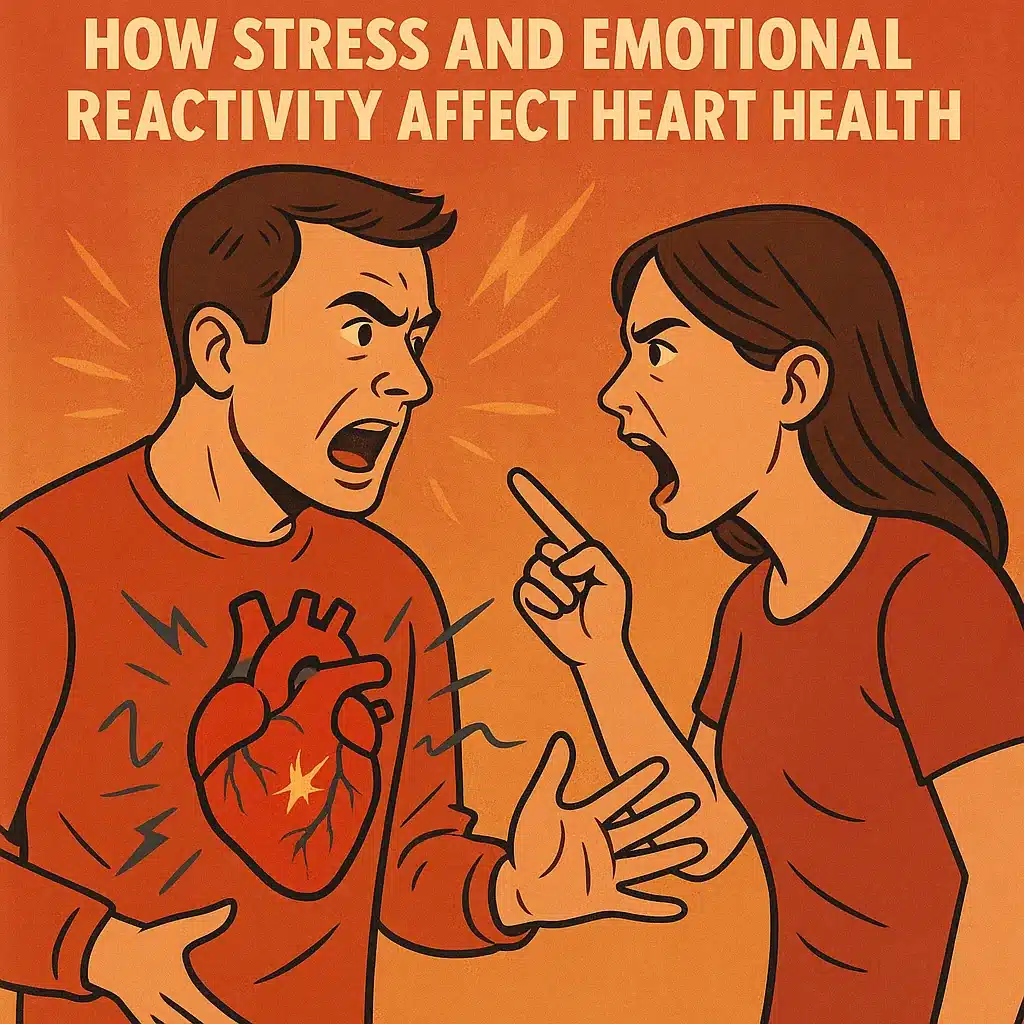
    How stress and emotional reactivity affect heart health. In the middle of an argument, a sharp comment sends your blood pressure soaring. A careless text makes your chest tighten. A mistake at work triggers an instant flood of shame. You don’t think. You just react—fast, emotionally, often regrettably.

    If this sounds familiar, you’re not alone. Reacting in the moment is deeply human—but when it becomes a pattern, it silently reshapes your life and damages your health in ways most people don’t realize.

    Let’s break it down: why you react, how your body and heart are involved, and what’s at stake if you don’t learn to pause and choose differently.


    The Anatomy of a Snap Reaction-How stress and emotional reactivity affect heart health

    Reacting in the moment feels instantaneous. A trigger happens, and boom—you’re already mid-reaction before your rational brain catches up. But what’s really going on inside?

    Step 1: The Trigger

    A “trigger” can be anything your nervous system perceives as a threat—criticism, rejection, loud noises, feeling ignored, not being in control. It may not be dangerous in a life-or-death way, but your body doesn’t make that distinction. The trigger sets off a biological chain reaction.

    Step 2: Stress Response

    Once triggered, your body lights up like an alarm system.

    • Amygdala hijack: The amygdala—your brain’s fear center—takes over. It overrides rational thought to focus purely on survival.
    • Cortisol + adrenaline spike: Your endocrine system floods your bloodstream with stress hormones.
    • Fight-flight-freeze mode: Your muscles tense, breath shortens, and heart rate spikes. You’re primed to defend, flee, or freeze.

    This system is fast and automatic. It’s meant to protect you—but it doesn’t stop to ask whether the threat is real or just old emotional pain being stirred up.


    How This Impacts Your Heart—Literally

    We often talk about emotional pain figuratively hurting the heart. But this isn’t just a metaphor. Reactivity and unhealed emotional stress have direct, measurable effects on your cardiovascular health.

    Here’s how:

    • Heart rate spikes: Even if you don’t physically move, your heart works harder in a reactive state.
    • Blood vessels constrict: Stress hormones make your arteries tighten, reducing oxygen flow and raising blood pressure.
    • Inflammation rises: Chronic stress inflames the lining of your blood vessels, a key risk factor for heart disease.
    • Heart rhythm disrupts: Intense or chronic stress can trigger arrhythmias and palpitations.

    If these reactions happen frequently, or stay unprocessed, your heart pays the price. Over time, emotional reactivity becomes a form of slow physical erosion.


    The Hidden Cost of Never Healing-How stress and emotional reactivity affect heart health

    If you don’t learn to slow down your reactivity and heal the root of it, here’s what the future looks like:

    1. Emotionally:

    You stay stuck in survival mode. You’re easily overwhelmed, defensive, or shut down. Everything feels personal. Instead of responding with clarity, you react from old wounds.

    2. Physically:

    The chronic flood of stress hormones takes a toll. Your risk of high blood pressure, heart disease, insomnia, digestive issues, and chronic fatigue increases.

    3. Relationally:

    When you react instead of respond, you push people away. You may damage trust, escalate conflict, or withdraw to protect yourself. Authentic connection becomes hard to sustain.

    4. Mentally:

    Your brain becomes wired for hypervigilance. You’re always scanning for danger, real or imagined. It’s exhausting—and it prevents inner peace.

    Without healing, you don’t just carry stress. You become stress. And that becomes your identity.


    The Power of the Pause: How to Stop Reacting

    Healing doesn’t mean you stop feeling. It means you learn to pause, notice, and choose—rather than lash out or shut down. Here’s how to build that skill:

    1. Breathe Like It Matters

    When you’re triggered, breath becomes shallow or disappears altogether. This is a fast track to panic.

    Try this:
    Inhale for 4 seconds.
    Hold for 1 second.
    Exhale for 6 seconds.
    Repeat for 1-2 minutes.

    This activates your parasympathetic nervous system (the “rest and digest” system) and tells your body it’s safe. You’re not just calming down—you’re rewriting your stress response.

    2. Name the Feeling

    Labeling your emotional state helps move your brain from the amygdala (panic mode) to the prefrontal cortex (logic and empathy).

    Say to yourself:
    “I feel overwhelmed.”
    “I feel disrespected.”
    “I feel hurt and scared.”

    Naming it gives shape to the storm. And once it has shape, it becomes something you can work with—not something that controls you.

    3. Track the Body Sensation

    The body always speaks first. When you’re reactive, your body holds the signal before your mind makes sense of it.

    Scan yourself:
    Is your jaw clenched?
    Are your fists tight?
    Is your chest tight or fluttering?

    Noticing these shifts builds self-awareness. Over time, it helps you catch the reaction before it hijacks you.

    4. Pause and Choose

    Once you’ve interrupted the pattern, ask yourself:

    • “What outcome do I actually want here?”
    • “If I respond from peace instead of panic, what does that look like?”

    This is the real turning point. You can still hold boundaries, express truth, or walk away—but you do it with clarity, not chaos.


    Healing the Root: Why You React That Way in the First Place

    Reactive patterns don’t start out of nowhere. Most of us learned them young—maybe from growing up in homes where safety was inconsistent, boundaries were unclear, or emotions weren’t handled well.

    If, as a child, you felt:

    • Unsafe
    • Unseen
    • Powerless
    • Unworthy

    …your nervous system learned to be on high alert. It became hypersensitive to rejection, criticism, abandonment, or conflict. That early wiring doesn’t just go away. It follows you into adulthood unless you consciously update it.

    That’s why healing work matters. Therapy, inner child work, somatic practices, and trauma-informed coaching can help you unpack the layers behind your reactions. You don’t just want to manage your triggers. You want to change the soil they grow from.


    Visualizing the Shift

    Let’s recap with a simple flow:

    Old Pattern:

    Trigger → Stress Response → React → Damage (Heart + Relationships + Mind)

    New Pattern:

    Trigger → Pause → Breathe → Name It → Track Body → Choose Response → Healing

    This isn’t perfection. This is progress. And each time you interrupt the pattern, your brain rewires. Your heart gets a break. Your life gets a little freer.


    What’s at Stake—and What’s Possible

    If you keep reacting without healing:

    • Your body breaks down.
    • Your relationships become volatile or distant.
    • Your sense of peace and safety erodes.

    But if you do the work to respond instead of react:

    • You build emotional resilience.
    • You create space for healthy relationships.
    • Your heart—emotionally and physically—gets to rest.

    Healing is hard, yes. But so is living in constant survival mode. One keeps you stuck. The other sets you free.

    So the next time you feel that surge of heat in your chest, that pulse quicken, that urge to explode—pause. Breathe. Feel it. Name it. Choose differently.

    Your heart is listening.

    And it wants to heal.

    [/fusion_text][fusion_text columns=”” column_min_width=”” column_spacing=”” rule_style=”” rule_size=”” rule_color=”” hue=”” saturation=”” lightness=”” alpha=”” user_select=”” awb-switch-editor-focus=”” content_alignment_medium=”” content_alignment_small=”” content_alignment=”center” hide_on_mobile=”small-visibility,medium-visibility,large-visibility” sticky_display=”normal,sticky” class=”” id=”” width_medium=”” width_small=”” width=”” min_width_medium=”” min_width_small=”” min_width=”” max_width_medium=”” max_width_small=”” max_width=”” margin_top=”50px” margin_right=”” margin_bottom=”50px” margin_left=”” fusion_font_family_text_font=”” fusion_font_variant_text_font=”” font_size=”” line_height=”” letter_spacing=”” text_transform=”” text_color=”” animation_type=”” animation_direction=”left” animation_color=”” animation_speed=”0.3″ animation_delay=”0″ animation_offset=”” logics=””]

    How Stress Can Impact Heart Health | Dr. Curnew MD Video

    [/fusion_text][fusion_youtube id=”https://www.youtube.com/watch?v=QMsRzS-dACs” alignment=”center” width=”” height=”” start_time=”” end_time=”” autoplay=”false” mute=”false” loop=”false” controls=”true” api_params=”” title_attribute=”” video_facade=”” thumbnail_size=”auto” video_facade_no_cookie=”on” margin_top=”50px” margin_bottom=”50px” hide_on_mobile=”small-visibility,medium-visibility,large-visibility” class=”” css_id=”” structured_data=”off” video_upload_date=”” video_duration=”” video_title=”” video_desc=”” /][fusion_text columns=”” column_min_width=”” column_spacing=”” rule_style=”” rule_size=”” rule_color=”” hue=”” saturation=”” lightness=”” alpha=”” user_select=”” awb-switch-editor-focus=”” content_alignment_medium=”” content_alignment_small=”” content_alignment=”” hide_on_mobile=”small-visibility,medium-visibility,large-visibility” sticky_display=”normal,sticky” class=”” id=”” width_medium=”” width_small=”” width=”” min_width_medium=”” min_width_small=”” min_width=”” max_width_medium=”” max_width_small=”” max_width=”” margin_top=”50px” margin_right=”” margin_bottom=”” margin_left=”” fusion_font_family_text_font=”” fusion_font_variant_text_font=”” font_size=”” line_height=”” letter_spacing=”” text_transform=”” text_color=”” animation_type=”” animation_direction=”left” animation_color=”” animation_speed=”0.3″ animation_delay=”0″ animation_offset=”” logics=””]


    Related Videos:

    Related Posts:

    How to Stay Grounded When You’re Triggered: A Guide for Everyday Life

    The Ugly in Me: How Triggers Shape the Versions of Ourselves We’d Rather Not See

    Building a Tic-Tac-Toe Game: A Comprehensive Guide with HTML, CSS, and JavaScript

    The Emotional Heart: How Far We Go to Protect It

    Computer Programming Sorting Algorithms

    [/fusion_text][/fusion_builder_column][/fusion_builder_row][/fusion_builder_container]