Approx. read time: 18.5 min.
Post: Connection With Loved Ones After Loss: 7 Ways to Stay Close
 Supplement Timing by Age and Lifestyle (Men & Women)
 Forever, If You’ll Let Me - vampire love romance
Connection With Loved Ones After Loss: 7 Ways to Stay Close
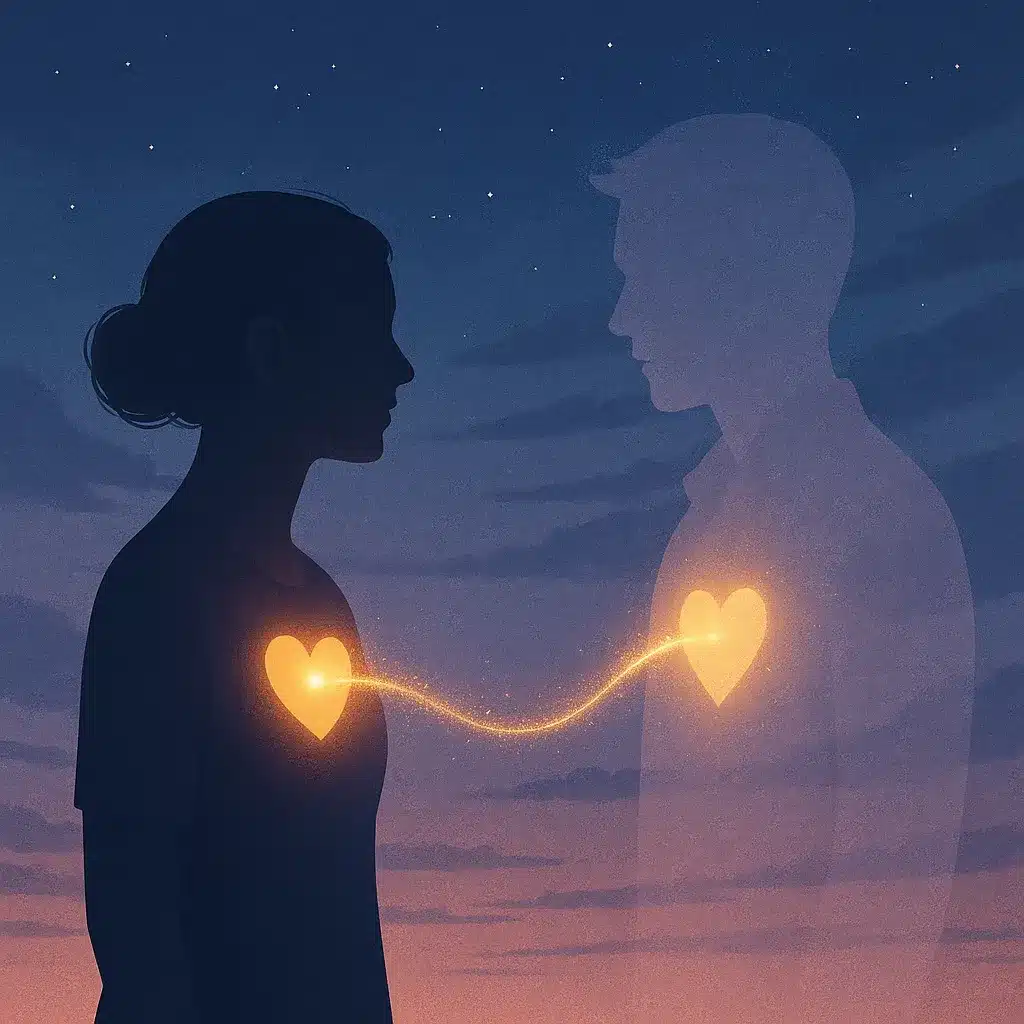
When someone you love dies, the world doesn’t snap back to “normal.” Routines change, the silence feels heavier, and even ordinary days seem to tilt in a new direction. One of the most painful questions is whether your connection with loved ones after loss is gone forever.
Many people, across cultures and belief systems, sense that the bond is not erased. It changes. It becomes less physical, more subtle, and more tied to energy, memory, vibration, and the way that person shaped who you are. Modern grief psychology even has a name for this: continuing bonds—the idea that maintaining a relationship with someone who has died can be a healthy and natural part of grieving.
This article explores that idea in a grounded way. We’ll look at how our personal energy and “vibrations” evolve, how bonds can continue after death, and practical, down-to-earth ways to stay connected while still moving forward with your life.
🌌 What Do We Mean by “Connection With Loved Ones After Loss”?
When we talk about connection with loved ones after loss, we’re not only talking about signs, dreams or mysterious coincidences. Those can matter to some people, but the connection is broader than that.
Connection can show up as:
-
The way you think about them in big decisions.
-
The values you live by because of them.
-
The comfort you feel when remembering their voice or laugh.
-
The quiet sense that they “walk with you” in hard moments.
Grief researchers describe this as maintaining a continuing bond instead of “letting go” or cutting emotional ties. Rather than seeing ongoing connection as a problem, many modern models see it as a normal part of adapting to loss.
You don’t have to choose between healing and staying connected. You can do both.
🔋 The Energy We Carry Through Life
Every person brings a kind of energy into a room. You can call it personality, presence, spirit, or vibration. Whatever word you prefer, you’ve felt it:
-
The friend who calms you just by sitting nearby.
-
The relative who makes everyone laugh, even on bad days.
-
The person whose quiet steadiness makes you feel safe.
This energy isn’t mystical in a forced way. It shows up in:
-
How we speak and listen.
-
What we pay attention to.
-
How we respond to stress.
-
The warmth (or coldness) we offer others.
Over time, life shapes this energy. Joy, trauma, illness, success, heartbreak, recovery—all of these experiences leave a mark. You don’t have the same emotional “tone” you did five years ago, and you won’t have the same tone five years from now.
In that sense, your energy is always in motion.
🌱 Do Our Energies Grow and Evolve?
Many people feel that our energy and vibration grow as we do. Others describe it in more psychological terms: emotional maturity, wisdom, or self-awareness. Underneath the wording, the idea is consistent—your inner world is not fixed.
Growth can look like:
-
Being more patient than you used to be.
-
Catching your reactions before you explode.
-
Understanding your emotions instead of running from them.
-
Staying grounded in situations that used to overwhelm you.
-
Seeing life through a wider, more compassionate lens.
Loss often accelerates this growth. When someone you love dies, your inner world cracks open. Suddenly you’re thinking about meaning, purpose, and mortality in a way you never had to before. Psychologists note that grief can reorder priorities and change identity—sometimes painfully, but also in ways that deepen empathy and resilience.
As you grow, the energy you bring into the world changes, and so does the way you hold the person you’ve lost inside you.
💞 How Bonds Continue After Death
Traditionally, some grief models taught that “healthy” grieving meant eventually detaching from the person who died. Many people found that idea cold and unrealistic. Later research and clinical work led to continuing bonds theory, which suggests that staying connected can be both normal and healthy for many people.
You can see this in everyday life:
-
Someone talks to their late parent while driving or cooking.
-
A friend keeps a small ritual on their partner’s birthday.
-
A child sleeps with a parent’s sweater years after the death.
-
A family keeps telling stories that start with, “Remember when they…”
These aren’t signs of being “stuck” in grief by default. They’re often ways the relationship continues in a different form. The physical part of the bond has ended. The emotional, spiritual, and energetic parts evolve.
Your connection with loved ones after loss becomes:
-
Less about physical presence.
-
More about inner presence and influence.
-
Less about “having” them here.
-
More about carrying them with you.
🧠 Grief, Memory, and the Brain’s Way of Holding On
Grief isn’t only emotional; it’s neurological. Brain imaging studies show that grief activates regions linked to attachment, pain, memory, and emotion regulation.
In simple terms, the brain:
-
Keeps checking for the person, even after they’re gone.
-
Replays memories as it tries to integrate the loss.
-
Slowly rewires itself to make space for a life without their physical presence.
That’s part of why reminders can suddenly sting or suddenly comfort you, even months or years later. Your brain hasn’t “forgotten” that bond. It’s reorganizing how that bond lives inside you.
This is one reason your connection with loved ones after loss can feel very real, even if you don’t view it as spiritual. Your brain is literally built to remember and maintain attachment.
🕊️ Healthy vs Unhealthy Ways of Staying Connected
There’s a crucial difference between a connection that helps you heal and one that keeps you stuck. Most people move, slowly and unevenly, toward a place where memories, rituals, and inner conversations bring comfort more often than crippling pain.
However, grief professionals warn that a small percentage of people develop what’s called prolonged or complicated grief, where intense grief remains overwhelming and disabling for a long time.
Healthy ongoing connection usually includes:
-
Still being able to work, study, or care for yourself (even if it’s hard).
-
Feeling both sadness and moments of peace or even joy.
-
Having some curiosity about your future, not just your past.
-
Using memories to steady you, not only to shatter you.
Red-flag signs that you may need extra support include:
-
Feeling stuck in intense grief for many months without any easing.
-
Being unable to imagine any future without unbearable pain.
-
Avoiding everyone and everything that reminds you of the person.
-
Using alcohol, drugs, or other harmful coping behaviors to numb out.
If any of this sounds like you—especially if you ever feel like you can’t stay safe—it’s important to reach out to a trusted adult, health professional, or local helpline as soon as possible. You are not weak for needing help. Grief is heavy, and support is part of how we carry it.
🕯️ Way #1: Remembering Them on Purpose
Memories hurt at first, but they often become anchors over time. Intentional remembering is one of the simplest ways to nurture connection with loved ones after loss.
You might:
-
Look through photos or videos when you feel ready.
-
Re-read old notes, letters, emails, or messages.
-
Revisit a favorite place you shared.
-
Make a playlist of “their” songs.
The point isn’t to torture yourself. It’s to remind your heart that the relationship was bigger than its ending. It had depth, joy, conflict, growth, and shared life.
Start small if it feels raw. A single photo, a short visit, or a few minutes with a memory can be enough.
💌 Way #2: Talking to Them in Your Own Way
You don’t need to expect a literal reply to talk to someone who has died. People across cultures and religions naturally speak to their loved ones in private moments. Grief research has found that inner conversations and imagined dialogues are a common, normal form of continuing bonds.
You can:
-
Talk to them in your thoughts.
-
Speak out loud when you’re alone.
-
Write letters or journal entries “to” them.
-
Tell them about your day, worries, or small victories.
This isn’t about pretending they’re still physically here. It’s about giving your feelings somewhere to land and allowing your bond to keep influencing your choices and growth.
🌿 Way #3: Carrying Forward What They Taught You
One of the most powerful forms of connection with loved ones after loss is living out something they taught you.
Ask yourself:
-
What values did they live by?
-
How did they try to guide or protect you?
-
What strengths did you see in them that you admired?
You might honour them by:
-
Treating others with the kindness they showed.
-
Taking your education or work seriously because they encouraged it.
-
Setting boundaries or speaking up the way they wished they could.
-
Keeping a tradition they cared about alive.
Their influence doesn’t end when their life does. It continues in your behaviour, choices, and the way you show up for others.
🔁 Way #4: Creating Simple Rituals That Feel Right
Rituals don’t have to be complicated or religious to matter. They just need meaning.
Some gentle rituals include:
-
Lighting a candle for them on certain days.
-
Visiting their favourite park or café once in a while.
-
Cooking their signature meal on a special date.
-
Keeping a small object of theirs in a place of honour.
These acts give your grief and love a regular place to go. They tell your nervous system, “This connection is still real. I’m allowed to remember.”
If a ritual ever starts to feel heavy or pressured instead of comforting, you can change it. The ritual serves you, not the other way around.
🧭 Way #5: Noticing How They Shaped Who You Are
Take a quiet moment and ask:
“Who would I be if this person had never been in my life?”
You might notice that because of them you are:
-
More patient or less judgmental.
-
More confident or more thoughtful.
-
More willing to love, even after being hurt.
-
More aware of what really matters to you.
This reflection turns the relationship into a living influence, not just a past event. Your connection with loved ones after loss becomes part of your identity, values, and way of existing in the world.
🗣️ Way #6: Sharing Stories With People You Trust
Saying their name out loud can be surprisingly healing. Yet many people feel pressure to “stop talking about it” after a while, which can make grief feel lonely and invisible.
You can gently push back against that by:
-
Sharing a favourite story with a friend or family member.
-
Letting people know it helps when they talk about your loved one.
-
Joining a support group, online or in person, where people expect and welcome these conversations.
Telling stories keeps their presence woven into your social world. It also proves to your nervous system that the bond is allowed to exist outside your own head.
🎵 The Role of “Vibration”: Emotional Tone Between Souls
Many spiritual traditions talk about vibration—subtle energy that connects us beyond words. Even if you view this metaphorically, the principle still holds: the emotional tone between two people often matters more than anything they say.
That emotional vibration doesn’t vanish when one of you dies. You may feel it when:
-
A random moment suddenly warms you with their memory.
-
You sense their encouragement when you’re scared.
-
Something small (a song, smell, or object) makes you feel they’re “saying hi.”
-
You feel calmer just by thinking about them the way they were at their best.
Maybe you see this as spiritual connection. Maybe you see it as your mind and body remembering the safety and love they brought you. Either way, it is a real part of your connection with loved ones after loss.
🌉 Why These Ongoing Connections Help Us Heal
Continuing bonds aren’t about refusing reality. They’re about integrating reality in a way that doesn’t destroy you.
Healthy ongoing connection can help you:
-
Make sense of your life story (“They were an important chapter, not the whole book”).
-
Feel less alone in hard decisions (“What would they tell me now?”).
-
Turn pain into purpose (“I’ll honour them by living in a way they believed in”).
-
Soften the sharp edges of grief with meaning.
Research on grief suggests that the way people find meaning in their loss strongly affects how they adjust over time. Continuing bonds—especially those based on love, gratitude, and realistic remembering—are one way people find that meaning.
🌄 Growing Through Grief: Letting Love Change You
You don’t “get over” a major loss. You grow around it.
Over time, your energy often changes in three ways:
-
Depth – You understand suffering more intimately and are often kinder to others in pain.
-
Clarity – You see more clearly what matters and what you no longer have patience for.
-
Capacity – You gradually become more able to hold both sadness and moments of joy in the same day.
As your energy grows, your connection with loved ones after loss can shift from raw ache to quiet strength. The relationship becomes less about clinging to the past and more about carrying them with you into the future.
You might move from:
-
“Why did this happen?” to “How can I honour them?”
-
“I can’t live without them” to “I carry them as I live.”
-
“Everything is broken” to “Life is different, but still worth engaging with.”
The grief doesn’t disappear. Its shape changes.
🔗 The Connection Is Never Really Lost
No matter what you believe about the afterlife, there’s something almost universal in the idea that love continues.
It continues when you:
-
Remember their face and voice.
-
Tell a story that makes others laugh.
-
Practice a habit you learned from them.
-
Make a choice that reflects their values.
-
Feel a sudden wave of love for them years later.
The bond isn’t gone. It’s more transparent to the physical world, but fully alive in your inner world. It’s part of your energy now, part of your vibration, part of your growth. Your connection with loved ones after loss travels with you into every new chapter.
✅ Practical Grounding Tips When Grief Feels Heavy
Sometimes all of this talk about energy and vibration is nice in theory, but you still have days where getting out of bed feels like climbing a mountain. On those days, small, practical steps matter most. Health services and bereavement charities often recommend simple grounding habits while you process grief.
Consider:
-
Basic care: Eat something simple, drink water, and try to sleep regularly.
-
One tiny goal: Choose one small task for the day—shower, walk, message a friend.
-
Talk to someone: A trusted friend, relative, teacher, or counsellor can help carry the weight for a while.
-
Limit numbing: Be cautious about using alcohol, drugs, or risky behaviour to escape the pain. They usually make things harder later.
-
Professional help: If grief feels unmanageable, ask your doctor or a local mental health service about grief support or counselling.
If at any point you feel like you might hurt yourself or truly can’t keep yourself safe, reach out to a trusted adult or local emergency or crisis service immediately. You deserve support, and there are people whose entire job is to help in moments like that.
🧭 Conclusion: Carrying Your Connection With Loved Ones After Loss Forward
Grief isn’t a puzzle you solve; it’s a landscape you learn to walk through. Your connection with loved ones after loss doesn’t have to vanish for you to heal. It can soften, mature, and take new forms—through memory, values, rituals, inner conversations, and the person you become.
You don’t have to force signs or chase spiritual experiences. You don’t have to worry about “doing it right.” If you feel the bond, it’s real to you. If you don’t feel it yet, that’s okay too; connection can appear in quieter ways over time.
Your loved ones helped shape your energy, your vibration, and your growth. That doesn’t disappear. In the quiet moments—when a memory surfaces, when a decision feels guided, when you find strength you didn’t know you had—you may notice that they are still with you in ways that matter.
If you’re struggling, please consider reaching out to a trusted person or a grief support service in your area. You don’t have to carry this alone. And if you’d like more resources or someone to talk to, you can start with the health and wellbeing content and contact options on MiltonMarketing.com’s own support and health pages.
🙋♀️ FAQs: Connection With Loved Ones After Loss
1. Is it normal to still feel connected to someone years after they died?
Yes. Many people feel a strong connection with loved ones after loss for years or even for life. Grief models like continuing bonds theory recognise this as normal, not a sign of failure or weakness.
2. How do I know if my ongoing connection is healthy or keeping me stuck?
Ask yourself whether the connection helps you function, make decisions, and feel supported, or whether it stops you from living at all. If your grief makes daily life almost impossible for a long time, it’s worth talking to a professional.
3. Do I have to believe in the spirit world to stay connected?
Not at all. You can see the connection as spiritual, psychological, or both. Memories, values, habits, and inner conversations are real forms of connection, even if you don’t use spiritual language.
4. Are “signs” from loved ones real or just my imagination?
Different people answer that differently. Some see signs as spiritual communication; others see them as meaningful coincidences. What matters most is whether those moments comfort you and help you live more fully, not the exact explanation.
5. Is talking to someone who died a problem for my mental health?
Talking privately to someone who has died—through thoughts, letters, or quiet conversations—is common and usually healthy. If you feel overwhelmed, frightened, or unable to tell what’s real, that’s a signal to seek professional support.
6. What if I don’t feel any connection and that scares me?
Numbness or emotional “blankness” can be part of grief too. Sometimes your mind protects you by switching off feelings for a while. You’re not failing your loved one. Connection can grow later as you feel safer and more ready.
7. Can my energy or vibration really grow through grief?
Yes. Grief often changes how you see life, other people, and yourself. Over time, many people become more compassionate, more grounded, and more aware of what matters—that’s your energy shifting and maturing.
8. How can I keep their memory alive without feeling sad all the time?
Blend remembering with living. Tell stories, keep a few rituals, or carry forward their values, but also allow yourself to laugh, play, and enjoy new experiences. Joy doesn’t betray them; it’s one way you honour the life they had.
9. Is it okay if I feel closer to them now than when they were alive?
Yes. Some people discover a deeper connection after loss, especially if the relationship was complicated. Grief can deepen understanding and compassion. You’re allowed to grow into a better relationship with their memory.
10. How do I explain this ongoing connection to people who don’t get it?
You don’t have to convince anyone. You can simply say, “I still feel close to them, and remembering them helps me.” The connection is between you and your loved one; other people don’t need to fully understand it for it to be valid.
11. Can staying connected make it harder to start new relationships?
It can if you feel like there’s no room for anyone else. But often, keeping a healthy bond actually makes you more able to love again, because you feel supported by the person you lost instead of feeling you must “replace” them.
12. What if my culture or family doesn’t approve of ongoing rituals?
This can be tricky. You might choose private rituals that don’t create conflict, or you may carefully explain that these habits comfort you. If it still causes tension, focus on internal forms of connection—values, memories, inner conversations—that no one can control.
13. How can I help a friend who is staying very connected to someone who died?
Listen without judging, use the person’s name, and let your friend talk about their bond. If you’re worried they’re not coping, gently suggest grief support or counselling, but don’t rush them to “move on.”
14. Is there a “right” time to let go of objects that remind me of them?
No. There’s no universal schedule. Some people keep cherished objects forever; others give things away sooner. What matters is whether the items comfort you or keep you stuck in constant pain. You can always start small and see how it feels.
15. How can I strengthen my connection with loved ones after loss and still move forward?
Think in terms of integration, not replacement. Let your loved one’s influence guide you as you study, work, build relationships, and try new things. Moving forward doesn’t mean leaving them behind; it means carrying them with you as you grow.
Related Videos:

Related Posts:
Supplement Timing by Age and Lifestyle (Men & Women)
10 Innovative Tips for Oral Health and Longevity
Death of a Parent How Loss Can Teach You 5 ways to Live Fully
Mindset Burnout 5 Gifts of Kindness to Protect Your Soul
11 Hard Truths About Obsession and Blackmail in Relationships
Supplement Timing by Age and Lifestyle (Men & Women)Forever, If You’ll Let Me - vampire love romanceRelated Posts




About the Author: Bernard Aybout (Virii8)