Approx. read time: 9.6 min.
Post: When Work Becomes Harm: Understanding, Surviving, and Recovering from a Toxic Workplace
 Safe Driving Tips: 21 Smart Ways to Stay Safer Anywhere
 Magna EV strategy: Canada’s 2026 survival plan for the EV era
Toxic Workplace Mental Health: 12 Real Psychological Impacts
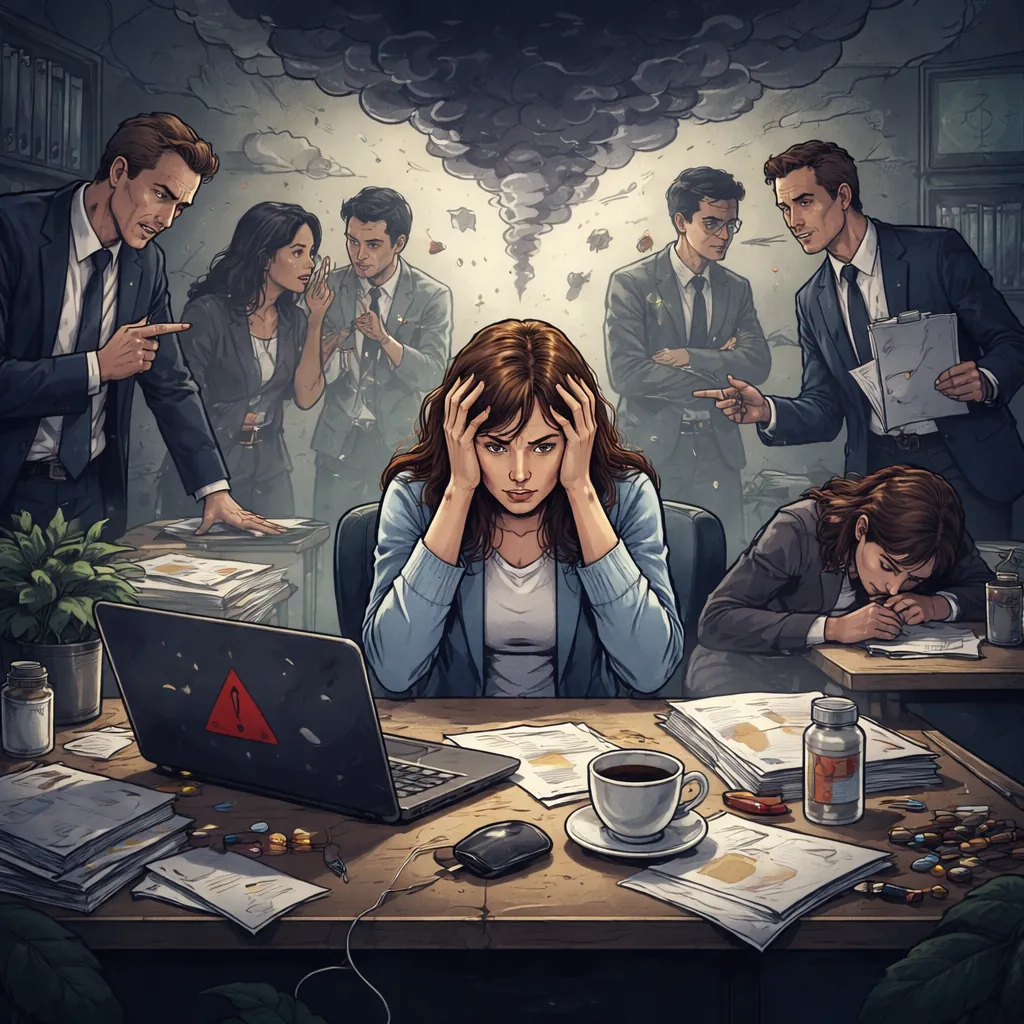
Toxic workplace mental health harm is far more common than most organizations are willing to admit. While stress is expected in any job, there is a clear line between normal workplace pressure and an environment that systematically damages a person’s psychological health, safety, and sense of self.
Most people expect work to involve deadlines, accountability, and occasional conflict. What is not normal is leaving work feeling humiliated, unsafe, anxious, or slowly psychologically worn down by the very place meant to provide stability and purpose.
Toxic workplaces are not simply “bad jobs.” They are environments that cause measurable toxic workplace environment & mental health damage, often quietly, often over time, and often while presenting themselves as professional, compliant, or “high performance.”
This article exists for people who have lived through toxic workplace mental health harm — and for those who are still trapped inside it.
🧠 What Toxic Workplace Mental Health Harm Really Is (Not a Buzzword)
A toxic workplace is not defined by a single argument or a bad day. Toxic workplace mental health injury emerges through patterns of behavior that go uncorrected, normalized, or actively protected by leadership.
In these environments, harmful behavior becomes policy through silence.
Common defining traits include:
- Power without accountability
- Fear-based management
- Retaliation against reporting
- Chronic psychological stress
Over time, toxic workplace mental health effects compound in ways that are often invisible to outsiders but devastating to those inside.
🔑 Leadership Based on Loyalty, Not Competence
One of the strongest predictors of toxic workplace mental health harm is leadership that is selected based on loyalty rather than competence.
This occurs when management roles are filled due to:
- Personal relationships
- Family connections
- Social alliances
- Informal power dynamics
instead of training, qualifications, or suitability for leadership.
Unqualified leaders often compensate by using:
- Intimidation instead of guidance
- Public criticism instead of coaching
- Discipline instead of problem-solving
- Control instead of trust
This leadership style creates fear, not productivity.
Fear is one of the fastest accelerants of toxic workplace mental health decline.
🎭 Bullying Disguised as “Performance Management”
In toxic workplace mental health cases, bullying is frequently reframed as performance management.
This can appear as:
- Constant negative feedback without solutions
- Criticism delivered publicly, support withheld privately
- Selective enforcement of rules
- Sudden disciplinary paperwork contradicting prior evaluations
- Pressure to sign documents without investigation
This is not accountability.
It is coercion, and it directly contributes to toxic workplace mental health injury.
🧱 Mobbing, Humiliation, and Divide-and-Conquer Tactics
In many toxic workplace mental health scenarios, one worker becomes the designated “problem.”
Patterns include:
- A single employee being blamed for systemic issues
- Colleagues encouraged — subtly or directly — to isolate them
- New hires elevated to undermine experienced workers
- Conflicting instructions used to provoke mistakes
These tactics isolate the target while discouraging witnesses from speaking up.
Silence becomes self-preservation.
⚠️ Unsafe Conditions and Psychological Safety Failures
Toxic workplace mental health damage accelerates when physical or psychological safety concerns are ignored.
Red flags include safety issues being:
- Minimized
- Dismissed as inconvenient
- Labeled too expensive
- Framed as exaggeration
When workers are denied reasonable protections, the organization has already failed its most basic duty of care.
🧠 The Psychological Impact of Toxic Workplace Mental Health Damage
Toxic workplace mental health harm does not stop at morale. It affects the nervous system, cognition, emotional regulation, and physical health.
This damage often continues long after the worker leaves the environment.
🔔 Chronic Anxiety and Hypervigilance
People experiencing toxic workplace mental health harm commonly report:
- Persistent fear of discipline or retaliation
- Being “on edge” even at home
- Sleep disruption
- Replaying workplace interactions repeatedly
The nervous system remains in survival mode.
This is not weakness — it is a physiological stress response.
🌑 Depression, Shame, and Identity Erosion
Over time, toxic workplace mental health environments can produce:
- Emotional numbness or hopelessness
- Deep shame over circumstances beyond one’s control
- Loss of professional identity
- A belief that competence has disappeared
This erosion is especially severe for people who once took pride in their work.
🧠 Intrusive Thoughts and Suicidal Ideation in Toxic Workplace Mental Health
In severe, prolonged toxic workplace mental health cases — especially when:
- Reporting fails
- Retaliation escalates
- Financial pressure exists
- The person feels trapped
individuals may experience intrusive thoughts of self-harm or of not wanting to exist.
These thoughts are signals of overwhelm, not moral failure or weakness.
They indicate that the mind is attempting to escape sustained psychological threat.
🍺 Substance Use as Survival, Not Recreation
Many people coping with toxic workplace mental health harm turn to:
- Alcohol
- Cannabis
- Misuse of prescribed medication
This is not recreational use.
It is self-medication aimed at sleeping, numbing fear, or surviving another day.
Left unaddressed, this coping strategy often escalates alongside workplace stress.
🚑 Burnout, Collapse, and Medical Crisis
Eventually, the body enforces a limit.
Toxic workplace mental health outcomes frequently culminate in:
- Panic attacks
- Hospital visits
- Medical leave
- Emotional collapse
At this stage, remaining in the environment becomes dangerous.
🏢 Why Reporting Often Worsens Toxic Workplace Mental Health
Many workers believe reporting will stop the behavior.
In toxic systems, reporting often intensifies it.
Retaliation commonly includes:
- Increased scrutiny
- Documentation campaigns
- Isolation from meetings
- Escalated discipline
This does not mean reporting was wrong.
It means the system was protecting itself.
🛡️ How to Protect Yourself in a Toxic Workplace Mental Health Situation
📝 Document Everything
Keep factual records of:
- Dates, times, locations
- Exact language used
- Witnesses
- Messages, schedules, photos
- Performance reviews contradicting discipline
Let patterns speak for themselves.
🧊 Avoid Emotional Confrontation
Toxic workplace mental health systems weaponize emotional reactions.
Protect yourself by:
- Staying calm
- Requesting written clarification
- Asking for evidence
- Taking contemporaneous notes
📄 Do Not Rely on Verbal Promises
If it is not written, it did not happen.
Always request written:
- Instructions
- Feedback
- Reasons for decisions
This often exposes bad faith.
🏠 When Toxic Workplace Mental Health Follows You Home
Toxic workplace mental health harm does not remain at work.
It affects sleep, relationships, parenting, physical health, and safety perception.
Declining health is not weakness.
It is the body responding to sustained harm.
🔇 Silence, Settlements, and Pressure to “Move On”
Organizations facing exposure may attempt:
- Quiet exits
- Silence-based settlements
- Forced resignations
- Legal intimidation
This is damage control, not accountability.
Never agree to silence without independent advice.
🌱 Recovery After Toxic Workplace Mental Health Harm
Leaving a toxic workplace mental health environment often brings grief, anger, fear, and identity loss.
Recovery involves:
- Reframing survival as strength
- Rebuilding confidence in safe environments
- Sharing experiences responsibly
- Supporting others when ready
Healing is possible.
📣 Final Truths About Toxic Workplace Mental Health
- Toxic workplace mental health harm destroys lives, not just careers
- Competent workers are often targeted
- Psychological injury from work is real
- Needing help is not weakness
- You are not imagining what happened
If you recognize yourself here: you are not alone.
❓ Frequently Asked Questions About Toxic Workplace Mental Health
❓ Can toxic workplace mental health damage cause depression?
Yes. Prolonged psychological stress is a known risk factor.
❓ Is suicidal ideation linked to toxic workplace mental health?
Yes. Chronic exposure can overwhelm coping systems.
❓ Why does HR often fail in toxic workplaces?
HR protects the organization, not employees.
❓ Is substance use common in toxic workplace mental health cases?
Yes. Many people self-medicate to cope.
❓ Does leaving mean failure?
No. Leaving is often survival.
❓ Can recovery take years?
Yes, and that is normal.
📌 A Note to Readers
If this article brings up distressing thoughts, consider reaching out to a trusted person or a mental-health professional. Support is a strength.
🆘 Mental Health & Crisis Support Resources
(Halton • Peel • GTA • Canada-Wide)
If you or someone you know is struggling with suicidal thoughts, intrusive thoughts, overwhelming stress, or emotional distress, confidential help is available. You do not need to be in immediate danger to reach out.
🇨🇦 Canada-Wide Support
- 📞 Call or text 988 (24/7, free, confidential)
🌐 https://988.ca
Immediate support for suicide crisis, severe distress, or intrusive thoughts. - 📞 1-833-456-4566 (24/7)
💬 Text 45645 (evenings)
🌐 https://talksuicide.ca
National suicide prevention and emotional support services. - 📞 1-800-668-6868
💬 Text CONNECT to 686868
🌐 https://kidshelpphone.ca
Support for youth and young adults dealing with anxiety, depression, or intrusive thoughts.
🏙️ Greater Toronto Area (GTA)
- (DCGT)
📞 416-408-4357
🌐 https://www.dcgt.org
Network of local distress centres across Toronto and the GTA.
🟦 Halton Region (Milton, Oakville, Burlington, Halton Hills)
- 📞 905-849-4541 (24/7)
🌐 https://haltondistressline.ca
Crisis and emotional support for residents of Halton Region.
🟥 Peel Region (Mississauga, Brampton, Caledon)
- 📞 905-278-9036
🌐 https://www.distresslinepeel.org
Confidential support for emotional distress, anxiety, and suicidal thoughts.
🏥 Emergency Support
If someone is in immediate danger, call 911 or go to the nearest emergency department.
💬 A Gentle Reminder for Readers
Experiencing intrusive thoughts, emotional overwhelm, or thoughts of self-harm does not mean something is “wrong” with you. These experiences are signals that support is needed — not signs of failure.
Reaching out for help is an act of strength.
Call to Action, Call to arms – You Don’t Have to Go Through This Alone
If you need support, resources, legal, or guidance:
A Personal Note
I did not write this article as a theory, a study, or an outsider looking in. I lived this. I spent approximately 20 years employed (Magna International – Cosma Division – Karmax Heavy Stamping.) in a workplace where these conditions slowly took hold, and over time, the environment became toxic, unsafe, and psychologically damaging. What began as a career I was proud of turned into an experience that affected my health, my family, and my sense of self. I stayed longer than I should have—not out of weakness, but out of loyalty, responsibility, and the belief that things could improve.
Everything described here comes directly from my own lived experience at my former employer (Magna International – Cosma Division – Karmax Heavy Stamping.) These words come from my heart, my body, my mind, and my soul—from what prolonged workplace toxicity does to a person when it goes unchecked and unaddressed. I am sharing this not to seek sympathy or revenge, but to give language to what so many people struggle to name, and to let others know they are not alone, not broken, and not imagining what they are going through.
📚 Sources & References
- World Health Organization – Mental Health at Work
https://www.who.int/teams/mental-health-and-substance-use/promotion-prevention/mental-health-at-work - American Psychological Association – Workplace Mental Health and Stress
https://www.apa.org/monitor/2023/04/workplace-mental-health - Centers for Disease Control and Prevention (CDC / NIOSH) – Stress at Work
https://www.cdc.gov/niosh/topics/stress/default.html - National Institute for Occupational Safety and Health (NIOSH) – Work Organization and Stress-Related Disorders
https://www.cdc.gov/niosh/topics/workstress/ - Canadian Centre for Occupational Health and Safety (CCOHS) – Mental Health in the Workplace
https://www.ccohs.ca/oshanswers/psychosocial/mental_health.html - Harvard T.H. Chan School of Public Health – Workplace Stress and Health Outcomes
https://www.hsph.harvard.edu/news/features/workplace-stress/ - My personal journal from my 20 year tenure at Magna International – Cosma Division – Karmax Heavy Stamping.
Why these sources are solid:
- ✔ Government (.gov) and global health authorities
- ✔ Academic and medical institutions (.edu)
- ✔ Directly support claims about toxic workplace mental health, stress, burnout, and psychological harm
- ✔ Suitable for public, legal-adjacent, and educational publishing
 Safe Driving Tips: 21 Smart Ways to Stay Safer AnywhereMagna EV strategy: Canada’s 2026 survival plan for the EV era
Related Posts





About the Author: Bernard Aybout (Virii8)