Approx. read time: 17.4 min.
Post: 11 Hard Truths About Obsession and Blackmail in Relationships
Obsession and Blackmail in Relationships: When Love Controls
Relationships don’t usually start with threats. They start with butterflies, late-night talks, and “I can’t believe I found you.” But sometimes, slowly and quietly, that warmth twists into something darker.
Intensity replaces safety.
Control replaces respect.
Fear replaces choice.
That’s what happens when obsession and blackmail in relationships take over. You end up in a bond held together not by love, but by pressure, guilt, and insecurity.
If you’re reading this and thinking, “That feels uncomfortably familiar,” you’re not broken. You’re not stupid. You’re not beyond repair. You might just be stuck in a dynamic that was never built to keep you safe.
This guide will walk you through:
-
What obsession and emotional blackmail actually look like
-
How both partners’ insecurities keep the cycle going
-
The two real options you always have: restructure or leave
-
How to rebuild yourself afterward
Throughout this, keep one truth in mind: You are allowed to choose peace over drama.
Quick safety note: If your partner is threatening to hurt you or themselves, or you feel unsafe, contact local emergency services or a crisis line in your area immediately. If you’re in Canada, federal resources can help you find shelters and support services near you.
💔 What Obsession and Blackmail in Relationships Really Look Like
When people hear “toxic relationship,” they picture shouting, broken dishes, or public scenes. But obsession and blackmail in relationships usually grow in silence.
It often starts with things that sound caring:
-
“Text me when you get home so I know you’re safe.”
-
“I just worry about you, so I checked your phone.”
-
“I miss you so much, I need to know where you are all the time.”
Then it slides into:
-
“If you loved me, you’d answer immediately.”
-
“If you talk to them again, we’re done.”
-
“If you leave me, I’ll hurt myself.”
-
“If you tell anyone what’s happening, I’ll ruin you.”
That’s not drama. That’s emotional blackmail — using fear, guilt, or obligation to control you.
Researchers and clinicians describe emotional blackmail as a form of psychological abuse. It can leave people in a state of constant guilt and fear, and is linked to anxiety, depression, low self-esteem, and a damaged sense of identity.
In simple terms:
-
Obsession = “I must have you; I can’t tolerate any distance or uncertainty.”
-
Blackmail = “Do what I want, or I’ll make you pay emotionally, socially, or physically.”
This is not passion. It’s control dressed up as love.
🧠 How Control Sneaks In Disguised as Love
Control rarely walks in and says, “Hi, I’m abuse.” It arrives in costume.
Common disguises:
-
“I just care too much.”
They use their anxiety or intensity to justify constant monitoring or demands. -
“I’ve been hurt before.”
Their past becomes the excuse for interrogations, jealousy, and punishing you for tiny things. -
“I’m just very honest.”
“Honesty” turns into criticism, humiliation, or blaming you for their reactions. -
“I can’t live without you.”
What sounds romantic becomes a lever: “If you leave, I’ll fall apart, and it’ll be your fault.”
Emotional blackmail works because it targets your empathy and your fear of being the “bad one.”
You may start to think:
-
“Maybe I am overreacting.”
-
“They just love me a lot.”
-
“If I try harder, it’ll go back to how it was at the start.”
That’s how people end up staying in situations they would never accept for someone they love.
🚩 Signs You’re in Survival Mode, Not Love
If obsession and blackmail in relationships are present, your nervous system usually knows before your brain admits it.
Common signs you’re in survival mode:
-
You feel watched or monitored — messages, social media, location, calls.
-
Setting even small boundaries (alone time, friends, hobbies) leads to panic, anger, or threats.
-
You feel anxious around your partner more often than calm.
-
You walk on eggshells, constantly scanning their mood and rehearsing what to say.
-
They bring up past mistakes to control your current choices.
-
Apologies feel like hitting reset — things are good for a bit, then the same pattern returns.
-
You feel smaller, guilty, or ashamed, even when you did nothing wrong.
This isn’t healthy conflict. It’s a pattern of emotional abuse and manipulation, even if there are no bruises or screaming matches.
If your body feels like it’s always bracing for the next blow-up, it’s not “just a rough patch.” It’s survival mode.
😰 When Both Partners Are Insecure: The Double-Trigger Effect
Here’s the part nobody likes to admit: most toxic dynamics are powered by two people’s insecurities colliding. That doesn’t mean both are equally harmful or equally responsible for abuse, but it does mean both are hurting.
When both partners are insecure, obsession and blackmail in relationships become a loop.
🧍♀️ Your Insecurity: Why You Stay
Your insecurity might sound like:
-
“I’m too much / not enough; nobody else will want me.”
-
“If I leave, I’ll be alone forever.”
-
“If I set boundaries, they’ll hate me or abandon me.”
-
“Maybe I’m overreacting; I should be more understanding.”
So you:
-
Tolerate behavior that breaks your values
-
Apologize when you’re the one hurt
-
Let boundaries slide every time they protest
-
Cling to the good days like a life raft
You’re not “weak.” You’re scared, attached, and exhausted.
🧍♂️ Their Insecurity: Why They Control
Their insecurity might sound like:
-
“If I don’t control things, I’ll lose everything.”
-
“If you pull away, it means I’m worthless.”
-
“If you have a life without me, I’m not important.”
So they:
-
Check, monitor, and interrogate
-
Threaten, guilt-trip, or sulk to get their way
-
Use your fears or secrets as leverage
-
Confuse “possessing you” with “feeling safe”
Obsessive preoccupation with a partner — their flaws, loyalty, or attention — is linked in research to distressed, unstable relationships and reduced relationship satisfaction.
🔁 The Loop You Both Get Stuck In
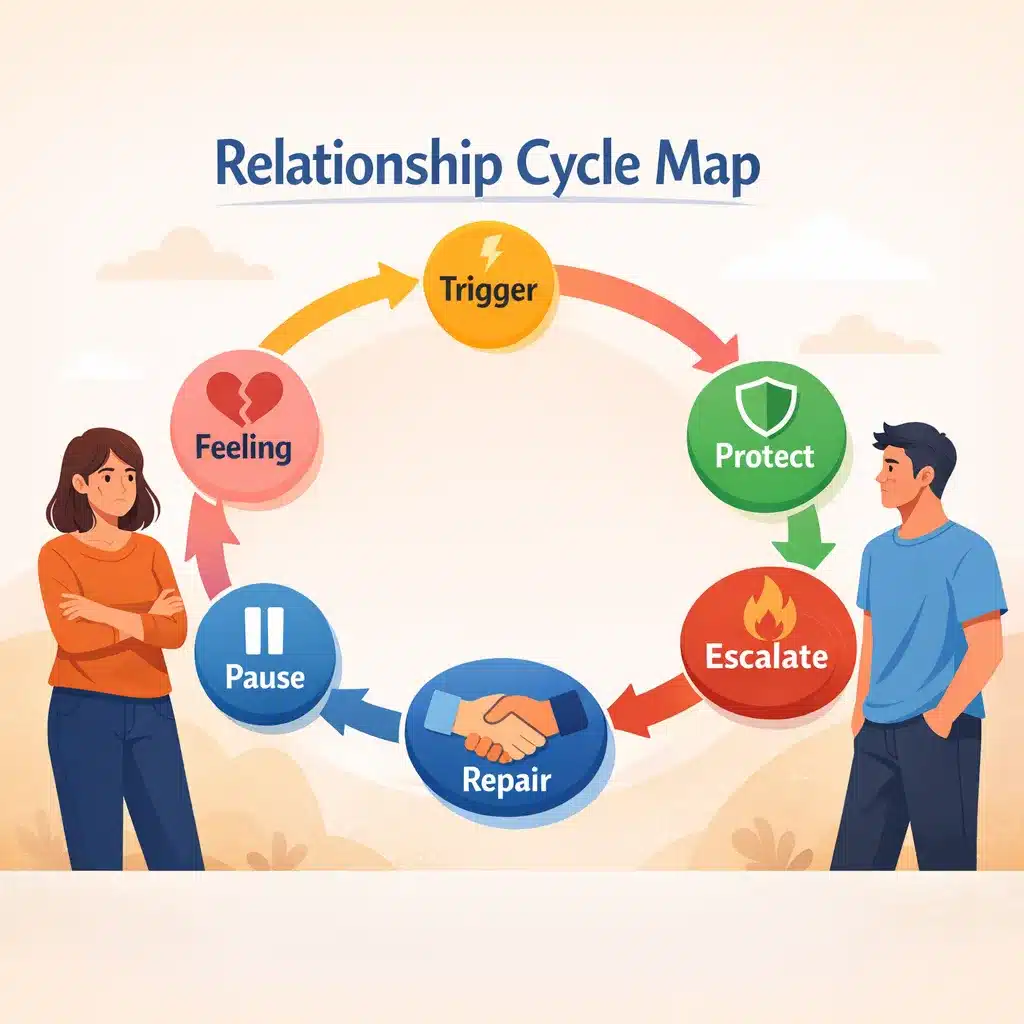
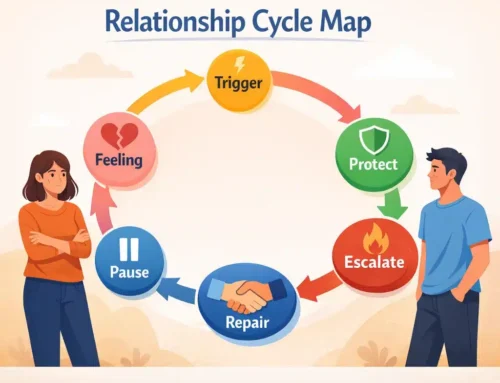
The cycle looks like this:
-
They act out of fear (controlling, monitoring, threatening).
-
You react out of fear (people pleasing, freezing, fawning, or exploding).
-
Issues get buried, not solved.
-
Both of you feel more insecure, not less.
-
The next conflict hits harder.
Insecurity doesn’t excuse emotional blackmail. But it explains why obsession and blackmail in relationships often repeat the same script for years.
🪞 Naming the Truth Without Demonizing Yourself (or Them)
You can’t heal what you refuse to name.
Calling it “just intense” or “a toxic phase” is like calling a house fire “a strong candle.” It keeps you stuck.
More accurate language:
-
“This relationship uses emotional blackmail to keep me in line.”
-
“I’m being controlled with fear, guilt, and threats.”
-
“I feel unsafe saying no.”
-
“We are both insecure, but one of us is using that as a weapon.”
You don’t have to label your partner a monster to admit that the behavior is harmful. Emotional abuse and emotional blackmail are abuse, even if the person “has a good heart sometimes.”
Naming the truth:
-
Stops you from gaslighting yourself
-
Helps you see patterns instead of isolated events
-
Clarifies what needs to change — or why you may need to leave
🛣️ Your Two Core Options: Restructure or Leave
No matter how stuck you feel, your options boil down to two routes:
-
Restructure the relationship so it becomes safe and respectful
-
Leave the relationship so you can rebuild in safety elsewhere
Both are hard. Both are scary.
Only one question matters: Which option protects your long-term safety, dignity, and future?
Let’s walk through them honestly.
🔧 Option 1 – Restructuring the Relationship Safely
Restructuring is only possible if both people are willing to change, not just talk about change.
For obsession and blackmail in relationships to stop, you need at least these conditions:
1. 🚫 A Full Stop on Manipulation
-
No more threats (“I’ll hurt myself,” “I’ll ruin your life,” “I’ll take the kids”).
-
No more guilt campaigns (“You owe me,” “After everything I did for you”).
-
No more keeping score or weaponizing secrets.
They don’t get to say “I’m working on it” while still doing it.
2. 🧱 Clear Boundaries That Are Actually Respected
Boundaries are not punishment; they’re rules for what is and isn’t okay.
Examples:
-
“You don’t get to check my phone or email.”
-
“If you yell or insult me, I will leave the conversation.”
-
“I will keep seeing my friends and family.”
If your boundaries only “work” when they’re terrified you’ll leave, they’re not respecting you; they’re reacting to fear.
3. 📝 Real Accountability on Both Sides
Accountability sounds like:
-
“Yes, I did that. It was wrong. I see how it hurt you.”
-
“Here is what I’m doing differently now.”
-
“You don’t have to earn basic respect from me.”
No “I’m sorry but you made me…”
No “If you hadn’t…”
No “You’re too sensitive.”
4. 🐢 Slowing the Relationship Way Down
Rebuilding trust is boring by design. Less drama, more consistency.
-
Fewer late-night crisis talks
-
More calm, scheduled conversations
-
More time alone and with friends
-
Less love bombing, more steady behavior
If someone refuses to slow down, they’re choosing intensity over healing.
5. 🧑⚕️ Outside Support (Therapy, Groups, Coaching)
Trying to fix obsession and blackmail in relationships on your own is like fixing a plane while flying it.
Consider:
-
Individual therapy (to work on your insecurity and patterns)
-
Couples therapy (if it’s safe to attend and not being used to manipulate)
-
Support groups or hotlines for people in abusive or high-control relationships
If both of you commit to these steps consistently, the relationship can sometimes become healthier than it ever was.
If not, restructuring is just a prettier word for staying stuck.
🧐 Questions to Test If Restructuring Is Realistic
Be brutally honest with yourself:
-
When you set a boundary, do they respect it or punish you?
-
Do they change only when they’re scared of losing you, then slip back?
-
Do they take responsibility without you prompting them, or always have an excuse?
-
Do you feel safer and calmer over time, or still tense and on guard?
-
Does this relationship support your best self — or your most anxious self?
If most of those answers are negative, obsession and blackmail in relationships like this rarely improve, no matter how much you “try.”
🚪 Option 2 – Leaving the Relationship Without Losing Yourself
Leaving isn’t dramatic. It’s strategic.
It’s not “giving up on love.”
It’s “stopping the damage so you have a future worth living.”
Leaving often becomes the healthier path when:
-
Blackmail or emotional threats keep happening.
-
You’re afraid of their reaction to basic honesty.
-
You feel drained, monitored, or controlled more than loved.
-
You hide parts of yourself to keep the peace.
-
Your needs are always secondary to their insecurity.
-
You’re losing your identity, confidence, or will to try.
Professionals warn that abusers often escalate when they sense a partner may leave, so safety planning is essential.
1. 📋 Plan Quietly and Safely
-
Don’t announce “I’m leaving” until you have a plan.
-
Hide or protect important documents, IDs, and money.
-
Think through where you’ll go and how you’ll stay safe.
Use safety planning guides from domestic violence organizations; many offer checklists and templates.
2. 🧑🤝🧑 Tell Someone You Trust
Control thrives in isolation.
-
Tell a trusted friend, family member, or therapist what’s been happening.
-
Agree on a code word or phrase you can use if you’re in danger.
-
If you’re in Canada, use government and nonprofit resources that list shelter and hotline options nationwide.
3. 🚫 Limit or Cut Contact
Once you’re out:
-
Block or mute where you reasonably can.
-
Avoid long text arguments — they’re designed to pull you back in.
-
If you must stay in contact (children, legal matters), use short, factual, neutral messages.
4. 🌪️ Expect Emotional Withdrawal
Toxic bonds can feel like addiction. When you leave, you may feel:
-
Empty or numb
-
Guilty for “hurting” them
-
Tempted to go back “just to check on them”
That’s withdrawal, not proof that you made a mistake.
This is a good time to lean on support, routines, and grounding activities.
🧱 Rebuilding Your Sense of Self After Control
Whether you restructure or leave, you’ll have to rebuild your identity after obsession and blackmail in relationships.
Start with small, concrete steps.
🔎 Reconnect With Who You Are
Ask yourself:
-
What did I enjoy before this relationship?
-
What kind of friend/partner/parent do I want to be?
-
What values did I compromise to keep this going?
Write it down. This becomes your “north star.”
🧩 Map Your Insecurity Patterns
Gently ask:
-
What fears made me tolerate behavior that hurt me?
-
Where did I learn that love = sacrifice or pain?
-
Do I believe I deserve calm, respectful love — or do I feel I have to earn it?
Understanding your patterns helps you choose different partners and different reactions in future relationships.
🧘 Learn Emotional Independence
Emotional independence is not “never needing anyone.” It’s:
-
Knowing how to regulate your emotions without drama
-
Making decisions that are right for you, not just less upsetting for others
-
Having a support network beyond your romantic partner
If you need help here, therapy or support groups can be powerful.
🧼 How to Stop Confusing Intensity With Love
This is a big one.
Many people raised around chaos or emotional instability unconsciously equate:
-
Calm with “boring”
-
Chaos with “passionate”
-
Jealousy with “caring”
-
Control with “commitment”
Healthy love, especially after obsession and blackmail in relationships, will feel:
-
Steady, not constantly up and down
-
Safe, even when you disagree
-
Respectful of your time, space, and individuality
-
Honest, without weaponizing vulnerabilities
If a relationship feels like a cliffhanger episode every single day, that’s not chemistry; that’s nervous system overload.
🤝 Getting Support: Friends, Therapy, and Crisis Help
You do not have to figure this out by yourself.
Options include:
-
Friends and family who believe you and don’t minimize what’s happening
-
Mental health professionals experienced in trauma, codependency, or abuse
-
Domestic violence hotlines and shelters if you’re facing active threats or control
-
Online or local support groups for survivors of emotional abuse
If your partner threatens self-harm as blackmail, it is serious — but it’s still not your job to fix them. You can:
-
Call emergency services or a crisis line for them
-
Inform a trusted friend or family member of theirs
-
Maintain your boundaries while still acting compassionately
You are not responsible for what they choose to do with their feelings.
📏 If You Decide to Stay: Non-Negotiable Safety Rules
If you choose to try to repair the relationship:
-
No threats. Any return of emotional blackmail is a hard stop.
-
No monitoring. They do not get access to your messages, passwords, or location as a condition of love.
-
No isolation. You keep your friends, family, hobbies, and private time.
-
Professional help is mandatory, not optional, for them and ideally for you.
-
Clear exit plan. You know what lines, if crossed again, mean you are done.
If they resist these rules, they’re not choosing you, they’re choosing control.
🏃 If You Decide to Go: First 30 Days After Leaving
Those first weeks can feel rough. Here’s a simple 30-day focus:
-
Week 1: Safety and logistics
-
Secure housing, money, documents, and communication.
-
Block or limit contact where safe.
-
-
Week 2: Nervous system reset
-
Sleep, food, hydration, and movement.
-
Reduce doom-scrolling and stalking their social media.
-
-
Week 3: Reality check
-
Write down specific incidents that hurt you.
-
Re-read when nostalgia or guilt hits.
-
-
Week 4: Future focus
-
Tiny goals: walks, hobbies, career steps, small joys.
-
Consider therapy, coaching, or support groups if accessible.
-
🌅 Moving Forward: You’re Allowed to Choose Peace
Let’s be clear:
-
You’re not broken for wanting love deeply.
-
You’re not weak for getting pulled into obsession and blackmail in relationships.
-
You’re not doomed to repeat this story forever.
You are responsible for what you do next.
You can:
-
Restructure the relationship — if and only if there is real accountability, safety, and change.
-
Walk away — not as a failure, but as someone choosing a future over a loop.
You deserve relationships where:
-
“No” is respected
-
Your phone is your own
-
Your friends and family are still in your life
-
Your worst fears are not weapons used against you
You’re allowed to choose calm, respect, and safety — even if drama is all you’ve ever known.
❓ FAQs About Obsession and Blackmail in Relationships
❓ What is obsession and blackmail in relationships, in simple terms?
Obsession and blackmail in relationships happen when one partner becomes fixated on keeping control and uses fear, guilt, or threats to stop the other from leaving, setting boundaries, or saying no. It’s not just “clingy” — it’s a form of emotional abuse.
❓ Is emotional blackmail the same as emotional abuse?
Emotional blackmail is one type of emotional abuse. Emotional abuse includes constant criticism, humiliation, threats, monitoring, jealousy, and manipulation intended to control or frighten you.
❓ Can obsession and blackmail in relationships ever turn into something healthy?
Only if:
-
The abusive behavior fully stops
-
The controlling partner takes real responsibility
-
Both people do serious personal work
-
You feel consistently safer over time
Even then, some relationships are too damaged to repair. The goal is your safety, not “saving the story.”
❓ How do I know if I’m the one doing emotional blackmail?
Ask yourself:
-
Do I threaten to hurt myself or them if I don’t get my way?
-
Do I guilt-trip them for having boundaries or friends?
-
Do I use their secrets or past against them?
If yes, that’s emotional blackmail. The good news: you can learn different ways to cope with fear and insecurity. Therapy helps.
❓ Why do I miss them so much if the relationship was toxic?
Because your nervous system got wired to the cycle of threat → relief → threat → relief. That rollercoaster can feel like addiction. Missing them doesn’t mean the relationship was good; it means it was intense.
❓ What if they say they’ll change and start therapy — should I stay?
Words are cheap. Look at:
-
Do they go to therapy and stick with it?
-
Does their behavior actually change over months, not days?
-
Do you feel safer and less controlled?
If not, “I’ll change” is just another manipulation.
❓ Is it my fault for staying so long?
No. You stayed because you’re human: attached, hopeful, scared, and maybe trauma-trained to normalize emotional chaos. Responsibility for abuse always rests with the person choosing abusive behavior. Your job now is to choose what happens next.
❓ How do I talk to friends or family who don’t understand?
You can say:
“Things weren’t okay. There was emotional blackmail and control. I felt scared to say no. I’m focusing on healing, not debating whose side anyone is on.”
You don’t owe anyone your full trauma file.
❓ What if we share kids or finances and I can’t just leave?
You still deserve safety. Talk to:
-
A legal clinic or legal aid service about your options
-
A domestic violence organization about safety planning
-
A financial counselor or trusted advisor about separating money safely
Leaving doesn’t always mean leaving overnight — sometimes it’s a slow, strategic exit.
❓ How can AI or digital tools actually help me here?
AI tools can help you:
-
Journal and reflect on patterns
-
Draft boundary scripts and practice hard conversations
-
Organize a safety or exit plan
-
Access psychoeducation resources 24/7
They don’t replace therapists or lawyers, but they can reduce the mental load while you rebuild.
❓ How long does it take to heal from obsession and blackmail in relationships?
It varies. Some people feel dramatically better within months; others take years. Healing is less about a deadline and more about direction:
-
Less self-blame
-
More stable boundaries
-
Calmer relationships
-
Clearer sense of self
If those are improving, you’re healing — even if you still have rough days.
📚 Sources & References
-
Verywell Mind – How to Recognize Emotional Blackmail and Protect Yourself Verywell Mind
-
Medical News Today – Emotional blackmail: Definition, how it works, and more Medical News Today
-
PositivePsychology.com – What Is Emotional Blackmail? PositivePsychology.com
-
Canadian Women’s Foundation – Signs of Emotional Abuse Canadian Women’s Foundation
-
The Hotline – What Is Emotional Abuse? & After You Leave The Hotline+1
-
StopRelationshipAbuse.org – Develop a Safety Plan stoprelationshipabuse.org
-
Women’s Health (US HHS) – Leaving an Abusive Relationship Office on Women’s Health
-
Government of Canada – Find Family Violence Resources and Services in Your Area Canada
Related Videos:

Related Posts:
Children of Parents with Addictions AI to break the cycle
Elderly Loneliness: 15 Powerful Ways to Reconnect Now
AI for People with Disabilities 21 Benefits, Risks & Fixes
How to Balance Female Hormones: 5 Evidence-Based Fixes
AI for Workplace Burnout 25 Practical Ways to Fix Work Without Breaking
Related Posts



The Longevity Blueprint: AI-Powered Health Optimization
About the Author: Bernard Aybout (Virii8)