Approx. read time: 7.6 min.
Post: 10 Strategies for Empowered Spousal Caregiver Support
💔 The Six-Month Challenge in One Sentence
In the next six months, our biggest challenge is guiding my wife’s recovery while keeping our family steady. It’s not only about rehab plans and appointments; it’s about spousal caregiver support that protects our mental health, our marriage, and our kids’ sense of safety.
🧠 The Mental Load We Didn’t See Coming
The incident didn’t just injure my wife—it rewired our days. Anxiety creeps in between appointments, and sleep comes in fragments. I’m learning that spousal caregiver support starts with acknowledging the invisible: worry, guilt, decision fatigue, and the fear that progress might stall. Practical tools—calendars, shared to-dos, and predictable routines—turn chaos into small, doable steps.
🩹 When One Body Changes, Every Routine Does
Before, tasks felt effortless. Now, dressing, stairs, or shopping can drain an entire morning. We adapt by shrinking tasks, adding breaks, and celebrating small wins. This is where spousal caregiver support becomes a team sport: I handle logistics; she leads her pace; together we stay honest about limits.
🤝 What “Spousal Caregiver Support” Really Means
Spousal caregiver support isn’t heroic self-sacrifice—it’s sustainable care. It blends three layers:
-
Care for her (rehab, meds, accommodations).
-
Care for me (sleep, movement, social support).
-
Care for us (boundaries, gentle conversations, shared goals).
If one layer collapses, the others wobble. The goal is balance, not perfection.
👶 Our “Rug Rats” and the New Normal
Our three kids feel everything. They watch us for cues. We explain changes in plain language, set predictable check-ins, and give them age-appropriate jobs (fetch water, pick a playlist for rehab time). Spousal caregiver support includes giving children purpose without turning them into mini-caregivers.
🧭 From Chaos to Systems: The Lifestyle Shift
We’re turning life into systems that protect energy:
-
Timeboxing: therapy mornings, recovery afternoons, early lights-out.
-
Three-tier to-do list: must-do, nice-to-do, can-wait.
-
Buffer blocks: 15–20 minutes between tasks to decompress.
-
Daily “pulse checks”: pain, mood, sleep—quick ratings to spot trends.
These small systems are the backbone of spousal caregiver support.
🗓️ The Recovery Roadmap: Six Months at a Glance
Month 1: Stabilize. Build routines. Document meds, symptoms, triggers.
Month 2: Strengthen. Short walks, gentle rehab, micro-goals (e.g., 2 extra stairs).
Month 3: Expand. Reintroduce one family activity per week (board game, short outing).
Month 4: Rebalance. I reclaim one hobby hour; kids get one-on-one dates.
Month 5: Consolidate. Graduate rehab goals; review assistive tools at home/work.
Month 6: Sustain. Lock in habits. Identify relapse signals. Plan next 90 days.
We’ll revisit this roadmap weekly. Spousal caregiver support means adjusting early, not reacting late.
🧯 Burnout Early-Warning Dashboard
I watch for classic burnout signs in myself and our family: poor sleep, irritability, isolation, and “short fuse” mornings. If two or more show up for three days, we downshift: cancel non-essentials, increase breaks, and ask for help. (Mayo Clinic recommends simple, high-yield steps like routine, sleep, movement, hydration, and support groups—core pillars we use.) Mayo Clinic
🛡️ Boundaries, Scripts, and Micro-Habits
Boundaries protect love. We use short scripts:
-
With helpers: “Wednesday 5–7 works. Please handle dinner and dishes.”
-
With kids: “Mom needs quiet for 20 minutes; your job is to be library-quiet.”
-
With each other: “I’m at 3/10 energy—can we swap tasks?”
Micro-habits (2-minute stretches, water after coffee, 10-minute walk while she rests) keep spousal caregiver support humane.
🪜 Therapy, Rehab & Metrics We Track
We measure what matters:
-
Function: stairs, walking time, reach range.
-
Symptoms: pain spikes, sleep quality.
-
Mood: quick 1–10 check-ins.
-
Family strain: weekly 10-minute retrospective—what worked, what didn’t.
These data points guide spousal caregiver support without turning home into a clinic.
🧩 Couplehood Under Pressure
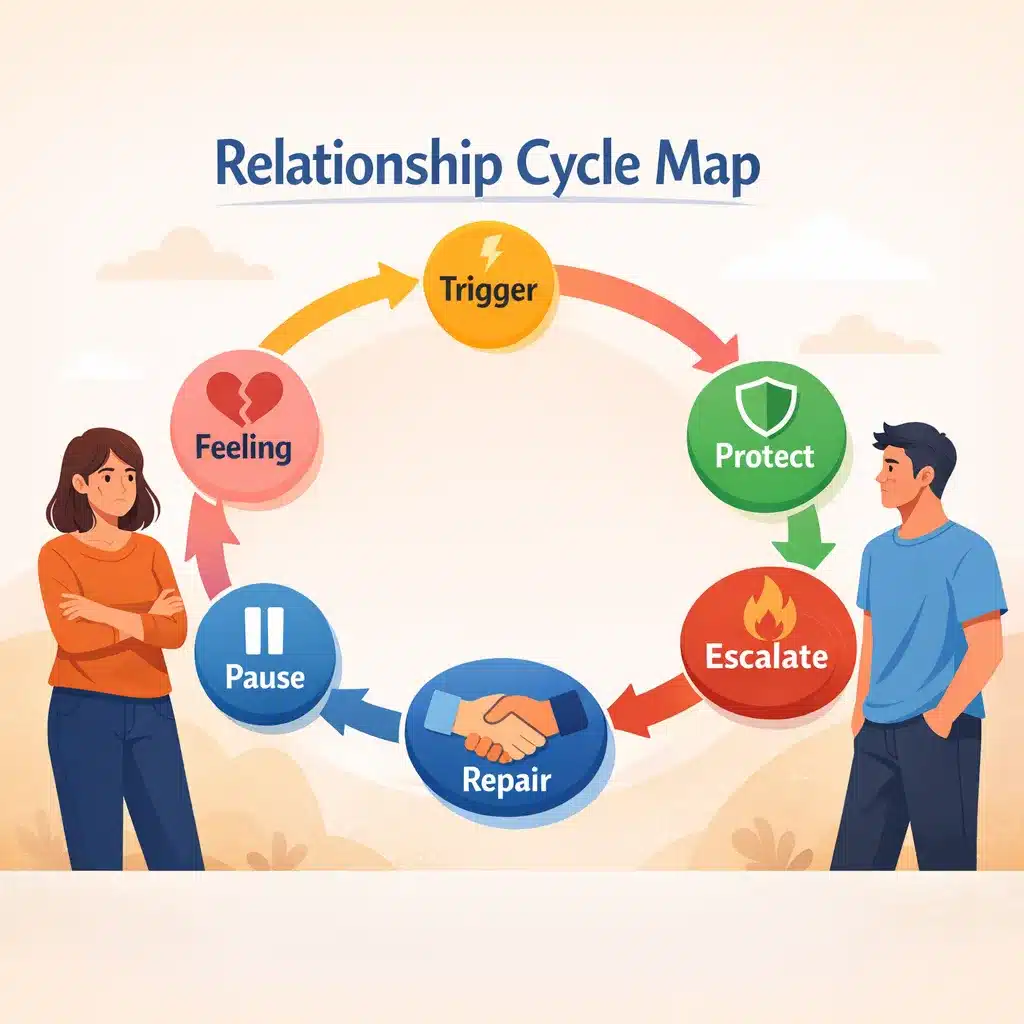
Stress steals tenderness. We schedule 10-minute “clearing” talks: one speaks, one mirrors, no fixing. Once a week we share appreciations—three specifics each. We also agree on a repair ritual for blowups: “say it + show it” (apology plus a concrete change).
🧒 Helping Kids Cope (By Age & Need)
-
Younger kids: stories, visual schedules, “helper badges.”
-
Tweens/teens: negotiation (“Pick two chores you own”), privacy time, and honest Q&A.
We normalize feelings and redirect problem energy into useful roles (pet care, music DJ for exercises). Spousal caregiver support includes protecting their childhood.
🧰 Tools That Actually Help
-
Shared calendar + color coding (medical, school, recovery).
-
Medication tracker (alarms + refill reminders).
-
Notes app for questions to ask clinicians.
-
Support roster of friends/family with their best ways to help.
We also lean on peer groups; the Ontario Caregiver Organization curates practical tools, peer support, and counseling options for families like ours. Ontario Caregiver
🇨🇦 What Canada & Ontario Offer Caregivers
Canada recognizes caregiver demands. Employment Insurance (EI) caregiving benefits can share weeks among eligible caregivers—vital when income or time off becomes tight. Canada.ca
In Ontario, the Ontario Caregiver Organization (OCO) centralizes supports, from peer groups to webinars that help reduce burnout and improve patient outcomes. Ontario Caregiver+1
Nationally, Canada highlights nearly 8 million caregivers supporting others—evidence that we’re not alone and that awareness is growing. Canada.ca
📚 Evidence Snapshot (Why Our Plan Looks This Way)
-
Caregiver stress management is built on fundamentals: sleep, movement, nutrition, social support, and respite—consistently recommended by clinical guidance. Mayo Clinic
-
Spousal caregivers who live with their partner average ~44.6 hours/week of hands-on care—another reason to formalize boundaries and ask for help. Caregiver
-
Canadian research notes a substantial burden among caregivers, with anxiety and depressive symptoms common—planning buffers and community resources helps. Online CJC
-
Many families juggle kids and elder or partner care; sandwich caregivers face unique time and energy constraints, so timeboxing is essential. Statistics Canada
-
Ontario roundtables increasingly treat caregivers as partners in care—encouraging signs that systems are catching up to family realities. Ontario Caregiver
🧪 Our Custom Care Protocol (Daily)
Morning (75–90 min): meds, gentle mobility, breakfast, brief walk, “pulse check.”
Midday (60–90 min): therapy set, then recovery rest; I handle errands; kids do micro-chores.
Afternoon (45–60 min): family time or quiet parallel time (reading, puzzles).
Evening (30 min): gratitude + tomorrow planning; devices down; wind-down routine.
This protocol keeps spousal caregiver support sustainable for months, not just days.
🧯 Relapse Plan (When Things Slide)
-
Trigger signs: rising pain, worsening sleep, skipped meals, simmering arguments.
-
Immediate steps: cancel non-urgent tasks, increase rest blocks, call one helper, schedule a check-in with our clinician.
-
48-hour review: adjust goals; re-simplify; reset commitments.
Because spousal caregiver support is a marathon, relapse planning is part of resilience.
🧭 Money, Work, and Admin Without Meltdown
-
Collect all paperwork in one shared cloud folder.
-
Track mileage and time for benefits/claims.
-
Assign roles: I handle insurance and appointments; my wife approves plans we draft together.
-
If work strains the system, we explore EI caregiving options or flexible schedules early, not late. Canada.ca
🧠 Guardrails for My Mental Health
My ability to care depends on caring for myself. I protect one non-negotiable (sleep window) and one joy block (a weekly hobby hour). If burnout markers rise, I add a peer group and speak with a clinician—exactly what evidence-based guidance suggests. Mayo Clinic
🎯 Conclusion: Stronger, Together
The next six months won’t be linear. But with spousal caregiver support that’s structured, compassionate, and honest, we can protect my wife’s recovery, our kids’ stability, and our marriage’s warmth. We move forward with small wins, clear boundaries, and community around us—one day at a time.
❓ FAQs
🧩 What is spousal caregiver support?
It’s the practical and emotional framework a spouse uses to care for a partner—balancing the partner’s needs, the caregiver’s well-being, and the family’s stability. Spousal caregiver support aims for sustainability, not martyrdom.
🗓️ How do we plan six months without burning out?
Use a flexible roadmap with monthly themes, weekly reviews, and daily buffer blocks. Keep goals small and adjustable. This structure is key to spousal caregiver support.
🧑⚕️ When should we call a professional?
If pain spikes, mood dips, sleep collapses, or daily tasks stall for a week, contact your care team. Add peer support and consider counseling—evidence supports these steps. Mayo Clinic
🧒 How do we help kids adapt?
Give them clear roles, predictable routines, and honest updates. Protect their childhood by assigning small, meaningful tasks—part of healthy spousal caregiver support.
🧭 What Canadian resources can we use?
Check EI caregiving benefits and Ontario Caregiver Organization tools, webinars, and peer support to reduce caregiver strain. Canada.ca+1
💤 What are early burnout signs I should watch for?
Irritability, poor sleep, isolation, constant overwhelm, and physical tension. If they cluster, downshift and ask for help—core guidance in caregiver stress management. Mayo Clinic
🧰 Which tools help most day to day?
Shared calendars, medication reminders, a simple symptom log, and a support roster you actually use—nuts-and-bolts spousal caregiver support tools.
🧪 How do we track recovery without obsessing?
Pick a few metrics (function, symptoms, mood). Review weekly for trends; adjust, don’t judge. This keeps spousal caregiver support data-informed and compassionate.

Related Posts





The Longevity Blueprint: AI-Powered Health Optimization
About the Author: Bernard Aybout (Virii8)