Approx. read time: 6.4 min.
Post: Why Are People Afraid of Needles? The Brain-Body Link and How to Overcome It
Needles are everywhere in healthcare — vaccines, blood tests, IVs — yet for many, even the sight of one can trigger intense fear. Whether it’s a racing heart, sweaty palms, or the urge to bolt from the room, the fear of needles is real and common. But why does it happen, and why do some injections, like shoulder shots, feel more daunting than others like bloodwork?
This article breaks down the science behind needle fear, how the brain and body react, why shoulder shots are often scarier than blood draws, and what you can do to overcome that anxiety.
Understanding the Fear of Needles
Fear of needles, officially known as trypanophobia, affects an estimated 10–20% of people, with some studies suggesting even higher numbers, especially among children. For a subset, the fear is intense enough to cause them to avoid medical care entirely — missing out on vaccines, lab work, and even life-saving treatments.
But fear of needles isn’t irrational. It’s deeply rooted in how our brains process threats and pain.
1. Evolutionary Survival Mechanisms
Our ancestors survived by avoiding injury. Anything that pierced the skin — animal bites, sharp objects, infections — was dangerous. This deep-seated aversion still exists in our nervous systems. A needle, though sterile and controlled, still represents a breach of the body’s protective barrier.
From an evolutionary standpoint, being afraid of sharp objects makes sense. It’s a defensive reflex, not a personal weakness.
2. Learned Fear and Past Trauma
Many people trace their fear of needles back to childhood experiences. A painful shot, a traumatic hospital visit, or a negative reaction can imprint in memory. Since early experiences shape how we perceive future ones, even a single bad encounter can create lasting fear.
The brain, especially the amygdala (its fear center), remembers painful or emotional events vividly. So, when a person faces another needle, the brain rings the same alarm bells — even if nothing bad is happening.
3. Vulnerability and Loss of Control
Getting a shot involves letting someone else pierce your body. That loss of control can be unsettling. You’re expected to sit still, relax, and not flinch while your brain is screaming “danger.”
This imbalance — you’re passive, someone else is active — creates psychological discomfort that amplifies fear.
The Body’s Physical Reaction to Needles
The moment you anticipate or see a needle, your brain kicks off a well-practiced biological response:
- The amygdala detects a threat and triggers the fight-or-flight response.
- The hypothalamus signals the nervous system.
- Adrenal glands release stress hormones like adrenaline and cortisol.
- The autonomic nervous system prepares the body for action.
This results in:
- Elevated heart rate
- Rapid, shallow breathing
- Sweating
- Muscle tension
- Cold hands or feet
- Tunnel vision or dizziness
Some people experience a vasovagal response, where the body overreacts to the perceived threat. Blood pressure drops, and the person may feel faint or even lose consciousness. It’s not weakness — it’s a reflex some bodies have when dealing with blood or pain.
Needle Placement Matters: Why Shoulder Shots Feel Worse
Not all needles feel the same. A common complaint is that shoulder injections (like vaccines or steroid shots) seem scarier or more painful than blood draws. Here’s why that happens.
1. Muscle vs. Vein
- Shoulder shots go into muscle tissue (intramuscular). Muscles have more sensory nerves, and injecting fluid into them can create pressure, burning, or aching sensations.
- Bloodwork targets veins (venipuncture). The pain is often limited to a quick surface prick, with less deep tissue involvement.
Because muscle injections go deeper and take longer, they feel more invasive. That alone can raise anxiety levels.
2. Loss of Visual Control
With blood draws, you can usually see the process if you want to. You’re facing it head-on, which gives some people a sense of control or preparedness.
With shoulder shots, the needle typically comes from the side or behind — and you often don’t see the exact moment it enters. That unpredictability triggers stronger fear responses in some people.
3. Emotional Associations
Blood tests are often routine and diagnostic — they help find problems. They don’t always carry urgency or emotion.
But shoulder injections often carry weight: vaccines, medications, hormone shots. People may associate these with illness, global events (like COVID), or larger consequences. That emotional framing makes them feel more serious or scary.
4. Pain Expectations and Aftereffects
People expect shoulder shots to hurt. The arm soreness that can follow vaccinations — due to inflammation in the muscle — reinforces that belief.
Blood draws might leave a bruise or minor soreness, but they rarely affect movement or comfort afterward. So, from experience, people develop different pain expectations, which the brain uses to predict and prepare for what’s coming — often exaggerating it in the process.
The Brain-Body Feedback Loop
Understanding how the brain and body interact is key to managing fear.
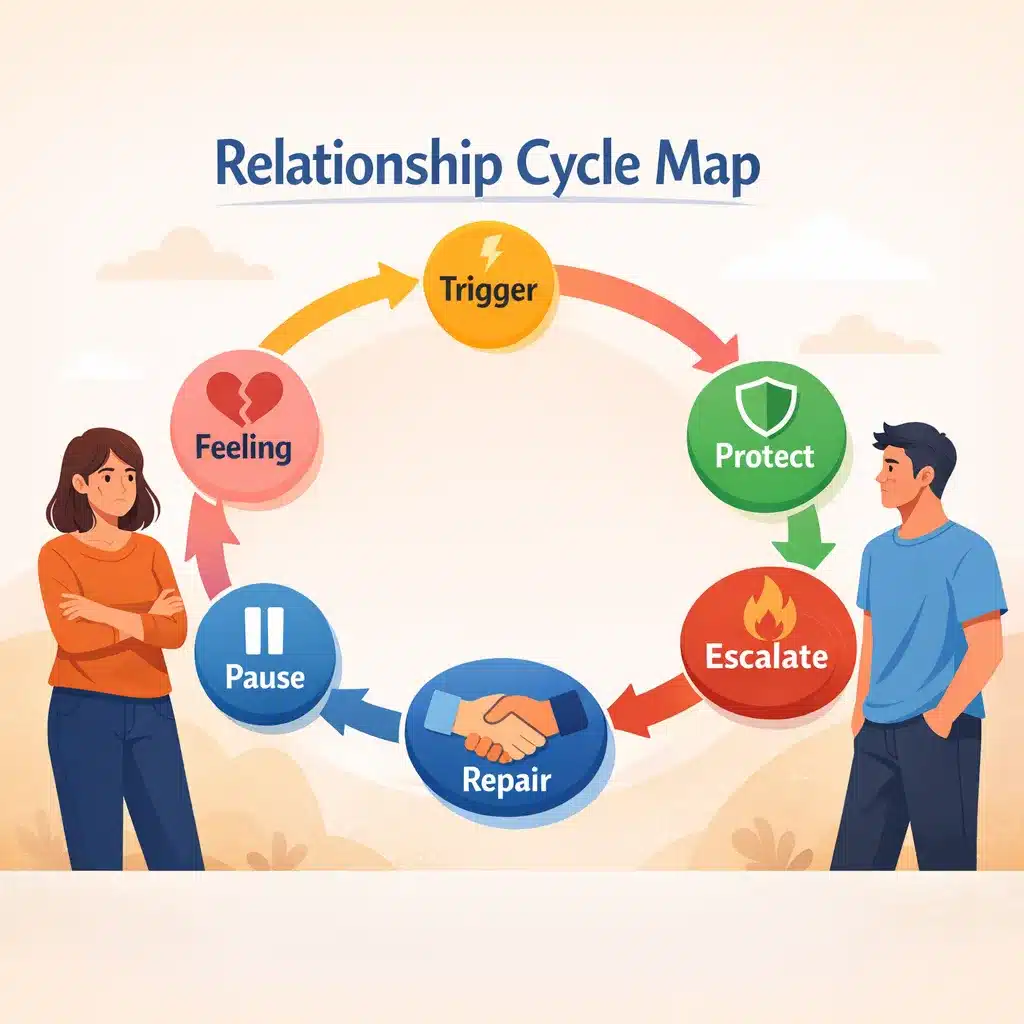
When your brain thinks you’re in danger, it alerts the body. Then, the body starts reacting (sweating, tensing up, breathing faster), and those physical signs reinforce the brain’s belief: “Yup, we’re in trouble.”
It becomes a loop:
Thought → Body reacts → Brain confirms fear → More stress → More reaction
Breaking this loop is possible — and necessary to overcome needle fear.
How to Overcome the Fear of Needles
You don’t have to love needles. But you can reduce the fear response and make medical procedures easier. Here’s how.
1. Exposure and Desensitization
Gradual exposure helps the brain rewire its fear response. This might look like:
- Looking at photos of needles
- Watching videos of injections
- Being in the room while someone else gets a shot
- Getting small procedures under calm conditions
This process, called exposure therapy, helps reduce reactivity over time.
2. Breathing Techniques
Deep, slow breathing counters the stress response. Try:
- Inhale for 4 seconds
- Hold for 4 seconds
- Exhale for 6–8 seconds
This activates the parasympathetic nervous system — your body’s “calm down” mode.
3. Muscle Tension to Prevent Fainting
If you tend to get dizzy or faint, use the applied tension technique:
- Tense your arms, legs, and core muscles for 10 seconds
- Release and rest for 20 seconds
- Repeat 5 times before and during the injection
This keeps blood pressure from dropping too fast.
4. Cognitive Reframing
Change how you think about the experience:
- Instead of “This will hurt,” try “This helps protect my health.”
- Instead of “I hate this,” try “I can get through 10 seconds of discomfort.”
Shifting the narrative reduces panic.
5. Distraction
Bring headphones, scroll your phone, talk to the nurse — anything that redirects your brain’s focus helps reduce the intensity of the fear.
6. Therapy for Deep Fear
If your fear is severe or prevents you from getting medical care, cognitive-behavioral therapy (CBT) is effective. A therapist can guide you through exposure, relaxation, and reframing techniques safely.
The Bottom Line
Needle fear isn’t childish, irrational, or rare. It’s a valid biological and psychological response tied to evolution, pain memory, and body awareness. Understanding why it happens — and how the brain and body fuel each other — is the first step to overcoming it.
Not all needles are the same. Shoulder shots tend to feel worse than blood draws due to their location, pain type, and emotional associations. But by using simple tools like breathing, muscle tension, and cognitive reframing, most people can reduce anxiety and take back control.
If needles are part of modern life, managing fear around them should be too — and it’s entirely possible.

Related Posts





The Longevity Blueprint: AI-Powered Health Optimization
About the Author: Bernard Aybout (Virii8)