Approx. read time: 14.5 min.
Post: Health Care Industry Cyber Security Breach: 9 Hard Lessons Meta Description
Health Care Industry Cyber Security Breach: 9 Hard Lessons
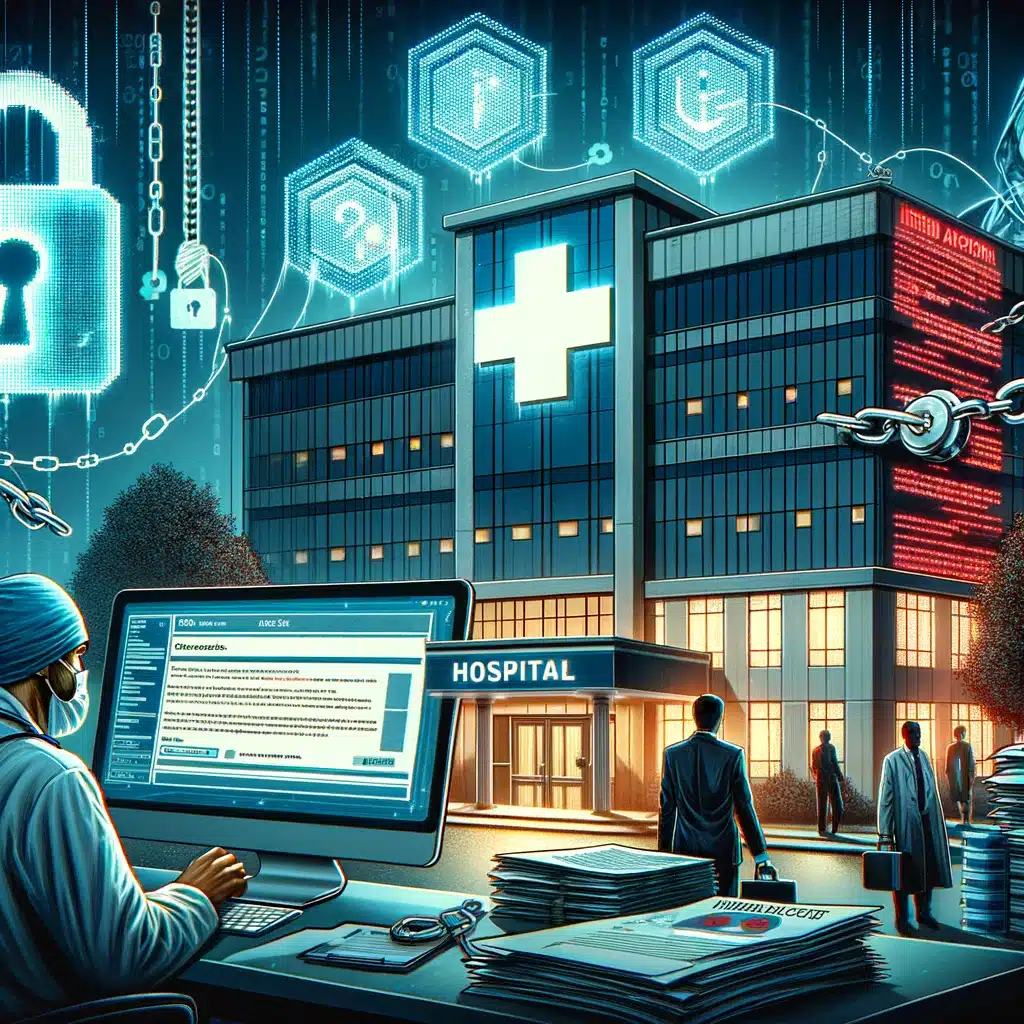
Health care industry cyber security breach stories hit differently, because the fallout isn't just "oops, our website was down." It can delay lab results, disrupt patient care, and expose deeply personal information that people can't simply "reset" like a password.
In Canada, the LifeLabs incident became a case study for why the health care sector is a prize target. It also became a blunt reminder that the public usually gets a token payout, while criminals and legal machinery often walk away with far more value.
Note: This article is educational and practical. It's not legal advice, and it can't guarantee protection against every threat.
🧭 Table of contents
- Why health care is a prime target
- LifeLabs in plain English
- What data was at risk
- Ransom pressure: why attackers love health care
- Investigation and accountability in Canada
- The $7.86 settlement and what it signals
- The real cost that never shows up on cheques
- Health care industry cyber security breach "attack surface" map
- Minimum baseline controls that actually work
- People problems: phishing, fatigue, culture
- Legacy systems and medical devices
- Detecting breaches earlier
- Health care industry cyber security breach incident response playbook
- Rules and standards that matter
- What patients can do after a breach
- FAQs
- Sources & references
- Conclusion
🎯 The Health Care Industry: A Prime Target for Cyber Criminals
Security pros have repeated the same warning for years: health care is a soft, valuable, and time-sensitive target. When an attacker hits a retailer, the goal is money. When an attacker hits a clinic, the goal is money plus leverage.
Health organizations run on brittle systems that must stay online. They also store high-value identity data and sensitive health information. That combination turns a regular hack into a high-pressure hostage situation.
Here's the uncomfortable truth: criminals don't need to be geniuses. They just need you to be busy, understaffed, and behind on patching. Which, for many health providers, is basically Tuesday.
🧪 Health care industry cyber security breach case study: LifeLabs in plain English
LifeLabs reported an attack where unauthorized parties accessed its systems and obtained personal information. The company's public notice described the incident and the categories of information potentially involved.
Early reporting described the breach as affecting up to 15 million customers. Later regulator communications discussed impacts in the millions, with figures over eight million in Ontario and B.C. being referenced in the joint investigation context. The exact number varies depending on what's being counted and when it was reported.
LifeLabs also publicly acknowledged that a ransom payment was made in connection with the incident (without detailing the amount). That's the part many people fixate on, but it's not the only lesson. The bigger lesson is that a health care industry cyber security breach creates pressure-cooker decision-making, and attackers plan around that.
🗂️ What data was at risk (and why it’s so damaging)
Health data is not like a credit card number. If a card leaks, you cancel it. If your health information leaks, you can't cancel your medical history. You live with the risk for years.
In LifeLabs' customer communications, the company described the types of personal information that could be involved. Even when no one can prove misuse, exposure alone can create long-term privacy risk and anxiety.
That's why a health care industry cyber security breach is often "quietly expensive." Victims spend time watching accounts, changing credentials, and dealing with spam, scams, and identity cleanup. Nobody invoices for that time, but it's real.
💸 Ransom payments: why attackers love health care pressure
Ransomware works because it weaponizes urgency. Health care organizations can't simply "wait it out" if systems affect patient care, lab results, scheduling, pharmacy workflows, or imaging. That urgency increases the odds of a payout.
Government of Canada guidance is blunt: don't pay. Paying doesn't guarantee you regain access, and it can make you a repeat target. It also signals your organization will negotiate under pressure.
But here's reality: executives don't make decisions in a perfect lab. They make decisions at 3 a.m. while the phones are melting and clinicians are furious. That's why prevention and rehearsed response matter more than "we'll figure it out if it happens."
⚖️ The investigation and accountability reality in Canada
Regulators investigated the LifeLabs cyberattack and produced a joint report completed in 2020. The publication of that report became its own multi-year fight, because LifeLabs argued parts should stay confidential.
Ontario's IPC later explained that the investigation concluded LifeLabs failed to meet obligations under Ontario's PHIPA and B.C.'s PIPA, including the duty to take reasonable steps to safeguard information. The report was ultimately published after court decisions cleared the way.
A separate regulator backgrounder summarized findings and orders, including improving IT security practices, putting written security policies in place, and ceasing collection of certain unnecessary information. In other words: "do the basics, document them, and stop hoarding data you don't need."
💰 Health care industry cyber security breach aftermath: the $7.86 settlement
Fast forward, and many affected people received settlement distribution notices. Reporting described a total of 901,544 valid claims, producing a per-claimant payment of $7.86 under court-approved distribution terms.
Other reporting also described the broader settlement structure and funding, noting figures in the millions and the administrative complexity behind processing claims.
So what does this mean in plain language? A health care industry cyber security breach can cause years of stress, and your "compensation" might not cover the price of a sandwich. That feels insulting because… it kind of is.
Practical takeaway for organizations: treat settlements like an alarm bell, not a finish line. A payment doesn't restore trust. Your security maturity does.
🧠 Who really pays the price (hint: it’s not the criminals)
When your data leaks, you inherit a new hobby: "checking things." Checking email headers. Checking credit reports. Checking whether that weird text message is a scam. Checking whether your kid's school got a phishing email using your name.
That emotional tax matters, and it doesn't show up in breach press releases. Regulators have also warned that health privacy breaches can have devastating impacts and undermine trust in the health system.
This is why I'm opinionated about one thing: if you run a health organization and you're still treating cybersecurity as "IT's problem," you're not behind. You're volunteering.
🕸️ Health care industry cyber security breach “attack surface” map
Health care environments are a perfect storm of complexity. You've got clinics, labs, patient portals, billing systems, third-party vendors, and remote workers. Add medical devices, legacy systems, and fast onboarding of new staff, and you get a wide attack surface.
Common weak points include:
- Email: phishing links and malicious attachments still work because humans are human.
- Remote access: exposed services, weak passwords, and missing MFA.
- Vendors: outsourced software and support tools that become a backdoor.
- Old systems: devices that can't be patched quickly (or at all).
- Backups: backups that exist, but aren't isolated (so attackers encrypt them too).
🧱 The minimum security baseline that actually changes outcomes
If you're hoping for a magic AI security box that fixes everything, I have bad news: attackers love that mindset. The best ROI still comes from boring controls done consistently.
Here's a baseline that dramatically reduces the chance a health care industry cyber security breach turns into a full outage:
- MFA everywhere (especially email, VPN, admin portals, and vendor access).
- Backups that are offline and offsite, tested regularly.
- Patch discipline for OS, browsers, VPNs, firewalls, and "boring" edge stuff.
- Least privilege (users don't need admin rights to do admin-level damage).
- Network segmentation so one compromised workstation doesn't reach everything.
- Asset inventory so you can protect what you actually have (not what you think you have).
Want a simple leadership metric? Measure how fast you can restore critical workflows from backup. If you can't do it quickly, you're not resilient. You're hopeful.
🧑⚕️ People problems: phishing, fatigue, and security culture
People are not "the weakest link." People are the main interface to everything. So yes, humans will click things, reuse passwords, and miss warnings, especially in high-stress roles.
Effective training is not a once-a-year slideshow. It's short, frequent, and tied to real scenarios staff see every week. It also needs leadership support, because culture follows incentives.
Two practical moves that work:
- Micro-training: 5 minutes a month, focused on one scam pattern.
- Blame-free reporting: staff should report mistakes fast, not hide them.
🩺 Medical devices and legacy systems: the awkward truth
Medical devices and older systems are hard to patch because vendors control firmware, validation cycles are slow, and downtime can affect care. Attackers know this.
So don't pretend you can "patch everything immediately." Instead:
- Segment devices into restricted networks.
- Control access with allow-lists and monitored jump boxes.
- Monitor behavior (device suddenly talking to the internet is a red flag).
This is also where vendor management matters. If a vendor can remote in, you need to know how, when, and under what controls.
🔎 Detecting breaches earlier (before they become headlines)
Prevention reduces risk, but detection reduces damage. The goal is simple: shorten the time between "attacker got in" and "we noticed."
In practice, that means:
- Centralized logging (email, endpoint, VPN, admin actions).
- EDR on endpoints to spot suspicious behavior quickly.
- Alert triage with clear ownership (someone must respond, not just "receive alerts").
If your only detection tool is "a nurse called because the screen looks weird," you don't have detection. You have luck.
🧯 Health care industry cyber security breach incident response playbook
Government of Canada guidance recommends isolating compromised devices, restoring from backups, and building an incident response plan you actually practice. This is not optional for health providers. It's the seatbelt.
| Phase | Goal | Do this first | Owner | Proof you did it |
|---|---|---|---|---|
| Identify | Know what's affected | Confirm scope, critical systems, and access paths | IT + Security | Incident ticket + asset list |
| Contain | Stop the spread | Isolate endpoints, disable risky accounts, block indicators | Security | Network blocks + account logs |
| Eradicate | Remove the threat | Wipe/reimage systems, patch entry points, rotate creds | IT | Reimage records + patch reports |
| Recover | Restore services safely | Restore from offline/offsite backups, validate integrity | IT + Ops | Restore test results + uptime |
| Communicate | Maintain trust | Clear internal updates + patient/public messaging plan | Leadership + Legal/PR | Comms timeline + approved statements |
| Learn | Prevent repeat | Post-incident review with actions + deadlines | All teams | Remediation plan + owners |
Hard rule: if you don't practice this, you don't have a plan.
📜 Rules and standards that matter (and why you should care)
Security frameworks help leaders translate "do cybersecurity" into an executable program. One widely used roadmap is the NIST Cybersecurity Framework, and its 2.0 release formalized a clearer governance emphasis.
Health-sector guidance also emphasizes practical controls against common threats such as ransomware and email compromise, because these are repeated pain points.
In Canada, health organizations should also treat regulator findings seriously, because "reasonable safeguards" and "collect only what you need" are not vibes. They are expectations, and they show up in investigation outcomes and orders.
🧍 What patients can do after a health care industry cyber security breach
You shouldn't have to do anything. But reality is reality. After a health care industry cyber security breach, take steps that reduce downstream risk without turning your life into a paranoia simulator.
- Change passwords on email first (email is the "master key" for resets).
- Enable MFA on email and banking.
- Watch for targeted scams using breach context (lab results, invoices, "urgent follow-up").
- Be careful with links in emails claiming to be about claims, refunds, or "verification."
If you're unsure whether a message is legit, don't click. Go to the organization's official site using your own bookmark, or contact them directly via known contact details.
If you run a clinic or lab and you want help making these protections real, not theoretical, start with Support or reach out via Contact.
❓ FAQs about health care industry cyber security breach risks
❓ What makes a health care industry cyber security breach different from a retail breach?
Health care breaches often involve sensitive health information and can disrupt patient care. The urgency and sensitivity increase both harm and attacker leverage.
❓ Did LifeLabs pay a ransom?
LifeLabs publicly acknowledged making a payment in connection with the incident, without disclosing the amount.
❓ How many people were affected by the LifeLabs breach?
Public reporting referenced figures up to 15 million, while regulator communications around the joint investigation referenced impacts in the millions (including over eight million in Ontario and B.C.). The number varies by definition and timing.
❓ What was the settlement payout per claimant in 2024?
Reporting described 901,544 valid claims and a $7.86 payment per claimant under court-approved distribution terms.
❓ Why do health organizations get targeted by ransomware so often?
Attackers know downtime can affect care and operations, creating pressure to restore systems quickly. That urgency increases leverage.
❓ Should organizations ever pay the ransom?
Government guidance recommends not paying because there is no guarantee of recovery and paying can increase future targeting risk.
❓ What’s the single best defense against ransomware?
Tested backups that are offline and offsite, combined with MFA and strong patching, dramatically reduce impact.
❓ Why are offline backups so important?
If backups are connected, attackers can encrypt them too. Offline/offsite backups give you a clean recovery path.
❓ What is “least privilege” and why does it matter?
Least privilege means users and systems only get the access they need. It limits damage when an account is compromised.
❓ How can clinics reduce phishing risk without slowing staff down?
Use MFA, modern email filtering, and short monthly micro-training. Make "report suspicious" fast and blame-free.
❓ Why are medical devices a security problem?
Some devices have long lifecycles and patch constraints. Segmentation, controlled access, and monitoring reduce risk.
❓ What is NIST CSF 2.0?
It's a cybersecurity framework used to organize security programs across functions like governance, protection, detection, response, and recovery.
❓ What should patients do after receiving a breach notice?
Secure email first, enable MFA, watch for targeted scams, and verify messages using known official contact paths.
❓ What should a clinic’s incident response plan include?
Roles, containment steps, recovery steps, communications, and a practice schedule. A plan must be tested to be real.
❓ Is “collect less data” a security strategy?
Yes. Less stored data reduces breach impact, reduces compliance risk, and reduces the value of theft.
📚 Sources & references – health care industry cyber security breach
- LifeLabs – Notice to customers
- IPC Ontario – May 23, 2024 news release (report status and scope)
- IPC Ontario / BC OIPC – 2020 LifeLabs backgrounder (findings and orders summary)
- IPC Ontario – Nov 25, 2024 news release (report published)
- CityNews – Settlement context and amounts
- Global News – Distribution details and claimant context
- Government of Canada – Protect your business against ransomware
- NIST – Cybersecurity Framework (CSF) 2.0 (PDF)
- HHS – Health Industry Cybersecurity Practices (HICP) (PDF)
🎥 Recommended videos
- NIST Cybersecurity Framework 2.0 | Step-by-Step Guide (CyberPlatter) – Good for understanding how to structure a security program using a framework.
- Ransomware attacks threaten Canada's national security, report warns (CBC News) – Helpful context on ransomware impact and why it's so disruptive in Canada.
✅ Conclusion: Who really pays the price?
A health care industry cyber security breach is never "just a tech problem." It's a trust problem, an operations problem, and a patient safety problem. And once trust is damaged, it's brutally expensive to rebuild.
The LifeLabs story shows the whole cycle: major breach, regulatory findings, long legal timelines, and a settlement distribution that feels comically small to individuals. Meanwhile, attackers still get what they wanted most: leverage, money, and attention.
If you run a clinic, lab, or health-adjacent business, do the boring stuff now: MFA, offline/offsite backups, segmentation, patching, logging, and an incident plan you actually rehearse. The "we'll handle it when it happens" approach is how it happens.
Want a practical checklist tailored to your setup (small clinic, multi-site practice, lab, or portal-based workflow)? Visit Support or reach out via Contact. You can also explore more patient-focused tech health content in Health.
Related Videos:

Related Posts:
Cyberattacks on Canada have already begun
Contextualising Legal Research: Practical Methods Guide
Coase Social Cost: 17 Practical Insights for Law + Econ
Spur Industries v Del E Webb: Indemnity and Urban Growth
Rawls Theory of Justice Explained: Justice as Fairness
Modern AI Concepts Explained: 5 Pillars Shaping Our Future
What Will Iran’s October 7-Level Cyberattack on Israel Look Like?
Java, PHP or .NET Which programming languages will earn you the most?
What is Healthcare Cybersecurity in organizations?
Bitcoin Price Predictions: Jamie Dimon’s ETF Impact
Hackers breached 3 US antivirus companies, researchers reveal
Coding Resources Recommended by Tech Experts
What does your car know about you? We hacked a Chevy to find out
Privacy commissioner investigating security of patient health records at Alberta Health Services
It’s Almost Impossible to Tell if Your iPhone Has Been Hacked
Cybersecurity burnout: 10 most stressful parts of the job
Russia ‘successfully tests’ its unplugged internet
Transforming the world through behavioral insights and scientific thinking
We should treat algorithms like prescription drugs
City of Toronto data at risk of cyber attack: report
B0r0nt0K Ransomware Wants $75,000 Ransom, Infects Linux Servers
Related Posts




The Longevity Blueprint: AI-Powered Health Optimization
About the Author: Bernard Aybout (Virii8)