Approx. read time: 14.7 min.
Post: HPE Cyberattack: How Russian Intelligence Hit the Cloud
Russian Intelligence, the HPE Cyberattack, and the Microsoft Breach
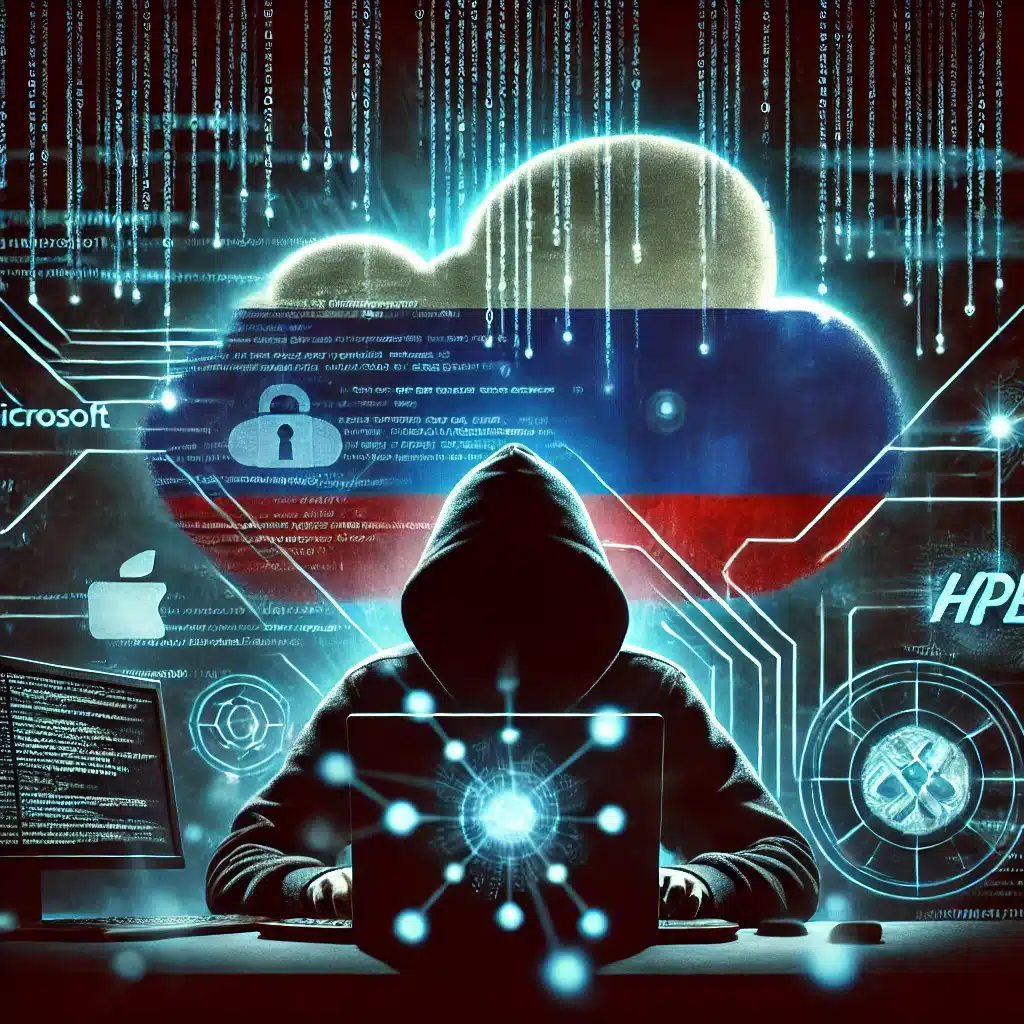
The recent HPE cyberattack, tied to Russian intelligence group APT29 (also known as Cozy Bear or Midnight Blizzard), is not “just another breach.” It’s a live case study in how nation-state hackers treat cloud email, SaaS vendors, and supply chains as an intelligence goldmine—with Microsoft caught in a parallel campaign.
If you run anything in Microsoft 365, Azure, or rely on vendors like HPE for infrastructure, this isn’t distant geopolitics. It’s your risk profile, today.
🔎 Why the HPE cyberattack matters for every cloud customer
In January 2024, Hewlett Packard Enterprise filed an 8-K with the U.S. Securities and Exchange Commission (SEC) confirming that a suspected nation-state attacker—Midnight Blizzard / APT29—had breached its cloud-based Microsoft Office 365 email environment. HPE later clarified the intrusion started around May 2023 but wasn’t detected until December 12, 2023.
Attackers accessed and exfiltrated data from a “small percentage” of mailboxes, including:
-
Cybersecurity staff
-
Go-to-market, marketing, and other business teams
On paper, “small percentage” sounds reassuring. In reality, those are exactly the people who:
-
Know where the sensitive systems and data are
-
See internal incident reports and detection gaps
-
Discuss current and future customers, deals, and products
That makes the HPE cyberattack strategically dangerous, even if the raw number of affected mailboxes seems limited.
🧩 Who is APT29 (Midnight Blizzard), the group behind the HPE cyberattack?
APT29 / Cozy Bear / Midnight Blizzard is a Russian state-sponsored cyber-espionage group widely assessed to operate under Russia’s Foreign Intelligence Service (SVR).
They are:
-
Linked to the SolarWinds Orion supply-chain attack in 2020, which compromised multiple U.S. federal agencies and major private firms.
-
Known for long-running intrusions against governments, political parties, NGOs, and tech companies.
-
Increasingly focused on cloud identity, email, and SaaS, not just old-school on-prem networks.
Their playbook is slow, quiet, and intelligence-driven. They’re not smashing ransomware gangs; they’re spies. That means they:
-
Prefer stealthy access over noisy destruction
-
Chain together multiple vendors and cloud services
-
Hunt for policy docs, architecture diagrams, and incident reports more than credit cards
That’s exactly why a targeted HPE cyberattack is such a big deal.
🕵️ Timeline: from the May 2023 breach to HPE cyberattack disclosure
Here’s the simplified timeline from public filings and reporting:
-
May 2023 – Midnight Blizzard gains access to HPE’s Office 365 email environment.
-
May–Dec 2023 – Attackers quietly exfiltrate data from a limited set of mailboxes over months.
-
December 12, 2023 – HPE is notified of a suspected nation-state breach and starts an internal + external investigation.
-
January 19, 2024 – HPE discloses the HPE cyberattack publicly via an SEC Form 8-K filing, naming Midnight Blizzard as the likely actor.
-
Early 2025 – HPE begins sending employee breach notifications as it confirms that personal data (including Social Security and financial details for some individuals) was also exposed.
This “months of undetected access, followed by a rushed disclosure under SEC rules” pattern is almost textbook for modern nation-state intrusions.
📧 What hackers accessed in the HPE cyberattack mailboxes
HPE has said Midnight Blizzard accessed:
-
A small percentage of Office 365 mailboxes
-
Accounts belonging to its cybersecurity team
-
Accounts in go-to-market / sales / marketing and other business units
Why that’s dangerous:
-
Cybersecurity mailboxes likely contain:
-
Internal incident alerts
-
Detection gaps and tool limitations
-
Architecture diagrams, playbooks, and vendor details
-
-
Go-to-market teams handle:
-
Key customer lists, including government and defence agencies
-
Roadmaps and strategy decks
-
Partner and supply-chain contacts
-
Even if the attackers never touched HPE’s core infrastructure directly, the HPE cyberattack may have given APT29 a blueprint of who to hit next, how HPE defends itself, and what its customers run on top.
🏢 How the Microsoft breach mirrors the HPE cyberattack playbook
While HPE was dealing with the fallout, Microsoft disclosed that Midnight Blizzard had also compromised its corporate email environment.
Key points from Microsoft’s disclosures and independent analysis:
-
Attackers used a password spray against a legacy, non-production test account with weak protections.
-
Once inside, they gained access to a small percentage of corporate email accounts, including:
-
Senior leadership
-
Cybersecurity and legal staff
-
-
The hackers appeared focused on learning what Microsoft knew about Midnight Blizzard itself—essentially spying on the investigation into their own operations.
So you have the same actor:
-
Targeting cloud email (Office 365) at both HPE and Microsoft
-
Prioritizing high-value internal comms, not random user inboxes
-
Using relatively simple footholds (weak accounts, identity misconfigurations) for very strategic goals
The HPE cyberattack and the Microsoft breach are two chapters in the same Russian intelligence campaign.
🧬 Russian intelligence goals: what APT29 was likely hunting
APT29 is not stealing random inboxes for fun. Based on historic behavior, public advisories, and technical analysis, their goals in the HPE cyberattack were likely:
-
Strategic intelligence on Western government and defence clients
-
HPE and Microsoft both serve government, defence, and critical-infrastructure customers.
-
Mapping who uses what, where, and how is invaluable for Russian planning.
-
-
Insight into defensive capabilities and blind spots
-
Emails about detection rules, SOC processes, incident retros, and red-team exercises reveal how to stay hidden next time.
-
-
Supply-chain footholds
-
Knowing which managed services, cloud offerings, and customer environments sit behind HPE gives attackers a menu of downstream targets.
-
-
Leverage for future campaigns
-
Even seemingly “boring” business emails can help build convincing phishing lures, social-engineering scripts, and impersonation attacks.
-
Think of the HPE cyberattack less as a smash-and-grab and more as reconnaissance for the next decade of operations.
🧱 Why cloud email remains a weak link for tech giants
Both HPE and Microsoft were hit through cloud email, not exotic zero-days in obscure infrastructure. That’s important.
Analysis of Midnight Blizzard shows a heavy focus on:
-
Password spraying and credential stuffing
-
Legacy accounts with weak MFA or none at all
-
Misconfigured conditional access and identity policies
-
OAuth apps, tokens, and federated identity weaknesses
Cloud email is:
-
Everywhere – almost every enterprise runs on Microsoft 365 or Google Workspace.
-
Highly interconnected – identity, apps, mobile devices, partners.
-
Hard to fully lock down – too many human users, exceptions, and edge cases.
The HPE cyberattack proves that even security-mature vendors can leave one weak test account or misaligned policy that a patient state actor will absolutely find.
🌐 From Cloud Hopper to today: HPE’s earlier nation-state breaches
This isn’t HPE’s first dance with nation-state hackers.
In 2018, attackers linked to China’s Ministry of State Security (APT10 / Cloud Hopper) penetrated HPE’s managed services and used that access to attack downstream customers, stealing large volumes of corporate and government secrets.
That campaign highlighted:
-
The risk of managed service providers (MSPs) as a single point of failure
-
How attackers ride big vendors into dozens or hundreds of customer networks
-
The need for supply-chain defence, not just perimeter defence
Fast-forward to the HPE cyberattack by APT29, and the theme is the same:
If your vendor is compromised, you are indirectly in play.
The Canadian Centre for Cyber Security has repeatedly warned that supply-chain compromises expand the attack surface for organizations of all sizes—not just Fortune 500 giants.
📜 SEC breach disclosure rules reshaped by cases like the HPE cyberattack
Historically, companies could sit on breach info for months or even years. That era is ending.
In July 2023, the U.S. SEC adopted new cybersecurity disclosure rules that require public companies to:
-
Disclose material cybersecurity incidents on Form 8-K
-
File within four business days after determining materiality
-
Provide ongoing updates in periodic filings if the situation evolves
HPE and Microsoft both disclosed their incidents under this new regime. The disclosures were cautious—limited details, careful wording—but they still forced daylight on operations that might previously have stayed buried in legal and PR spin.
This matters for you because:
-
Vendors are now under regulatory pressure to reveal breaches more quickly.
-
Investors and customers get timelier visibility into cyber risk.
-
Sloppy or misleading disclosures can trigger SEC enforcement, as seen in cases targeting SolarWinds and other firms.
The HPE cyberattack is an early test of how these rules work when a top-tier vendor faces a top-tier nation-state adversary.
🛡️ Practical lessons from the HPE cyberattack for enterprises
Let’s strip the marketing fluff and talk brass tacks. What should you learn from the HPE cyberattack?
-
Assume your vendors will be breached at some point.
Don’t just ask “Are you secure?” Ask:-
How do you segment customer data?
-
What’s your email retention and classification policy?
-
How quickly do you detect anomalous access in cloud email?
-
-
Treat vendor email domains as high-risk.
If your leadership and technical teams regularly email with HPE, Microsoft, etc., assume those threads may be monitored or replayed in phishing. -
Tie business impact to specific vendor scenarios.
Run tabletop exercises:-
“What if our cloud provider suffers an HPE-style email breach?”
-
“What if Microsoft 365 exposure reveals our licensing, topology, and key admins?”
-
-
Review contracts and SLAs for breach handling.
Ensure your agreements cover:-
Notification timelines
-
Forensic cooperation
-
Data segregation and logging guarantees
-
If you’re in government, defence, or critical infrastructure, the HPE cyberattack isn’t hypothetical. It’s a preview.
🔄 Supply-chain and third-party risk when vendors are breached
The HPE cyberattack is a supply-chain story in disguise.
When a major infrastructure vendor is compromised:
-
Customer naming data can map entire ecosystems (who uses what service).
-
Architecture & SOW docs can reveal VPNs, IP ranges, admin accounts, and integration points.
-
Tickets and incidents can expose historical vulnerabilities and unfinished remediation.
Regulators and cyber centres worldwide, including in Canada, now emphasize supply-chain security as a core requirement, not a “nice to have.”
If you’re a Canadian business using U.S. cloud providers, you’re downstream from both Russia–U.S. cyber tensions and SEC-driven transparency. That combination will define many of the breaches you read about in the next few years.
🧰 Security controls to blunt APT29-style attacks
You can’t out-spook the SVR, but you can make your environment a pain to live in.
Here’s what the HPE cyberattack and Microsoft breach tell us you should harden right now:
-
Identity & MFA hygiene
-
Enforce strong MFA on every account—especially legacy, test, and service accounts.
-
Kill basic/legacy authentication protocols where possible.
-
Rotate and review high-privilege credentials frequently.
-
-
Conditional access & least privilege
-
Apply conditional access policies based on device health, location, and risk.
-
Strip unnecessary admin roles; use just-in-time elevation (PIM/privileged access tools).
-
-
Tenant hardening & monitoring
-
Enable and actually review audit logs and sign-in logs.
-
Monitor for anomalous OAuth consent, new forwarding rules, impossible travel, etc.
-
-
Email & collaboration safeguards
-
Shorten retention for sensitive mailboxes.
-
Move crown-jewel secrets out of email and into more tightly controlled systems.
-
-
Security operations maturity
-
Run regular threat-hunting for APT29 tradecraft indicators.
-
Subscribe to advisories from CISA, Microsoft, and national cyber centres.
-
If you’re not sure where to start, prioritize identity and cloud email—because that’s where the HPE cyberattack started.
🧭 What this trend means for Canadian and global organizations
For Canadian organizations (and anyone doing business with U.S.-listed vendors), the HPE cyberattack and Microsoft breach sit at the intersection of:
-
Nation-state cyber operations (Russia via APT29)
-
Cross-border supply chains (cloud, MSPs, SaaS)
-
Tightening disclosure and governance rules (SEC and others)
Practically, that means:
-
You may learn about your risk first from a vendor’s SEC filing, not a direct notification.
-
Your cyber program should align with emerging U.S. standards, even if your business is based in Canada.
-
Regulators are increasingly expecting boards and executives to understand and own cyber risk, not just pass it to IT.
If you rely on HPE systems, Microsoft 365, or any major cloud provider, assume geopolitics is now part of your threat model.
📣 Incident response and transparency: grading HPE and Microsoft
Without access to internal timelines, we can’t fully “score” their response—but we can be blunt about what’s visible.
What they did reasonably well:
-
Activated incident response quickly after detection and brought in external experts.
-
Filed under the new SEC rules instead of quietly burying the incidents.
-
Released at least some technical guidance and context (Microsoft in particular).
What remains uncomfortable:
-
The months-long dwell time in both the HPE cyberattack and Microsoft breach before detection.
-
The lack of granular detail on exactly what data and which customers were impacted.
-
The reliance on phrases like “small percentage of mailboxes,” which sound soft when you realize they include security and leadership teams.
Still, compared to the pre-SolarWinds era, this is a more transparent, regulated, and investor-aware response—driven in part by the SEC’s new rules and enforcement posture.
❓ FAQs on the HPE cyberattack, APT29, and Russian cyber operations
❓ What exactly is the HPE cyberattack everyone is talking about?
The HPE cyberattack refers to a May 2023–December 2023 intrusion into Hewlett Packard Enterprise’s Microsoft Office 365 email environment by Midnight Blizzard (APT29), a Russian state-sponsored hacking group. Attackers accessed and exfiltrated data from a subset of mailboxes, including cybersecurity and business teams, and HPE disclosed the incident in a January 2024 SEC filing.
❓ Who is believed to be behind the HPE cyberattack?
Public filings and multiple security reports attribute the HPE cyberattack to Midnight Blizzard / APT29 / Cozy Bear, a threat group associated with Russia’s Foreign Intelligence Service (SVR) and known for high-end cyber-espionage campaigns.
❓ How is the HPE cyberattack connected to the Microsoft breach?
The same Russian group, Midnight Blizzard, compromised both HPE’s and Microsoft’s corporate email environments. In both cases, attackers targeted high-value mailboxes (leadership, security, legal) and used cloud-identity weaknesses like password spraying against Microsoft 365 accounts. The HPE cyberattack happened earlier (breach in May 2023), while Microsoft detected its breach in January 2024.
❓ Did the HPE cyberattack impact government or defence customers?
HPE has not publicly listed specific customers affected, but because HPE serves governments and defence clients worldwide, the intelligence value of exposed email threads, contracts, and architecture discussions is high. Even if customer systems weren’t directly breached, their names, architectures, and contacts may now be known to APT29.
❓ Was any source code or core infrastructure hit in the HPE cyberattack?
Public disclosures emphasise email rather than core infrastructure. HPE has focused on Office 365 mailboxes and personal data exposed from those mailboxes. By contrast, Microsoft has confirmed that Midnight Blizzard also accessed some internal systems and source-code repositories, though not customer-facing services.
❓ How long did the attackers stay inside HPE before being detected?
Investigations suggest attackers were active from around May 2023 until HPE learned of the intrusion on December 12, 2023, meaning a dwell time of roughly seven months before detection and response actions began.
❓ What are the main techniques APT29 used in these campaigns?
Across the HPE cyberattack and Microsoft breach, APT29 relied heavily on:
-
Password spraying against legacy or poorly protected accounts
-
Abusing cloud identity and Microsoft 365 configurations
-
Persistent, low-and-slow email exfiltration
-
Sophisticated spear-phishing and watering-hole campaigns tied to credentials theft
❓ Are companies legally required to disclose attacks like the HPE cyberattack?
Yes, if the incident is material under U.S. securities law. Under SEC rules adopted in 2023, public companies must disclose material cybersecurity incidents on Form 8-K within four business days of determining materiality, and then update investors as new information emerges.
❓ How can smaller organizations learn from the HPE cyberattack?
Even if you don’t run a global cloud, you can:
-
Harden Microsoft 365 identities and enforce strong MFA
-
Monitor email for suspicious forwarding and access patterns
-
Treat vendor relationships as part of your attack surface
-
Align your reporting and governance with frameworks inspired by SEC rules, even if you’re not directly regulated
The same techniques APT29 used against HPE and Microsoft scale down just fine.
❓ Does the HPE cyberattack mean cloud email is inherently unsafe?
No—but it is inherently high-value and attractive to attackers. Cloud email can be very secure when you combine strict identity controls, continuous monitoring, and good hygiene around legacy accounts and third-party access. The HPE cyberattack shows what happens when a nation-state actor finds the one weak link in that chain.
❓ What should I do today if I’m worried about an HPE-style cyberattack?
Start with three things:
-
Audit all accounts in your cloud tenant, especially legacy/test/service accounts.
-
Enforce MFA and conditional access rigorously.
-
Map your vendor dependencies and add “vendor breached” scenarios to your incident-response playbooks.
From there, build a roadmap that ties technical controls to board-level cyber governance.
🔚 Final thoughts and call-to-action
The HPE cyberattack is not an outlier; it’s a template. Russian intelligence, via APT29, is systematically probing cloud email, SaaS vendors, and supply chains—starting with giants like HPE and Microsoft, but absolutely not stopping there.
If you’re not sure whether your own environment could withstand an HPE-style cyberattack, this is the moment to tighten your identity controls, revisit vendor risk, and update your incident-response plan.
👉 Need a second set of eyes on your cloud security posture or vendor risk? Contact us through our support page and start hardening your stack before you’re the next case study.
Related Videos:

Related Posts:
What Will Iran’s October 7-Level Cyberattack on Israel Look Like?
Interviewing Skills for Legal Professionals: Step-by-Step Guide to Better Client Interviews
Canadian Criminal Law Explained: Rights, Risks, and Precrime
Tort and Contract Law: The Pillars of Private Law Explained in Depth
Employment Law in Canada: Essential Guide for Workers & Employers (Ontario Focus)
The Dynamic Landscape of Family Law in Canada: Rights, Duties, and Changing Families
China-Backed Hackers Hijack 9,200 Canadian Devices to Operate Illegal Hacking Network: FBI and CSIS
Suspected State-Sponsored Hack Targets British Columbia Government Networks
Facebook and Twitter Uncover and Dismantle Russian IRA Influence Network Ahead of US Elections
Microsoft and Other Companies Targeted in Russian Hacking Campaign: Insights and Impacts
Russian hackers are eight times faster than North Korean groups
Related Posts




The Longevity Blueprint: AI-Powered Health Optimization
About the Author: Bernard Aybout (Virii8)