FAQ: Question: What are the two divisions of the Courts of Ontario?
FAQ
Approx read time: 12.1 min.
Ontario Paralegal Exam Courts: 9 Best-Answer Rules
The two divisions of the Courts of Ontario are ____
a) Superior Court of Justice and Small Claims Court
b) Court of Appeal for Ontario and Divisional Court
🎯 Why this question shows up on the Ontario paralegal exam
This is a classic licensing-exam trap because the answer depends on what the exam wants you to recognize, not what a statute-bot would say if you asked it in a vacuum.
The Ontario paralegal exam is multiple-choice and open-book, which means you're not being tested on memorizing trivia. You're being tested on spotting the category of court being described (trial vs appeal, start vs review, claim vs judicial review). (Law Society of Ontario)
So when the question says something like "the two divisions where litigation is initiated," the exam is usually checking: Where do civil cases start?
✅ The exam answer: where civil litigation starts
When the options force you to choose between "trial-start courts" and "appeal-review courts," the Ontario paralegal exam "best answer" for civil litigation starting points is:
(a) Superior Court of Justice and Small Claims Court.
That's the practical reality of Ontario civil litigation: most civil claims begin either in the Superior Court (regular civil procedure) or in Small Claims Court (simplified process, monetary cap). (Ontario Courts)
⚖️ The “legal fact check” under the Courts of Justice Act
Here's the clean statutory nerd-version you'd put in your notes:
- The "Court of Ontario" (as described in the Courts of Justice Act) consists of two divisions:
Superior Court of Justice and Ontario Court of Justice. (Ontario) - Small Claims Court is a branch of the Superior Court of Justice, not a separate "division" of the Court of Ontario. (Emond Publishing)
- The Divisional Court is also a branch of the Superior Court of Justice (and functions largely as an appeal/judicial review court). (Ontario Courts)
So yes: the wording in many exam questions is "legally messy," but the exam is typically aiming at function, not perfect statutory taxonomy.
🧭 Trial vs appellate courts: the mental shortcut that saves you
If you learn one exam shortcut, make it this:
- Trial-level / starting courts = where the claim is filed first
- Appellate / review courts = where you go to challenge what happened below
Option (a) smells like starting courts.
Option (b) smells like appeal/review courts.
That's the whole trick.
💰 Ontario paralegal exam money thresholds that decide your starting court
Right now, the clean numbers to remember for civil-lit multiple-choice:
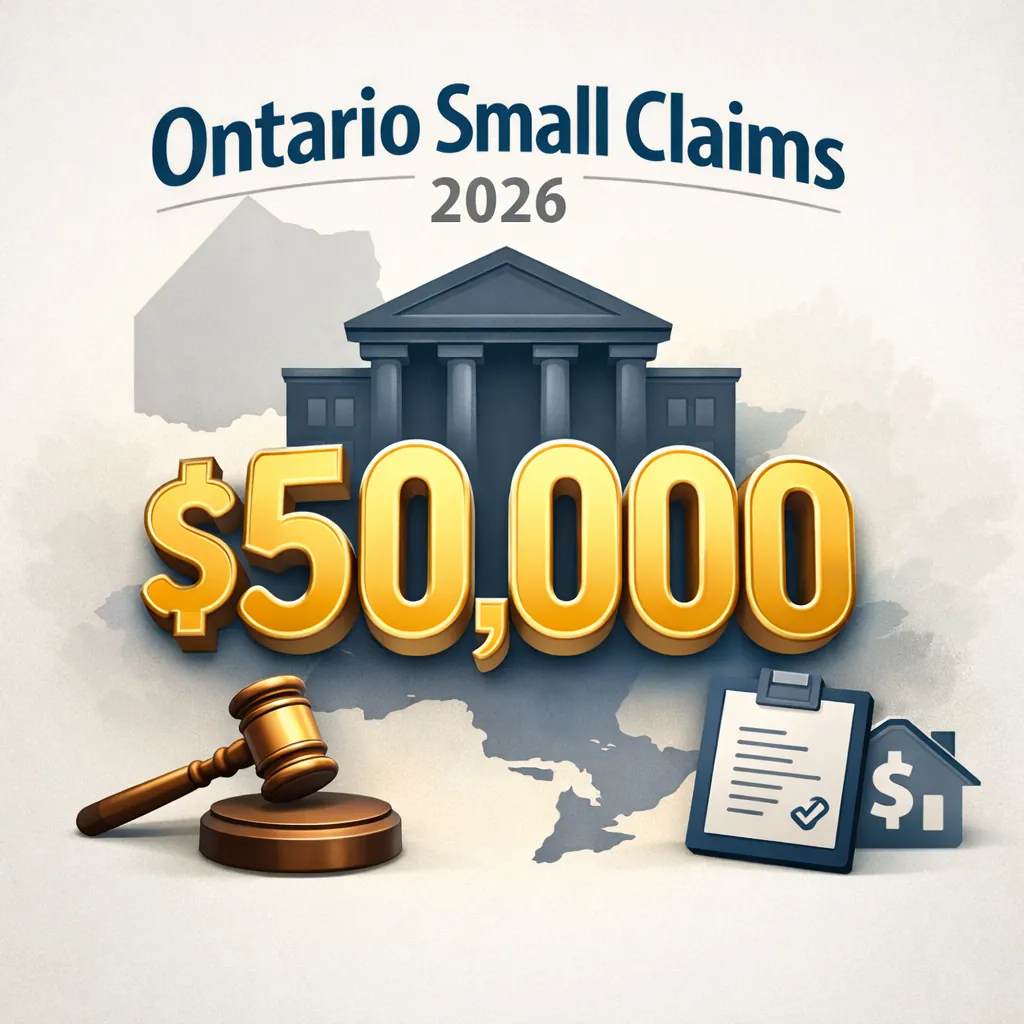
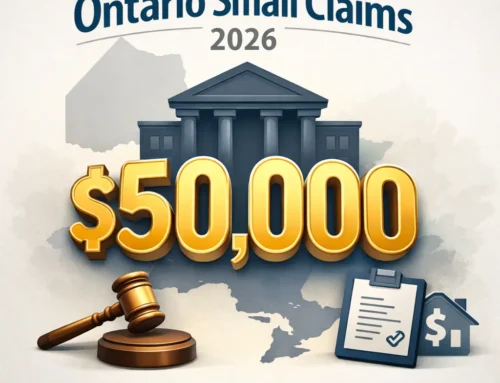
- Small Claims Court max claim: $50,000 (excluding costs/interest) (CanLII)
- Small Claims appeal threshold: $5,000 (below that, no appeal to Divisional Court) (CanLII)
And here's the practical implication the exam likes: if the claim is within Small Claims, it starts there; if it's over the cap, it starts in the Superior Court (unless the plaintiff abandons the excess to stay in Small Claims—another common exam idea).
🏛️ Superior Court of Justice basics you actually need for the exam
For Ontario paralegal exam purposes, the Superior Court of Justice is the "full" civil trial court. It hears the broader civil workload, runs on formal procedure, and it's where more complex motions and remedies live.
The exam usually wants you to connect the Superior Court with:
- Rules of Civil Procedure
- Larger claims and complex litigation
- Formal pleadings + motions + discovery + trial management
And importantly: it's not where paralegals have the same independent day-to-day lane as Small Claims (your scope focus is usually Small Claims, tribunals, POA, and limited criminal matters). (Law Society of Ontario)
🧾 Small Claims Court basics (and why paralegals live here)
Small Claims Court is designed to be faster, cheaper, and less formal—while still being real court with real consequences.
Key exam-friendly points:
- It handles civil claims up to $50,000 (Ontario Courts)
- It's known as the "People's Court" because the process is simplified (Ontario Courts)
- Paralegals are explicitly licensed to represent clients here (this is one of the headline examples the Law Society gives). (Law Society of Ontario)
📚 Rules of Civil Procedure vs Small Claims Rules: what changes
This is the "procedural fork in the road" your prompt asked about—and it's absolutely worth memorizing for the Ontario paralegal exam.
- Rules of Civil Procedure (RCP) apply to civil proceedings in the Court of Appeal and Superior Court of Justice. (vLex)
- The RCP do not apply to Small Claims Court, because Small Claims is governed by the Rules of the Small Claims Court (O. Reg. 258/98). (vLex)
What that means in plain English:
- Superior Court civil litigation = more steps, more paperwork, more formal motion practice
- Small Claims = streamlined steps, simplified evidence rules in practice, and a stronger "keep it moving" vibe
🧠 The 9 best-answer rules for Ontario paralegal exam court questions
These nine are my "pick the best answer" rules when the options are annoyingly close:
- If the question says "initiated/started/commenced," think trial-level.
- If the option includes "Court of Appeal," you're probably in appeal-land.
- Small Claims = branch of Superior Court, but treated as its own starting venue on exams. (Emond Publishing)
- Divisional Court = branch of Superior Court, mostly appeal/judicial review function. (Ontario Courts)
- Use money first: $50,000 cap points you to Small Claims. (CanLII)
- Don't overthink "Court of Ontario" wording: statute vs exam function can diverge. (Ontario)
- Procedure tells you the court: RCP = Superior/Court of Appeal; Small Claims Rules = Small Claims. (vLex)
- Scope clues matter: if the question smells like paralegal day-to-day civil litigation, Small Claims is the center of gravity. (Law Society of Ontario)
- When two answers are both "kind of true," pick the one that matches the course topic. Civil Lit topic = starting courts, not appeal courts.
🧩 How option (b) tries to trick you (Court of Appeal + Divisional Court)
Option (b) feels sophisticated because it names "big sounding" courts:
- Court of Appeal for Ontario
- Divisional Court
But those are not the courts where most civil claims begin. They're mainly where decisions get challenged.
Also, Divisional Court's identity is literally "appellate/review flavored" in Ontario's own description. (Ontario Courts)
🔁 Appeals in civil matters: the simplest “ladder” to memorize
You don't need to memorize every appeal route to ace most Ontario paralegal exam questions. You need a simple ladder:
- Small Claims Court decision → potential appeal path (often) Divisional Court, but only if the amount in dispute meets the threshold (CLEO)
- Superior Court decision → often Court of Appeal (with exceptions and nuances)
And because the appeal threshold matters: not every Small Claims loss is appealable. That's why the province bumped the appeal minimum to $5,000. (CanLII)
🛠️ Quick scenarios: pick the court in 10 seconds
Use these like flashcards.
⚡ Scenario 1: $12,000 unpaid invoice
Starts in Small Claims Court (under $50,000). (Ontario Courts)
⚡ Scenario 2: $49,500 damage claim
Still Small Claims Court (barely under the cap). (CanLII)
⚡ Scenario 3: $85,000 contract dispute
Starts in Superior Court of Justice (over the Small Claims limit). (CanLII)
⚡ Scenario 4: You want to challenge the result, not start a claim
Now you're thinking Divisional Court or Court of Appeal, depending on what decision you're appealing. (Ontario Courts)
🧷 Common exam traps (jurisdiction, terminology, “Court of Ontario”)
These are the traps that cause "but I read the Act and it says…" arguments:
- Trap #1: "Court of Ontario" vs "courts where civil claims start."
Statute defines the Court of Ontario divisions one way; exam questions often test practical pathways. (Ontario) - Trap #2: branches vs divisions.
Small Claims and Divisional are branches of the Superior Court, even if exams treat them as stand-alone choices. (Emond Publishing) - Trap #3: old numbers.
If your study notes still say $35,000 and $3,500, update them. The current cap is $50,000 and the appeal threshold is $5,000. (CanLII)
Ontario paralegal exam note: When an MCQ asks where civil litigation is initiated, the best answer is usually Superior Court of Justice + Small Claims Court (trial-start venues). The Court of Ontario (statutory wording) consists of Superior Court + Ontario Court of Justice, while Small Claims and Divisional Court are branches of the Superior Court. Use the function test: start courts vs appeal/review courts. Keep limits current: $50,000 Small Claims cap and $5,000 appeal threshold (effective Oct 1, 2025). (Ontario)
❓ Frequently Asked Questions
❓ On the Ontario paralegal exam, why is "Superior Court + Small Claims" usually the best answer?
Because the question is usually testing where civil claims start, not the statute's internal labels.
❓ What is the current Small Claims Court monetary limit in Ontario?
$50,000 (exclusive of costs and interest). (CanLII)
❓ What's the current Small Claims appeal threshold?
$5,000. (CLEO)
❓ Is Small Claims Court a separate court from the Superior Court?
Legally, it's a branch of the Superior Court of Justice. (Emond Publishing)
❓ Is the Divisional Court part of the Superior Court?
Yes. It's a branch of the Superior Court of Justice. (Ontario Courts)
❓ Do the Rules of Civil Procedure apply in Small Claims Court?
No. Small Claims uses the Rules of the Small Claims Court. (vLex)
❓ Where do the Rules of Civil Procedure apply?
They apply to civil proceedings in the Superior Court of Justice and Court of Appeal. (vLex)
❓ Can paralegals represent clients in Small Claims Court?
Yes, that's one of the core areas the Law Society highlights. (Law Society of Ontario)
❓ Can paralegals represent clients in Superior Court?
Not as a general independent right of appearance the way they can in Small Claims—watch for scope-based MCQs. (Law Society of Ontario)
❓ If the question mentions "initiated" or "commenced," what's the key clue?
Think trial-start venues, not appeal courts.
❓ If the option includes "Court of Appeal," what should you assume?
You're likely in appeal-land, not "where cases start."
❓ Why do exam questions use sloppy wording like "two divisions" sometimes?
They're testing your ability to classify courts by function, not just labels. (Ontario)
❓ What's the fastest way to choose between two close answers?
Ask: "Is this about starting a claim or challenging a decision?"
❓ Is Divisional Court only for appeals?
It's heavily appeal/review focused, including judicial review and certain statutory appeals. (Ontario Courts)
❓ Do I need to memorize every appeal route for the Ontario paralegal exam?
No—memorize the ladder concept and the key thresholds first. (CLEO)
❓ What's a common number-trap in older study materials?
$35,000 / $3,500 (old) vs $50,000 / $5,000 (current). (CanLII)
❓ What should I write in my notes if I want both exam accuracy and legal accuracy?
Write the statutory definition, then add: "Exam best-answer = where civil litigation starts."
❓ Is the Ontario paralegal exam really open-book?
Yes—LSO describes the licensing exam as self-study, multiple-choice, and open-book. (Law Society of Ontario)
📣 Conclusion: what to answer, and why it’s the smart pick
If the question is Civil Litigation-focused and the options basically force a trial-start choice vs an appeal-level choice, the Ontario paralegal exam "best answer" is Superior Court of Justice + Small Claims Court.
Use the two-layer approach:
- Notes layer (legal precision): Court of Ontario = SCJ + OCJ; Small Claims and Divisional are branches. (Ontario)
- Exam layer (what they're testing): where civil claims begin vs where decisions get reviewed.
And if you're dealing with a real Ontario civil issue (filing, defending, demand letters, Small Claims strategy, evidence prep), use Contact or Helpdesk Support to reach our legal and paralegal services team.
Summary Table:
| Term | Includes… | Context / Why it matters |
|---|---|---|
| Court of Ontario (statutory) | Superior Court of Justice + Ontario Court of Justice | Strict definition under the Courts of Justice Act (note vs exam wording) |
| Trial venues (civil starts here) | Superior Court of Justice + Small Claims Court | "Best answer" for civil litigation initiation MCQs |
| Appeals / review (civil) | Court of Appeal + Divisional Court | Where decisions get challenged (usually not "where claims start") |
Here you go — one-page Court Selection Cheat Sheet (copy/paste into WordPress or print).
🧾 Ontario Civil Litigation Court Selection Cheat Sheet (Paralegal Exam)
✅ The #1 exam rule
If the question says "initiated / started / commenced," think "trial-start courts."
That almost always points to: Superior Court of Justice + Small Claims Court.
🧭 10-Second Decision Tree
1) Is it a civil claim for money (damages, invoice, contract, property damage)?
- Yes → go to Step 2
- No / it's a review of a decision → jump to "Appeals & Review"
2) What’s the claim amount?
- $50,000 or less → Small Claims Court
- Over $50,000 → Superior Court of Justice
Memory hook: "50k = Small Claims."
🏛️ Trial-Start Courts (Where civil cases begin)
✅ Small Claims Court (branch of the Superior Court)
Use when:
- Claim is ≤ $50,000 (excluding costs/interest)
- You want simplified steps and faster timelines
- Paralegal practice is fully common here
Rules used: Rules of the Small Claims Court (O. Reg. 258/98)
✅ Superior Court of Justice
Use when:
- Claim is > $50,000
- More complex remedies / procedure / motions
- Formal litigation structure
Rules used: Rules of Civil Procedure
🔁 Appeals & Review (Where decisions get challenged)
✅ Divisional Court (branch of the Superior Court)
Think:
- Appeals / judicial review
- Often the next stop for certain lower-level decisions
Small Claims appeal threshold: generally only if amount is ≥ $5,000
✅ Court of Appeal for Ontario
Think:
- Higher-level civil appeals (usually from Superior Court decisions)
- Big-picture appellate court
🧠 “Messy but useful” exam clarification
Statutory definition (Courts of Justice Act)
"Court of Ontario" =
- Superior Court of Justice
- Ontario Court of Justice
Practical civil litigation “where claims start”
- Superior Court of Justice + Small Claims Court
Exam trick: when choices are (a) trial-start vs (b) appeal courts, pick trial-start for "initiated/commenced."
💡 Common Exam Traps (Don’t fall for these)
✅ Trap: "Court of Ontario" wording
➡️ Statute definition ≠ exam "where civil claims begin" question.
✅ Trap: Seeing "Court of Appeal" and thinking it starts cases
➡️ No — that's challenge decisions territory.
✅ Trap: Old numbers in notes
➡️ Use $50,000 (Small Claims cap) and $5,000 (appeal threshold).
🧷 Micro-Examples (Flashcard style)
- $12,000 unpaid invoice → Small Claims
- $49,500 damage claim → Small Claims
- $85,000 contract dispute → Superior Court
- "I want to appeal" → Divisional Court / Court of Appeal (depends what decision)
🧨 Best-Answer Shortcut (the one that wins MCQs)
If the question is Civil Litigation and asks where litigation is initiated, the best answer is almost always:
✅ Superior Court of Justice + Small Claims Court
🔗 Sources & References
- Law Society of Ontario — About paralegals (scope examples) (Law Society of Ontario)
- O. Reg. 626/00 — Small Claims Court Jurisdiction & Appeal Limit (CanLII)
- CLEO — New limits for small claims (50k / 5k update) (CLEO)
- Ontario Superior Court of Justice — Small Claims Court overview (Ontario Courts)
- Ontario Superior Court of Justice — Divisional Court overview (Ontario Courts)
- Courts of Justice Act (Ontario) — CanLII (CanLII)

Related Faqs



Does the Small Claims Court have jurisdiction to grant equitable relief pursuant to s. 96(3) of CJA and the decision in Grover v. Hodgins? Yes or No and why?
Discover MiltonMarketing FAQ Categories:
About the Author: Bernard Aybout (Virii8)