Approx. read time: 15.5 min.
Post: Children of Parents with Addictions AI to break the cycle
Children of parents with addictions carry a kind of invisible backpack: fear, responsibility, shame, and hyper-awareness. Many become experts at reading danger in a room before they can even spell the word “addiction.” It’s exhausting, and none of it is their fault.
If you grew up (or are growing up) with a parent who struggles with alcohol or drugs, it’s easy to believe you’re “marked” by their choices. Maybe you worry you’ll end up the same way. Maybe you’re already parenting your younger self through your own kids and trying not to repeat what you saw.
Here’s the blunt truth: children of parents with addictions are at higher risk, but they are not doomed. Research shows that supportive relationships, good coping skills, and stable environments dramatically cut the chances of repeating the pattern.
We’re also living in a moment where AI can add another layer of support—not to replace therapists or real-life connection, but to fill some of the gaps: late-night listening, simple coping tools, and better information for kids, parents, and schools.
This guide walks through:
-
What life is really like for children of parents with addictions
-
Why genetics and history are not a life sentence
-
How AI can safely support children, families, and professionals
-
Practical next steps to start breaking the cycle—today
🌍 The reality for children of parents with addictions
Addiction doesn’t stay in one person’s bloodstream. It seeps into bedtime, homework, money, mood, and safety.
In both Canada and the U.S., a huge number of children live with a parent who has a substance use disorder. Recent U.S. data suggests about 1 in 4 children—nearly 19 million—live with at least one parent with a substance use disorder, and Canadian analyses show similar exposure rates over time.
Behind each statistic is a home that feels like this:
🔄 Unpredictable homes and walking on eggshells
You never know which version of your parent you’re going to get:
-
Sober and loving
-
Numb and checked out
-
Angry, chaotic, or simply gone
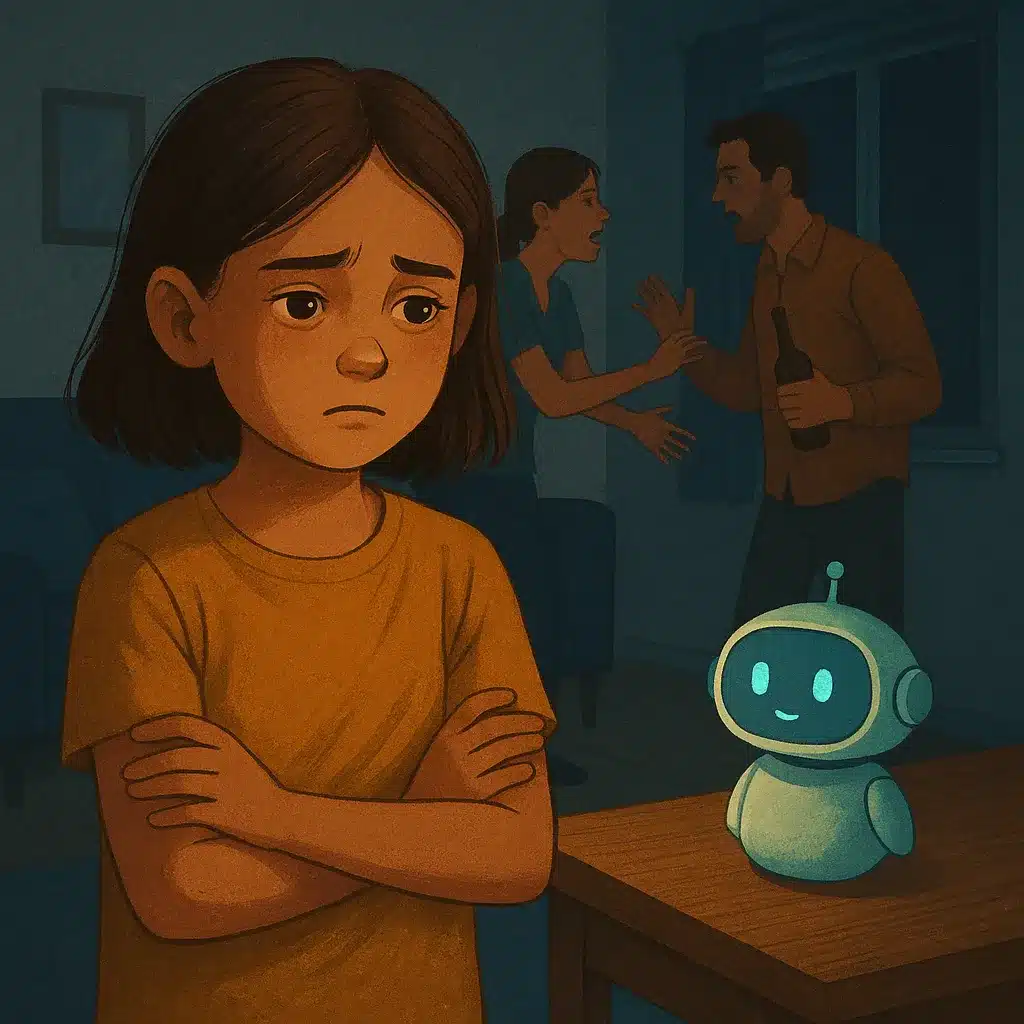
Kids quickly learn to scan for danger: tone of voice, footsteps, the smell of alcohol, how the keys hit the table. Their nervous system stays on high alert, which can show up later as anxiety, sleep problems, and difficulty relaxing even when things are objectively “fine.”
🧒 When kids become the adults (parentification)
In many families with addiction, kids become the unofficial adults:
-
Making meals, getting siblings ready, managing bedtimes
-
Covering up for a parent (“They’re just tired / sick”)
-
Trying to keep the peace so nothing “sets them off”
This is called parentification—and while it can build responsibility and empathy, it also steals time, energy, and the sense of being allowed to just be a kid.
🤐 Secrecy, stigma, and the weight of silence
Addiction carries heavy stigma. Kids often hear:
-
“Don’t tell anyone.”
-
“What happens in this house stays in this house.”
So they learn to lie to protect the family and hide their own pain. That secrecy cuts them off from support at exactly the moment they need it most. It also teaches that honesty is dangerous, and that their job is to protect the grown-ups—not the other way around.
💔 Emotional strain, trauma, and the body’s alarms
Children of parents with addictions are more likely to experience:
-
Emotional neglect
-
Verbal or physical conflict
-
Sudden changes (money issues, moves, breakups, jail, detox, relapse)
This chronic stress can cause real health effects—headaches, stomach aches, trouble concentrating, and later, higher risk of mental health struggles.
Important: None of this says anything about a child’s worth or potential. It only describes the starting point—not the finish line.
🧭 Why children of parents with addictions are not doomed to repeat the cycle
Yes, the risk is real. But risk ≠ destiny. We know a lot about what actually helps children of parents with addictions build healthy lives.
👀 Awareness as armor against addiction
Kids who grow up around addiction don’t need a “scared straight” lecture. They’ve lived it.
They remember:
-
Missed birthdays
-
Broken promises
-
Embarrassing scenes in public
-
The fear of not knowing what version of the parent is coming home
That lived experience can become internal armor. When alcohol or drugs show up in their own teenage or adult lives, they’re not just curious—they’re cautious. With support, that awareness becomes a strong reason to say, “I’m not going down that road.”
🧩 Supportive adults and safe relationships
Research on resilience is crystal clear: one stable, supportive adult can change everything.
That person might be:
-
A teacher who actually listens
-
A coach who notices when something’s off
-
A grandparent, aunt, or uncle
-
A therapist, youth worker, or faith leader
What matters is consistency and safety. When a child experiences at least one relationship where they are believed, valued, and not responsible for fixing the adult, it rewrites their expectations of what “love” is allowed to feel like.
🛠️ Coping skills and boundaries as cycle-breakers
Addiction often grows where there is untreated trauma, emotional pain, or mental illness. Children who learn:
-
How to name feelings
-
How to self-soothe without substances
-
How to set boundaries
-
How to ask for help
…are learning skills many parents never got. These are cycle-breaking tools. Studies on children of parents with alcohol and substance use disorders show that self-efficacy (believing you can handle challenges) and social support are powerful protective factors.
🧬 Genetics are not destiny
Can addiction run in families? Yes. But genes are just one piece of the puzzle:
-
Family history may increase vulnerability
-
Environment, relationships, and coping skills massively shape outcomes
Think of genetics as a loaded deck—not a forced move. With the right buffers (support, therapy, good information, lower exposure to substances, healthier stress outlets), children of parents with addictions can beat the odds.
🚶 Small choices that build a new path
Breaking the cycle rarely comes from one giant, dramatic decision. It usually looks like:
-
Choosing friends who respect your boundaries
-
Saying no to environments where you know things get wild
-
Joining a sport, club, or activity that makes you feel strong and seen
-
Talking honestly with a counselor or trusted adult
-
Learning how to handle emotions without numbing them
These might feel small in the moment. Over time, they build a life that looks nothing like the chaos you grew up in.
🤖 How AI can support children of parents with addictions
Let’s be blunt: AI is not a therapist. Experts are warning—loudly—against using chatbots as stand-alone mental health treatment, especially for young people. But when AI is used responsibly, with clear limits, it can still be a useful helper.
Think of AI as extra scaffolding around the real work: human support, therapy, school, and community.
💬 AI as a late-night listener (with safety boundaries)
Many kids (and adult children) feel the worst at night:
-
The house is quiet
-
The mind is loud
-
There’s no one they want to “bother”
AI-powered chat tools and mental health apps can:
-
Offer a non-judgmental space to vent
-
Prompt journaling (“What went okay today?”)
-
Teach simple grounding exercises (breathing, 5-senses check-ins)
-
Reflect feelings back in plain language
Clinical trials show that AI-supported chatbots like Woebot and Wysa can reduce symptoms of anxiety and depression in adults and young people over short periods. They’re not magic, but they can help some people feel less alone between therapy sessions—or before they get one.
However:
-
They must never be treated as emergency support.
-
They should always encourage users to reach real-life help when in crisis.
If a child is in immediate danger or talking about self-harm, the right action is still 911 / local emergency services, crisis lines, or in-person help.
📚 AI explaining addiction in kid-friendly ways
A lot of children secretly think:
“If I were better, my parent would stop.”
AI-powered educational tools can:
-
Explain addiction as a health condition, not a child’s fault
-
Use age-appropriate language and stories
-
Answer sensitive questions they may be embarrassed to ask an adult
-
Normalize mixed feelings: love, anger, relief, guilt, confusion
Used well, AI can turn clinical research into plain-English explanations in different reading levels and languages, making it easier for kids to understand what’s happening without blaming themselves.
👨👩👧 AI tools that support parents in recovery
When a parent is trying to get sober, their brain, body, and emotions are busy surviving. Remembering every tool from therapy can be hard.
AI-assisted tools can help parents:
-
Track mood, cravings, and triggers
-
Get in-the-moment coping ideas (“Pause. Text your sponsor. Go for a 5-minute walk.”)
-
Plan honest conversations with their children
-
Brainstorm simple ways to rebuild trust (small rituals, consistent routines)
As evidence grows for digital mental health tools, many experts now see them as useful add-ons to treatment, not replacements. A steadier parent means a steadier home—and that directly protects children of parents with addictions.
🏫 AI helping teachers and counselors notice silent struggles
Most kids don’t walk into school and say, “My dad is using again.” But their data sometimes speaks:
-
More absences
-
Sudden grade drops
-
Frequent nurse visits
-
Big shifts in behavior or mood
With strict privacy and ethical rules, AI could help schools spot concerning patterns sooner and nudge staff to check in:
-
“This student’s attendance and grades changed quickly—consider a gentle conversation.”
AI can also help counselors:
-
Draft age-appropriate explanations of addiction
-
Build personalized safety plans
-
Find local resources faster
Of course, humans must always stay in charge; AI just helps them focus attention where it’s needed most.
🌐 AI-powered mental health education and resources
AI can turn dry health information into:
-
Stories and comics about kids living with parental addiction
-
Interactive exercises about emotional regulation and boundaries
-
Multi-language resources for families with language barriers
For families who can’t easily access therapy due to cost, distance, or stigma, well-designed digital tools can be a first step toward understanding and change.
🛡️ Guardrails: making sure AI stays safe and ethical
For AI to actually help children of parents with addictions, it needs serious guardrails:
-
Clear disclaimers that it does not replace professional care
-
Crisis language: always tell users to contact emergency services or crisis lines in urgent situations
-
Strong privacy protections (especially for minors)
-
Co-design with clinicians, youth, and people with lived experience of addiction
-
Oversight from regulators and independent experts
Used without these safeguards, AI for mental health can actually make things worse or delay real help.
🌱 Practical ways to break the cycle (with or without AI)
AI is a tool, not a savior. The real power still lives in people and choices. Here’s how different groups can help break the cycle for children of parents with addictions.
📖 For children and teens
If this is your life right now (or was your life growing up):
-
Name what’s happening. “My parent has an addiction” is more accurate—and less self-blaming—than “My family is just messed up.”
-
Find one safe adult. Teacher, counselor, relative, coach—someone you can tell the truth to.
-
Learn basic coping tools. Breathing skills, journaling, exercise, time with safe friends.
-
Use AI as a helper, not a judge. If you use mental health apps or chatbots, treat them like practice wheels—not the bike. Let them help you organize your thoughts, then bring those thoughts to real people.
You are allowed to want a different life than the one you grew up in. That doesn’t make you disloyal. It makes you brave.
🧑🧑🧒 For other caregivers and relatives
If you’re a grandparent, aunt, uncle, or family friend:
-
Show up consistently. Predictability is medicine for kids from chaotic homes.
-
Don’t trash the parent in front of the child. You can be honest without putting the child in the middle.
-
Help them access support. That might mean counseling, Alateen or similar groups, or youth programs focused on resilience.
-
Leverage tech wisely. Help them find age-appropriate, credible apps or online resources (not random TikTok “therapy”).
🧑🏫 For teachers, coaches, and youth workers
You don’t need to be a therapist to be a lifeline.
-
Notice patterns. Sudden behavior changes, withdrawal, exhaustion, or “adult-like” worry can all be clues.
-
Offer low-pressure openings. “You seem really tired lately; is anything making life harder right now?”
-
Know your local resources. School counselors, community agencies, and national organizations like NACoA (National Association for Children of Addiction) provide guidance and materials.
-
Use AI as a planning tool. It can help you draft letters to parents, create lesson materials about emotions, or adapt information for different reading levels. But you stay the filter.
🧑⚕️ For professionals designing AI tools
If you’re building AI systems in this space:
-
Co-design with lived experience. Involve children of parents with addictions, recovered parents, and clinicians from the start.
-
Bake safety into the core. Default to conservative responses, clear crisis guidance, and strong disclaimers.
-
Aim for “augment, not replace.” The best designs help real humans—therapists, teachers, parents—do their work better.
-
Study harms, not just wins. Pay attention to over-reliance, delayed help-seeking, or misinterpretations.
✨ A new story: children of parents with addictions can build healthier futures
Children of parents with addictions start life on a harder difficulty setting. There’s no point pretending otherwise. But “hard mode” is not the same as “no chance.”
Evidence shows that:
-
Many children of parents with addictions grow up to avoid addiction themselves
-
Resilience is built through supportive adults, skills, and opportunities
-
Digital and AI tools can help widen access to information and emotional support—if they’re used thoughtfully and safely
Children of parents with addictions do not have to repeat their parents’ footsteps. They’re allowed to choose calm over chaos, honesty over secrecy, and support over silence. AI can’t heal trauma or hug a child, but it can:
-
Give them a place to put words to feelings
-
Help parents in recovery stay on track
-
Alert adults when a quiet kid might need a check-in
-
Turn complex science into understandable guidance
The real power, though, still lives in people: the kid who tells the truth for the first time, the teacher who notices, the counselor who listens, the parent who gets help, the developer who builds safer tools.
If you—or someone you love—grew up as a child of a parent with addiction, you are not broken. You’re carrying a heavy story. And with support, tools, and (yes) carefully used AI, you can write a very different next chapter.
If you need help navigating tech, tools, and mental health resources, consider reaching out through your site’s Contact or Health support pages so you’re not trying to untangle this alone.
❓ FAQs: children of parents with addictions & AI support
1. Are children of parents with addictions doomed to become addicted themselves?
No. They are at higher risk, but not doomed. Protective factors—like a stable adult, good coping skills, supportive peers, and treatment for any trauma—can significantly reduce the chance of addiction in later life.
2. How common is it for a child to live with a parent who has an addiction?
Recent U.S. data suggests about one in four children live with a parent who has a substance use disorder, and Canadian estimates show similar patterns over time.
3. What are signs a child might be struggling at home because of addiction?
Watch for sudden grade changes, frequent absences, chronic tiredness, unexplained health complaints, extreme perfectionism or caretaking, and strong reactions to discussions about alcohol or drugs. None of these prove anything alone, but together they’re a signal to check in.
4. How can AI help children of parents with addictions safely?
AI can offer late-night listening, journaling prompts, simple coping tools, and clear explanations of addiction. It can also help adults create educational materials or spot patterns that need attention. It should always point to human help for crises and never position itself as treatment.
5. Are AI mental health chatbots safe for kids and teens?
They can be helpful when chosen carefully and used under adult guidance, but they’re not risk-free. Experts warn about over-reliance, bad advice, and delayed access to proper care. They should supplement, not replace, real-world support.
6. What can I do as a parent in recovery to help my child heal?
Stay in treatment, be honest at an age-appropriate level, apologize for past harm, and show change through consistent behavior. Family-centered therapy and support groups can help you repair trust together, and digital tools may help you track your own mood and triggers between sessions.
7. How can teachers support students whose parents have addictions?
Offer a safe, calm presence. Avoid shaming language about “addicts.” Work with school counselors to connect students with services. Use education materials from organizations like NACoA to better understand what these kids face and how to talk about it.
8. What offline support options exist for children of parents with addictions?
Options include school counseling, community mental health centers, support groups like Alateen or similar local programs, youth mentorship programs, and family-focused treatment centers that specifically include children in care.
9. Can genetics make children of parents with addictions more vulnerable?
Yes, genetic factors can increase vulnerability, but they don’t dictate outcomes. Environment, support, and coping skills strongly influence whether someone develops a substance use disorder.
10. How can adult children of parents with addictions start breaking the cycle now?
Begin by naming your experience, seeking therapy or support groups, learning healthier coping tools, and setting clear boundaries in relationships. You can also use AI tools for journaling or education—as long as you pair them with human support instead of using them alone.
Sources & References
-
National Institutes of Health – Millions of U.S. kids live with parents with substance use disordersNational Institutes of Health (NIH)+1
-
Statistics Canada – Trajectories of psychological distress among Canadian adults (childhood exposure to parental addiction)Statistics Canada
-
Włodarczyk et al. – Protective mental health factors in children of parents with alcohol use disordersPMC+1
-
Torous et al. – The evolving field of digital mental healthPMC
-
NIMH – Technology and the Future of Mental Health TreatmentNational Institute of Mental Health
-
Karkosz, Fitzpatrick, Haque et al. – Clinical evidence on Woebot and Wysa chatbotsSpringerLink+3PMC+3JMIR Mental Health+3
-
NACoA – Resources for children of parents with addictionNACoA

Related Posts




The Longevity Blueprint: AI-Powered Health Optimization
About the Author: Bernard Aybout (Virii8)