Approx. read time: 10 min.
Post: Chronic Stress 17 Hidden Costs to Your Body and Mind
Stress Feels Normal… Until Your “Bucket” Runs Dry
Stress gets praised like it's a personality trait. People brag about being slammed, overloaded, and running on fumes. That mindset looks tough, but it's expensive.
Here's the truth: your body keeps score. Chronic stress doesn't just "stay in your head." It shows up in your sleep, your immune system, your mood, and your energy.
If you've been feeling like your inner bucket is empty, you're not broken. You're likely running a nervous system that never gets a real "off switch."
🧬 What Stress Really Is (And Why Your Body Reacts So Hard)
Stress is your body's built-in survival alarm. Your brain senses pressure or threat, then signals hormones like adrenaline and cortisol to gear you up for action.
In the short term, that's useful. It can sharpen focus and speed up reactions. The problem starts when the alarm never stops ringing.
Modern stressors usually aren't lions or fires. They're emails, bills, conflicts, uncertainty, and constant mental noise. Your body often reacts the same way anyway.
🔥 Acute Stress vs Chronic Stress (One Helps, One Hurts)
Acute stress is short and specific. It's the "big moment" pressure that fades after the event. Your body rises, performs, then returns to baseline.
Chronic stress is different. It's ongoing strain with no real recovery. Mayo Clinic notes that long-term activation of the stress response can disrupt many body processes and increase risk for multiple health problems.
A simple way to spot chronic stress: you rest, but you don't feel restored. You sleep, but you wake up tired. You "relax," but your body stays braced.
🦴 The Tension Pattern: When Your Muscles Become Armour
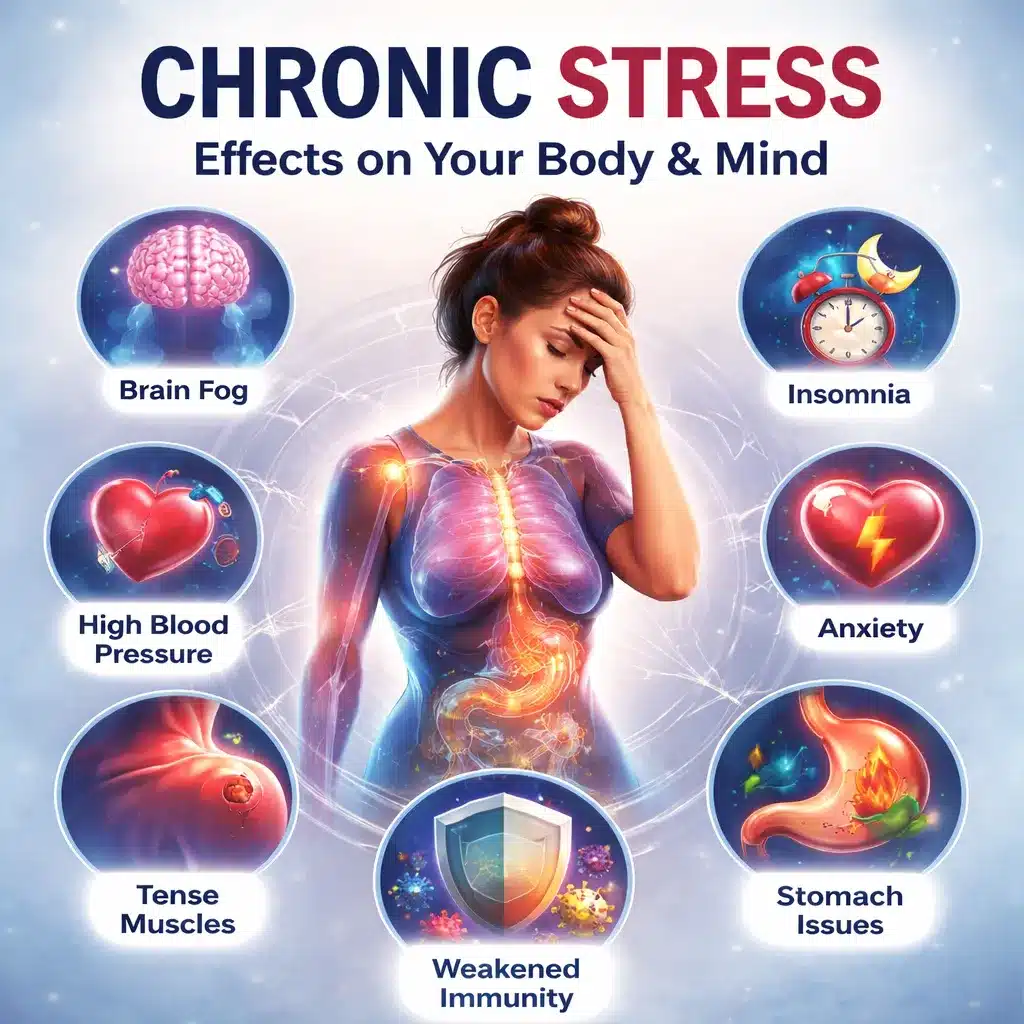
Stress often turns your body into a clenched fist. Your jaw tightens. Your shoulders lift. Your neck stiffens. You start living in a half-braced posture without noticing.
That tension can lead to:
-
Headaches or migraines
-
Neck and shoulder pain
-
Jaw soreness or teeth grinding
-
Back tightness and aches
This is why stress management isn't just meditation talk. Sometimes you need physical release: stretching, walking, heat, massage, breathing, and movement that tells your body, "You're safe now."
😴 Sleep and Recovery: Stress Steals First, Then Charges Interest
Sleep is where your brain cleans house and your body repairs damage. Chronic stress loves to wreck it.
You might notice:
-
Trouble falling asleep because your mind won't shut up
-
Light sleep where you wake easily
-
Early waking with an immediate "stress surge"
-
Weird dreams or restless nights
Then the cycle gets nasty. Poor sleep makes stress tolerance worse the next day. It's like trying to handle life on a phone stuck at 12% battery.
Sleep loss can also affect immune function, which is one reason stressed, underslept people often get sick more easily.
🛡️ Chronic Stress and Your Immune System: Why You Catch Everything
When stress stays high, your immune system can get dysregulated. Some immune responses get suppressed, while inflammation patterns may increase over time.
That can look like:
-
More colds and lingering infections
-
Slower recovery
-
More flare-ups if you already deal with inflammatory issues
You don't need to blame yourself for getting sick. If your nervous system has been on high alert for months, your body has fewer resources left for defence.
🍽️ Stress in the Gut: Appetite, Cravings, and Stomach Drama
Stress shows up in digestion fast. The gut and brain constantly talk to each other, so when you feel under threat, digestion often changes.
Common patterns include:
-
Stomach upset, nausea, or bloating
-
Constipation or diarrhea shifts
-
Loss of appetite, or sudden intense hunger
-
Cravings for sugar, salt, and fast comfort foods
This isn't "lack of willpower." It's biology plus habit. Stress pushes quick energy choices, and your brain learns those shortcuts.
❤️ Heart, Blood Pressure, and Wear-and-Tear Over Time
When stress hormones stay elevated, your heart rate and blood pressure can stay higher than they should. Over time, that adds strain. Mayo Clinic lists chronic stress as a factor that can raise risk for issues like high blood pressure, heart disease, stroke, and more.
Also, the American Heart Association has highlighted strong links between psychological health and cardiovascular health, including how mental well-being can affect heart outcomes.
No scare tactics here—just reality. If you're "fine" but always tense, your body still pays a toll.
⚙️ Hormones, Energy, and Weight: Cortisol Isn’t Evil—Chronic Exposure Is
Cortisol gets demonised online like it's the villain hormone. It's not. You need it for energy regulation, wakefulness, and response to challenges.
The issue is constant cortisol output. Mayo Clinic notes that too much exposure to stress hormones can disrupt many processes and raise risk for health problems, including weight gain and sleep trouble.
Chronic stress can also mess with:
-
Energy levels (wired at night, tired in the day)
-
Motivation (everything feels harder)
-
Hunger cues (cravings and appetite swings)
🧠 Brain Changes: Focus, Memory, and Learning Take a Hit
When your brain is in survival mode, it prioritises threat detection. That means your higher-level thinking often gets less fuel.
You may notice:
-
Forgetfulness and "brain fog"
-
Short attention span
-
Trouble organising tasks
-
Slower learning and weaker recall
This is why chronic stress can make smart people feel "dumb." Your brain isn't failing. It's prioritising defence over creativity.
😬 Mood Changes: Anxiety, Anger, and Emotional Whiplash
Chronic stress can narrow your emotional bandwidth. Small problems feel huge. Your patience gets shorter. You start reacting faster than you want.
Anxiety often ramps up when your body stays activated. NIMH describes how stress and anxiety can overlap and how feeling overwhelmed can become a persistent pattern.
You might see:
-
Constant worry or doom thinking
-
Irritability and snapping
-
Restlessness, tension, or panic-like surges
-
Withdrawal from people because you "can't deal"
🪫 Burnout and Emotional Exhaustion: When You Can’t Recharge
Burnout isn't laziness. It's depletion.
Emotional exhaustion can look like:
-
Feeling numb or disconnected
-
Low motivation, even for things you used to enjoy
-
Apathy, hopelessness, or feeling trapped
-
Trouble concentrating and staying productive
If you keep pushing through burnout, you don't become stronger. You just become more depleted.
👥 The Hidden Costs: Relationships, Identity, and Quality of Life
Chronic stress doesn't just hurt your body. It changes how you show up.
It can:
-
Reduce empathy and patience
-
Increase conflict at home
-
Kill playfulness and intimacy
-
Make you feel like you're "not yourself"
The identity hit matters. When you live overwhelmed, you start believing "this is who I am." That story is dangerous, because it keeps you stuck.
🧭 Not Every Battle Deserves Your Stress
This is the mindset shift that saves people.
Not every situation deserves full emotional investment. Not every comment deserves a response. Not every conflict deserves your nervous system going to war.
A practical rule:
If it won't matter in a week, don't let it steal your peace today.
When you know your truth—your values, your limits, your priorities—you stop chasing every external pressure. That clarity lowers stress because you stop fighting battles you never needed to fight.
Letting go isn't quitting. It's energy protection.
🧰 A Practical Stress Maintenance Plan (Small Habits, Big Payoff)
Stress management works best as maintenance, not emergency repair. The goal isn't to live stress-free. The goal is to recover faster.
Here's a simple plan that actually works in real life:
-
Daily body reset (5–10 minutes): walk, stretch, shower, breathing, light movement
-
Sleep protection: consistent wake time, dim lights at night, reduce late doom-scrolling
-
"One thing" focus: pick one priority, finish it, then choose the next
-
Boundary reps: say no to one unnecessary thing per week
-
Nervous system cues: slow exhale breathing, music, nature, prayer, journaling
-
Social support: talk to someone who calms you, not someone who fuels drama
And yes—movement helps. Mayo Clinic notes that exercise can reduce stress and improve well-being, even if you're not an athlete.
A quick “stress map” you can use today
| Body system | What chronic stress can do | What you might notice | Fast reset idea |
|---|---|---|---|
| Muscles | Prolonged tension | Headaches, sore jaw, tight shoulders | Stretch + slow exhale breathing |
| Sleep | Disrupted recovery | Insomnia, waking tired | Consistent wake time + screen cutoff |
| Immune | Weaker defence over time | Frequent colds, slow recovery | Sleep + hydration + gentle movement |
| Digestion | Gut rhythm disruption | Bloating, nausea, appetite swings | Slow meals + short walk after eating |
| Mood | Lower emotional bandwidth | Irritability, anxiety, overwhelm | Grounding: name 5 things you see |
(These system-wide effects are widely described by APA and Mayo Clinic.) :contentReference[oaicite:28]
🚩 When Stress Needs More Than Self-Help
Self-help is great—until it isn't enough.
Consider extra support if:
-
You feel stuck in constant panic or dread
-
Sleep stays broken for weeks
-
You're numb, hopeless, or constantly overwhelmed
-
Stress is affecting school, work, or relationships daily
Talking to a trusted adult, a doctor, or a mental health professional isn't weakness. It's smart system maintenance.
❓ Frequently Asked Questions (FAQ)
Q1: What’s the fastest way to calm chronic stress in the moment?
Use a long, slow exhale. Longer exhales help signal "safe" to your nervous system. Pair it with relaxing your jaw and shoulders.
Q2: Can chronic stress really make you sick more often?
Yes, it can affect immune function and recovery over time.
Q3: Why does chronic stress cause brain fog?
Your brain prioritises threat response over deep thinking. Focus, memory, and planning can feel harder during prolonged stress.
Q4: Is cortisol always bad?
No. Cortisol is normal and helpful. Problems happen when stress keeps cortisol high too often for too long.
Q5: Why does stress hit my stomach so hard?
The gut-brain connection is real. Stress can change digestion speed, appetite, and gut sensitivity.
Q6: Can chronic stress raise blood pressure?
It can contribute by keeping your system activated and your vessels under strain.
Q7: How do I know if I’m burned out or just tired?
Tired improves with rest. Burnout often doesn't. Burnout includes emotional depletion, low motivation, and feeling detached.
Q8: Does exercise help even if I’m not fit?
Yes. Even walking can reduce stress and improve mood over time.
Q9: What does “not every battle deserves stress” actually mean?
It means you choose your triggers. You stop giving full emotional power to things that don't match your values or won't matter later.
Q10: What’s one daily habit that helps most?
Protect your sleep and do one small body reset daily. Consistency beats intensity.
Q11: Can chronic stress cause anxiety or depression?
Chronic stress can increase risk and worsen symptoms for many people. If symptoms persist, extra support can help.
Q12: What should I do if stress feels unmanageable?
Talk to a trusted adult, a doctor, or a counselor. If you feel unsafe, seek urgent help locally.
✅ Conclusion: Protect Your Energy Before It’s Gone
Chronic stress is not a badge of honour. It's a cost—paid with sleep, patience, focus, immunity, and joy. CDC and Mayo Clinic both describe how long-term stress can worsen health and daily functioning.
The fix isn't perfection. It's protection. You protect your energy by choosing your battles, trusting your truth, building recovery into your days, and getting support when you need it.
Sources & References
-
CDC (ATSDR): Stress effects across body systems. ATSDR
-
CDC: Managing stress and chronic stress impacts. CDC
-
American Psychological Association: Stress effects on the body. apa.org
-
National Institute of Mental Health: "I'm So Stressed Out!" fact sheet. National Institute of Mental Health
-
Mayo Clinic: Chronic stress puts your health at risk. Mayo Clinic

Related Posts




The Longevity Blueprint: AI-Powered Health Optimization
About the Author: Bernard Aybout (Virii8)